


Guangdong Development Bank (廣東發展銀行) is considering selling stakes that could result in overseas investors holding a combined majority share in a Chinese bank for the first time, a bank official said yesterday.
Two different plans are currently being mulled, both of which involve introducing foreign shareholders, said the official who requested anonymity.
Under one plan, the bank would divest some 30 billion yuan (US$3.7 billion) in bad loans to the provincial government of Guangdong Province and bring in both domestic and foreign investors.
The combined holdings of the foreign firms would not exceed the present foreign ownership cap of 25 percent in total, the official said.
However, if the non-performing loans cannot be hived off to the government then the bank will look to foreign investors to take on the debt, thus selling more than half of the lender in the process, the official said.
He did not know when a decision would be made on the restructuring options, which investors would be selected, nor how the bank has priced the stakes.
Six firms, including Chinese insurer China Ping An Insurance Co (
The official said that Morgan Stanley was no longer on the list and that Deutsche Bank was now the deal co-ordinator rather than a potential investor.
DBS is thought to be a frontrunner to take a stake, with China's Sinopec Corp (中國石化) seeking to become the largest single shareholder.
Other media reports have linked Dutch lender ABN Amro and France's Societe General as well as DBS and Deutsche Bank to Guangdong Development Bank.
The official said Guangdong Development Bank would probably sell holdings to three or four companies on the shortlist and transfer the operations of about five branches to each investor as part of the restructure.
Foreign banks face restrictive capital and regulatory requirements in setting up their own branch networks in China, increasing their interest in buying into existing domestic lenders.
Many have lobbied Beijing to up its limits on foreign ownership to allow them a greater say in their management and better protect their investments.
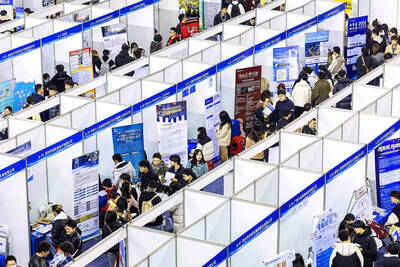
Stephen Garrett, a 27-year-old graduate student, always thought he would study in China, but first the country’s restrictive COVID-19 policies made it nearly impossible and now he has other concerns. The cost is one deterrent, but Garrett is more worried about restrictions on academic freedom and the personal risk of being stranded in China. He is not alone. Only about 700 American students are studying at Chinese universities, down from a peak of nearly 25,000 a decade ago, while there are nearly 300,000 Chinese students at US schools. Some young Americans are discouraged from investing their time in China by what they see
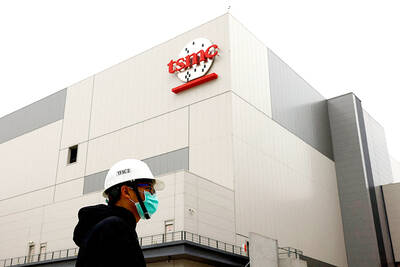
Taiwan Semiconductor Manufacturing Co (TSMC, 台積電), the world’s largest contract chipmaker, yesterday reported record sales for the first quarter, which analysts attributed to solid demand for emerging technologies. Consolidated revenue totaled NT$592.64 billion (US$18.51 billion) in the January-to-March period, up 16.5 percent from a year earlier, but down 5.26 percent from the previous quarter, TSMC said in a statement. The first-quarter revenue beat analysts’ average projection of NT$579.5 billion, Bloomberg News reported. That performance lends weight to expectations that the world’s most valuable chipmaker would return to solid growth this year after weathering a post-COVID-19-pandemic cratering of smartphone and computer sales. TSMC is budgeting

MAJOR DROP: CEO Tim Cook, who is visiting Hanoi, pledged the firm was committed to Vietnam after its smartphone shipments declined 9.6% annually in the first quarter Apple Inc yesterday said it would increase spending on suppliers in Vietnam, a key production hub, as CEO Tim Cook arrived in the country for a two-day visit. The iPhone maker announced the news in a statement on its Web site, but gave no details of how much it would spend or where the money would go. Cook is expected to meet programmers, content creators and students during his visit, online newspaper VnExpress reported. The visit comes as US President Joe Biden’s administration seeks to ramp up Vietnam’s role in the global tech supply chain to reduce the US’ dependence on China. Images on
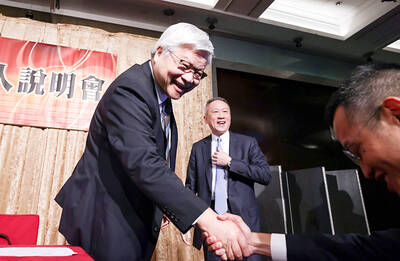
US CONSCULTANT: The US Department of Commerce’s Ursula Burns is a rarely seen US government consultant to be put forward to sit on the board, nominated as an independent director Taiwan Semiconductor Manufacturing Co (TSMC, 台積電), the world’s largest contract chipmaker, yesterday nominated 10 candidates for its new board of directors, including Ursula Burns from the US Department of Commerce. It is rare that TSMC has nominated a US government consultant to sit on its board. Burns was nominated as one of seven independent directors. She is vice chair of the department’s Advisory Council on Supply Chain Competitiveness. Burns is to stand for election at TSMC’s annual shareholders’ meeting on June 4 along with the rest of the candidates. TSMC chairman Mark Liu (劉德音) was not on the list after in December last


 RSS
RSS