


After decoding the rice genome, keeping one of the world's most important cereals productive despite chronic droughts is now a key focus of global research, the International Rice Research Institute says.
Philippines-based IRRI said a study this year concluded that dry spells, more than floods or typhoons, is the primary recurring threat in Asia, where around a fifth of all the rice-growing areas are drought-prone.
Coping
"Coping with recurrent drought is part of life for millions of Asia's rural poor," the institute said in the latest edition of its journal Rice Today.
In 2004, widespread severe drought in much of Asia led not only to agricultural production losses of hundreds of millions of dollars, but also pushed millions of people into poverty, it added.
Since then, IRRI research has identified many rice varieties that not only produce high yields in good conditions but also 2-3 tonnes per hectare under conditions that are so dry many popular varieties return less than a tonne per hectare, it said.
Cross-breeding
Cross-breeding varieties has produced the first generation of so-called "aerobic rice" that grows on dry soil like maize, instead of on flooded paddies, it added.
This rice was produced by crossing modern high-yielding varieties, that respond well to fertilizer, with traditional but low-yield ones that grow on dry soils.
Some lines are now being field-tested in drought-prone areas of South and South Asia, IRRI said.
Following the breakthrough sequencing of the rice genome, IRRI scientists have also created more than 40,000 varieties where chemicals or radiation were used to knock out random segments of the rice chromosome.
`Deletion mutants'
The resulting plants, which IRRI calls "deletion mutants," are screened under drought stress in the field, or with the application of drought-related hormones in the laboratory, in order to identify drought-tolerant or drought-susceptible mutants.
Work is also under way to identify which deleted genes are responsible for this effect, it added.
The rice plant traditionally requires lots of water during its reproductive stage. If conditions are dry, it reduces production of gibberellin, the hormone that stimulates the panicle, or the flower, to fully emerge from the leaf sheath, as well as pollen release. This results in reduced yields.
The impact of dry spells is often felt throughout the local Asian region, effecting the local economy, the paper quoted IRRI senior agricultural economist Sushil Pandey as saying.
"And if the local economy isn't functioning well, the other employment disappears. You have a cumulative effect," Pandey said.
"When people are unable to pay off their loans, they go deeper and deeper into debt, ultimately losing their land and whatever else they own, and become completely destitute," Pandey said.
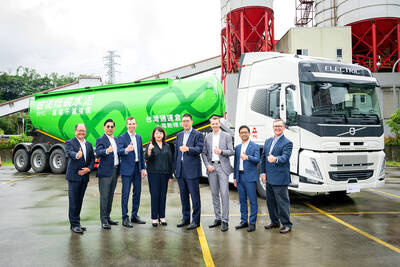
Taiwan Transport and Storage Corp (TTS, 台灣通運倉儲) yesterday unveiled its first electric tractor unit — manufactured by Volvo Trucks — in a ceremony in Taipei, and said the unit would soon be used to transport cement produced by Taiwan Cement Corp (TCC, 台灣水泥). Both TTS and TCC belong to TCC International Holdings Ltd (台泥國際集團). With the electric tractor unit, the Taipei-based cement firm would become the first in Taiwan to use electric vehicles to transport construction materials. TTS chairman Koo Kung-yi (辜公怡), Volvo Trucks vice president of sales and marketing Johan Selven, TCC president Roman Cheng (程耀輝) and Taikoo Motors Group

Among the rows of vibrators, rubber torsos and leather harnesses at a Chinese sex toys exhibition in Shanghai this weekend, the beginnings of an artificial intelligence (AI)-driven shift in the industry quietly pulsed. China manufactures about 70 percent of the world’s sex toys, most of it the “hardware” on display at the fair — whether that be technicolor tentacled dildos or hyper-realistic personalized silicone dolls. Yet smart toys have been rising in popularity for some time. Many major European and US brands already offer tech-enhanced products that can enable long-distance love, monitor well-being and even bring people one step closer to
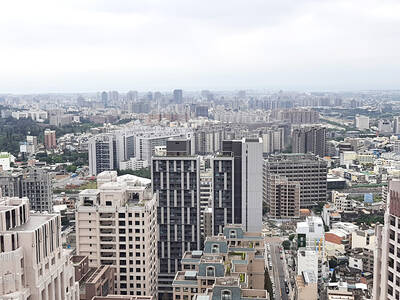
New apartments in Taiwan’s major cities are getting smaller, while old apartments are increasingly occupied by older people, many of whom live alone, government data showed. The phenomenon has to do with sharpening unaffordable property prices and an aging population, property brokers said. Apartments with one bedroom that are two years old or older have gained a noticeable presence in the nation’s six special municipalities as well as Hsinchu county and city in the past five years, Evertrust Rehouse Co (永慶房產集團) found, citing data from the government’s real-price transaction platform. In Taipei, apartments with one bedroom accounted for 19 percent of deals last
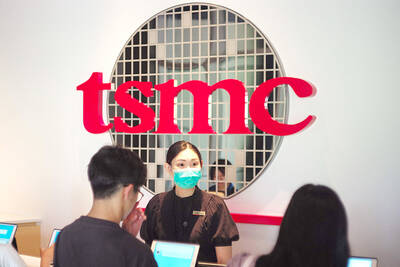
RECORD-BREAKING: TSMC’s net profit last quarter beat market expectations by expanding 8.9% and it was the best first-quarter profit in the chipmaker’s history Taiwan Semiconductor Manufacturing Co (TSMC, 台積電), which counts Nvidia Corp as a key customer, yesterday said that artificial intelligence (AI) server chip revenue is set to more than double this year from last year amid rising demand. The chipmaker expects the growth momentum to continue in the next five years with an annual compound growth rate of 50 percent, TSMC chief executive officer C.C. Wei (魏哲家) told investors yesterday. By 2028, AI chips’ contribution to revenue would climb to about 20 percent from a percentage in the low teens, Wei said. “Almost all the AI innovators are working with TSMC to address the


 RSS
RSS