


China plans to accelerate development of its futures and derivatives markets to help companies cope with currency and stock fluctuations in a more market-driven financial system, officials said.
The government is considering introducing interest-rate and stock-index futures, Cheng Siwei (程思危), vice chairman of the National People's Congress, and Shang Fulin (
China is making its currency more flexible, deregulating interest rates and increasing the supply of tradable shares on stock markets, increasing the need of companies and investors for tools to hedge risks.
The government hopes that a more developed domestic derivatives market will help avoid a repeat of scandals such as China Aviation Oil (Singapore) Corp, which lost US$550 million trading options in Singapore last year.
China Aviation "is a wake-up call," Cheng said at today's conference. "It's a sign that we lack the ability to hedge risk. It's necessary for China to develop financial derivatives so that we can be competitive."
A derivative is a financial obligation whose value is derived from interest rates, the outcome of specific events, or the price of underlying assets such as debt, equities and commodities.
China hasn't allowed trading in financial futures since the mid-1990s, when the government halted trading after speculation and insider trading caused the market to crash. Authorities shut all but three exchanges and scrapped more than 50 contracts.
The introduction of currency futures in China will take "a long time" and may not happen until the yuan becomes fully convertible, Cheng said.
China on July 21 ended the yuan's decade-old peg to the US dollar and started managing it against a basket of currencies.
The yuan is allowed to move 0.3 percent either side of a daily fixing rate set by the central bank. The People's Bank of China on Sept. 23 widened the daily trading band for the euro, yen and Hong Kong dollar to 3 percent, from 1.5 percent. The government hasn't given a timetable for free-floating the currency.
The start of a program this year to convert non-tradable, mostly state-owned, stockholdings into common shares that can be bought and sold on exchanges has paved the way for developments such as stock-index futures, China Securities Regulatory Commission Chairman Shang told the conference.
Non-tradable shares make up almost two-thirds of the value of listed companies. The country is seeking to unwind five decades of state ownership and bring its exchanges in line with global standards as it opens them wider to overseas investors.
The Chicago Mercantile Exchange plans to develop China-based futures products in partnership with domestic exchanges such as the Shanghai Stock Exchange and Shanghai Futures Exchange, Chief Executive Craig Donohue said in an interview.
The Merc is trying to position itself to lead China's evolving derivatives market, and is also working with Chinese regulators and banks to encourage use of the US$600 trillion US-listed derivatives market.
"Chinese banks and financial institutions are currently using our products such as euro-dollar products, our stock index futures contracts and ultimately, we hope, the foreign-exchange contracts," Donohue said.
China restricts trading in overseas futures to domestic lenders such as Bank of China and Agricultural Bank of China, while 26 Chinese companies are approved to trade in overseas commodities futures markets, said Steve Ng, ABN Amro Holding NV's Asia head of global futures.
ABN Amro, the biggest Dutch bank, plans to apply to set up a futures venture with Beijing-based Galaxy Securities Co to tap growing demand in China.
"China has the potential to be the biggest futures market in Asia within the next five years," Ng said. ABN Amro's revenue from China futures operations has doubled in the past two years, he said, declining to give figures.
China already allows trading in 11 types of commodity futures, including copper, cotton and soybeans. As of June, the nation had about 180 futures brokerages. US exchanges trade futures contracts on more than 130 products.
China's central bank last month said it will let more than 130 domestic and foreign banks trade yuan forward contracts and swaps on behalf of clients.
Forwards are agreements in which assets are bought and sold at current prices for delivery at a later specified time and date. They will allow local companies and investors to protect themselves from swings in the yuan and other currencies.
The Shanghai stock exchange is studying plans to introduce exchange-traded funds, or ETFs, based on the Asia Bond Fund, ETF warrants and stock-index futures, Geng Liang, head of the exchange, said at the conference.
The Shenzhen stock exchange is running trials of stock-index futures and is studying plans for stock options, said Zhang Yujun, the exchange's chief executive.
Use of derivatives would have enabled China to earn higher returns on its foreign-exchange reserves, which stood at US$711 billion at the end of June, NPC Vice Chairman Cheng said. The government made US$40 billion on the reserves last year, mainly through bond interest and appreciation of the euro, he said.

Among the rows of vibrators, rubber torsos and leather harnesses at a Chinese sex toys exhibition in Shanghai this weekend, the beginnings of an artificial intelligence (AI)-driven shift in the industry quietly pulsed. China manufactures about 70 percent of the world’s sex toys, most of it the “hardware” on display at the fair — whether that be technicolor tentacled dildos or hyper-realistic personalized silicone dolls. Yet smart toys have been rising in popularity for some time. Many major European and US brands already offer tech-enhanced products that can enable long-distance love, monitor well-being and even bring people one step closer to

Malaysia’s leader yesterday announced plans to build a massive semiconductor design park, aiming to boost the Southeast Asian nation’s role in the global chip industry. A prominent player in the semiconductor industry for decades, Malaysia accounts for an estimated 13 percent of global back-end manufacturing, according to German tech giant Bosch. Now it wants to go beyond production and emerge as a chip design powerhouse too, Malaysian Prime Minister Anwar Ibrahim said. “I am pleased to announce the largest IC (integrated circuit) Design Park in Southeast Asia, that will house world-class anchor tenants and collaborate with global companies such as Arm [Holdings PLC],”
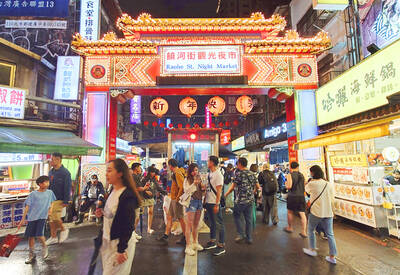
Sales in the retail, and food and beverage sectors last month continued to rise, increasing 0.7 percent and 13.6 percent respectively from a year earlier, setting record highs for the month of March, the Ministry of Economic Affairs said yesterday. Sales in the wholesale sector also grew last month by 4.6 annually, mainly due to the business opportunities for emerging applications related to artificial intelligence (AI) and high-performance computing technologies, the ministry said in a report. The ministry forecast that retail, and food and beverage sales this month would retain their growth momentum as the former would benefit from Tomb Sweeping Day
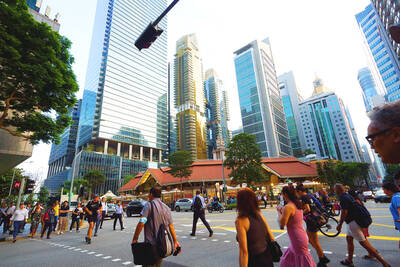
Thousands of parents in Singapore are furious after a Cordlife Group Ltd (康盛人生集團), a major operator of cord blood banks in Asia, irreparably damaged their children’s samples through improper handling, with some now pursuing legal action. The ongoing case, one of the worst to hit the largely untested industry, has renewed concerns over companies marketing themselves to anxious parents with mostly unproven assurances. This has implications across the region, given Cordlife’s operations in Hong Kong, Macau, Indonesia, the Philippines and India. The parents paid for years to have their infants’ cord blood stored, with the understanding that the stem cells they contained


 RSS
RSS