


Financial regulators have apparently made another about-face on changing the ceiling on daily stock trades, as local press reports cited one policymaker as saying that no concrete timeframe has yet be decided upon.
The change was originally set to happen next month.
The Financial Supervisory Commission decided to relax the trading band from 7 percent to 15 percent, starting from the beginning of next year, for the trading of foreign currency-denominated futures products, commission spokesman Lin Chung-cheng (林忠正) told two major Chinese-language business dailies over the weekend.
NO CLEAR TIMETABLE
"We plan to phase in the relaxation mechanism ... but have no clear timetable for widening the stock trading band for the moment," Lin was quoted as saying.
In an attempt to internationalize the local stock markets, stock and financial regulators agreed last January to ease trading restrictions, including the 7 percent daily limit on stock price movements.
At the time, the regulators agreed on a September time frame to phase out the rule that prevents locally traded stocks from rising or falling by more than 7 percent per day.
The commission, however, backtracked on the plan in April, after Premier Frank Hsieh (謝長廷) urged it to reevaluate the schedule.
Hsieh's caution followed criticism from the business community, which was concerned that the change might have a volatile impact on trading.
In June, Taiwan Stock Exchange chairman Wu Nai-jen (吳乃仁) said the new daily trading ceiling would be implemented in October.
INVESTOR CONCERNS
The delay in relaxing the daily trading limit comes as the British FTSE Group is preparing to review Taiwan's market status next month.
Investors have voiced concern that the government's hesitation could give the British reveiwers a negative impression and that in turn could affect a possible FTSE Group reweighting.
This isn't the first time the commission has flipflopped on policy decisions.
In August last year, it gave in to business community pressure and said only two independent members are needed on a company's board of directors, instead of a quarter of the board members it planned to require.
In May, the commission also shelved a proposal to split the single stock-trading session into two, again in the face of strong opposition from the business community to the proposed change.
However, the FSC is pressing ahead with other plans, including its program for an offshore bourse. It said it would start trading next year with the less complicated financial products of bonds and US dollar futures.
OFF-SHORE BOURSE
The commission decided to exclude China-based Taiwanese companies from initial trading on the offshore stock market because the public is still concerned about possibly accelerating the capital outflow to China, Lin said.
Overseas Taiwanese businesses with which have half of their output value outside the country will be welcome to make their initial or secondary public offerings on the bourse, he said.
The idea of an additional offshore bourse was devised as a tool to attract China-based Taiwanese companies.
Many of these companies have been making their initial public offerings in Hong Kong, Shanghai and elsewhere because of the government's strict requirements for listing on the local bourses, officials have said.
HOLD-UPS
The FSC was due to unveil its blueprint for the offshore bourse in June but disagreements with the Mainland Affairs Council and with the Ministry of Finance forced the delay.
Investors would need to pay a 0.3 percent tax on trading shares on the offshore bourse, the commission said.
The capital gains are categorized as overseas income and thus are tax-free for retail investors, but taxable for corporate investors, it said.
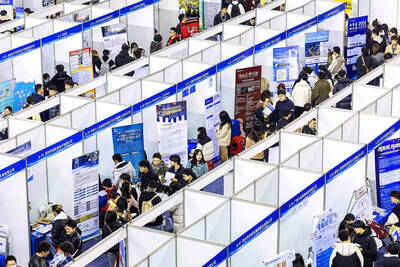
Stephen Garrett, a 27-year-old graduate student, always thought he would study in China, but first the country’s restrictive COVID-19 policies made it nearly impossible and now he has other concerns. The cost is one deterrent, but Garrett is more worried about restrictions on academic freedom and the personal risk of being stranded in China. He is not alone. Only about 700 American students are studying at Chinese universities, down from a peak of nearly 25,000 a decade ago, while there are nearly 300,000 Chinese students at US schools. Some young Americans are discouraged from investing their time in China by what they see

MAJOR DROP: CEO Tim Cook, who is visiting Hanoi, pledged the firm was committed to Vietnam after its smartphone shipments declined 9.6% annually in the first quarter Apple Inc yesterday said it would increase spending on suppliers in Vietnam, a key production hub, as CEO Tim Cook arrived in the country for a two-day visit. The iPhone maker announced the news in a statement on its Web site, but gave no details of how much it would spend or where the money would go. Cook is expected to meet programmers, content creators and students during his visit, online newspaper VnExpress reported. The visit comes as US President Joe Biden’s administration seeks to ramp up Vietnam’s role in the global tech supply chain to reduce the US’ dependence on China. Images on
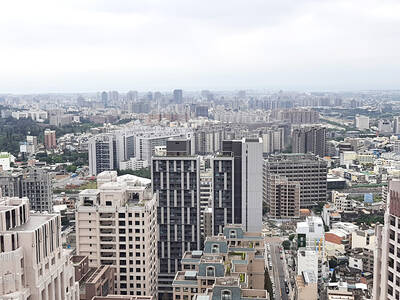
New apartments in Taiwan’s major cities are getting smaller, while old apartments are increasingly occupied by older people, many of whom live alone, government data showed. The phenomenon has to do with sharpening unaffordable property prices and an aging population, property brokers said. Apartments with one bedroom that are two years old or older have gained a noticeable presence in the nation’s six special municipalities as well as Hsinchu county and city in the past five years, Evertrust Rehouse Co (永慶房產集團) found, citing data from the government’s real-price transaction platform. In Taipei, apartments with one bedroom accounted for 19 percent of deals last
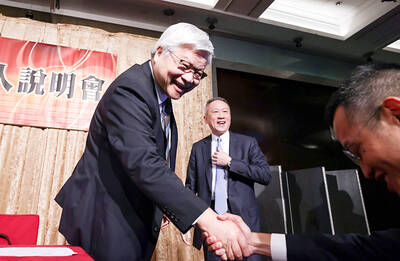
US CONSCULTANT: The US Department of Commerce’s Ursula Burns is a rarely seen US government consultant to be put forward to sit on the board, nominated as an independent director Taiwan Semiconductor Manufacturing Co (TSMC, 台積電), the world’s largest contract chipmaker, yesterday nominated 10 candidates for its new board of directors, including Ursula Burns from the US Department of Commerce. It is rare that TSMC has nominated a US government consultant to sit on its board. Burns was nominated as one of seven independent directors. She is vice chair of the department’s Advisory Council on Supply Chain Competitiveness. Burns is to stand for election at TSMC’s annual shareholders’ meeting on June 4 along with the rest of the candidates. TSMC chairman Mark Liu (劉德音) was not on the list after in December last


 RSS
RSS