


International investors are betting that Asia's economies will get a lift from China's move last month to revalue its currency, the yuan, perplexing those analysts and economists who had argued that the shift would not have much effect.
In the last month, foreign investors have poured almost US$6 billion into Asia's stock markets, with US$1.2 billion entering last week, according to Nomura International, which tracks foreign trading data from Taiwan, South Korea, India, Thailand, Indonesia and the Philippines. That does not include the deluge of cash that analysts say is flowing into Hong Kong, Singapore and Malaysia, which do not disclose data on foreign trading.
According to Emerging Portfolio Fund Research in Cambridge, Massachusetts, equity funds dedicated to Asia outside Japan received US$370 million in new investments the week after China's revaluation and another US$471 million the week after that.
That money is being spread far and wide. In the first week this month, foreign fund managers bought US$519 million worth of stock in Taiwan, according to Nomura. They bought US$244 million worth of stock in Indonesia, a market roughly one-sixth the size of Taiwan's.
"It's the relative-competitiveness angle," said Chua Hak Bin, an economist at DBS Bank in Singapore. "If China has a currency that is going to appreciate, then your currency becomes more competitive relative to China and your exports should do better."
So Taiwan and Thailand, whose electronics exports compete with those from China, would seem poised to benefit from a higher yuan. The same goes for South Korea, which competes with China not only in electronics, but also in steel and other areas.
But there is another rationale. The higher yuan means that Asia's other currencies will also rise, so foreign investors who buy stocks denominated in those currencies stand to see a return even if stock prices go nowhere. Before China's revaluation move, most Asian central bankers, seeking to maintain their nations' competitiveness against Chinese exports, were working hard to keep their growing trade surpluses from pushing their own currencies higher.
Rising currencies would tend to cancel out any additional export competitiveness gained as a result of the yuan's rise, however. Indeed, most Asian currencies have appreciated since China's move, including the ringgit, which Malaysia allowed to float freely after having pegged its value to the US dollar since 1998.
And higher currencies are only part of the reason for some to invest in Asian markets.
"The currencies will appreciate, the economies are getting better, the valuations are not expensive, and there's a global liquidity surge caused by the US trade deficit," said Richard Duncan, the author of The Dollar Crisis.
Duncan said that the surge in foreign investment was only a continued side effect of the imbalance in global funds caused by an overvalued dollar. So long as Asian currencies do not appreciate to correct the region's yawning trade surplus with the US, its central banks will continue to recycle dollar earnings by buying US debt, keeping interest rates in the US artificially low and financing continued American purchases of Asian goods, perpetuating the region's export engine.
Many economists said that China's decision to move the yuan 2 percent higher against the US dollar and to begin using a basket of currencies to determine its target value, in place of the dollar peg, would do little to reverse this cycle. And the recent inflows of foreign funds into Asia's stock markets are only part of a buying binge that has put more than US$20 billion into the region's markets so far this year, the biggest influx since at least 2000.
As Duncan said, despite this huge influx of investment, many Asian stocks still look cheap relative to corporate earnings, because of growing exports and low interest rates. So in many markets, speculation about the effect of a higher yuan is by no means the only thing driving prices higher. And in some, analysts say, the higher yuan may have little impact, or even a negative one.
India, for example, does not compete with China for exports and so is unlikely to see much of an effect, yet it has experienced a rise in foreign buying since China's revaluation. Taiwan, which saw so much foreign money come in, has moved so much of its manufacturing to China that analysts say the higher yuan may actually hurt corporate profits there.
Indonesia competes with China in textiles and it exports raw materials to China, so a more expensive yuan could help Indonesia sell more clothes and enable China to buy even more wood, palm oil and natural gas. The bid by CNOOC for the US oil company Unocal, though unsuccessful, also signaled a Chinese desire to invest in natural resources in Indonesia, where many of Unocal's gas reserves are, analysts say.
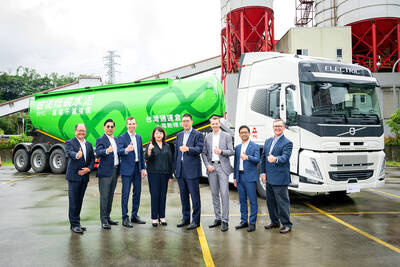
Taiwan Transport and Storage Corp (TTS, 台灣通運倉儲) yesterday unveiled its first electric tractor unit — manufactured by Volvo Trucks — in a ceremony in Taipei, and said the unit would soon be used to transport cement produced by Taiwan Cement Corp (TCC, 台灣水泥). Both TTS and TCC belong to TCC International Holdings Ltd (台泥國際集團). With the electric tractor unit, the Taipei-based cement firm would become the first in Taiwan to use electric vehicles to transport construction materials. TTS chairman Koo Kung-yi (辜公怡), Volvo Trucks vice president of sales and marketing Johan Selven, TCC president Roman Cheng (程耀輝) and Taikoo Motors Group

Among the rows of vibrators, rubber torsos and leather harnesses at a Chinese sex toys exhibition in Shanghai this weekend, the beginnings of an artificial intelligence (AI)-driven shift in the industry quietly pulsed. China manufactures about 70 percent of the world’s sex toys, most of it the “hardware” on display at the fair — whether that be technicolor tentacled dildos or hyper-realistic personalized silicone dolls. Yet smart toys have been rising in popularity for some time. Many major European and US brands already offer tech-enhanced products that can enable long-distance love, monitor well-being and even bring people one step closer to
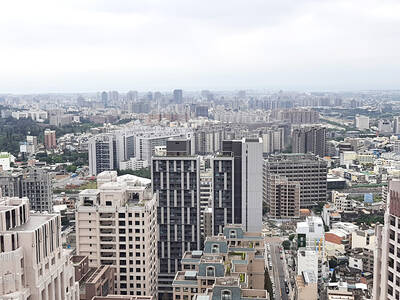
New apartments in Taiwan’s major cities are getting smaller, while old apartments are increasingly occupied by older people, many of whom live alone, government data showed. The phenomenon has to do with sharpening unaffordable property prices and an aging population, property brokers said. Apartments with one bedroom that are two years old or older have gained a noticeable presence in the nation’s six special municipalities as well as Hsinchu county and city in the past five years, Evertrust Rehouse Co (永慶房產集團) found, citing data from the government’s real-price transaction platform. In Taipei, apartments with one bedroom accounted for 19 percent of deals last
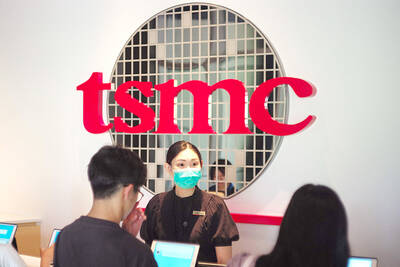
RECORD-BREAKING: TSMC’s net profit last quarter beat market expectations by expanding 8.9% and it was the best first-quarter profit in the chipmaker’s history Taiwan Semiconductor Manufacturing Co (TSMC, 台積電), which counts Nvidia Corp as a key customer, yesterday said that artificial intelligence (AI) server chip revenue is set to more than double this year from last year amid rising demand. The chipmaker expects the growth momentum to continue in the next five years with an annual compound growth rate of 50 percent, TSMC chief executive officer C.C. Wei (魏哲家) told investors yesterday. By 2028, AI chips’ contribution to revenue would climb to about 20 percent from a percentage in the low teens, Wei said. “Almost all the AI innovators are working with TSMC to address the


 RSS
RSS