


Chunghwa Telecom Co (中華電信) entered the last stage for privatization yesterday after the government offloaded 135.1 million American Depositary Receipts (ADRs), or a 14 percent stake, at US$18.98 per unit to overseas investors, contributing US$2.56 billion to the state's coffers.
The share sale was announced after the close of trading at the New York Stock Exchange on Tuesday.
Each ADR is equal to 10 common shares.
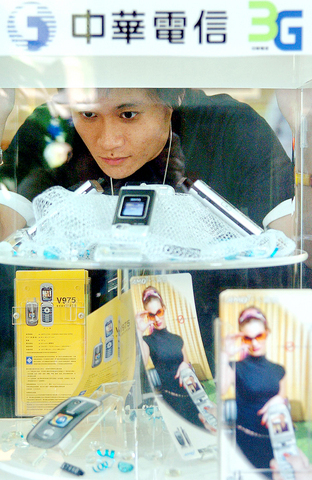
PHOTO: AFP
The offering price of US$18.98 per ADR (equivalent to NT$60.67 per common share) represents a 0.5 percent discount on the company's closing share price of NT$61 on the local bourse on Tuesday, and a 3 percent discount on the company's closing price of US$19.57 traded on the New York Stock Exchange on Tuesday, according to a Chunghwa Telecom press release yesterday.
The overseas sale, together with the government's auction of a 3 percent stake, or 289.43 million shares, to domestic investors on Tuesday, helped reduce the government's holding in the nation's biggest telecommunications company from 65 percent to around 48 percent.
That means Chunghwa Telecom is now technically a private entity, according to the government's definition of a privatization.
As the ADR news was released during TAIEX trading yesterday, Chunghwa Telecom's shares got a boost and closed NT$1.5 higher at NT$62.50, a 2.46 percent rise, which one analyst said showed investor confidence was bouncing back.
"Investors have welcomed the privatization of Chunghwa Telecom as it will help reduce personnel costs and streamline company operations, enhancing its competitiveness. I expect its share price will gradually climb in the near term," said Lu Chia-lin (
Clouded by uncertainties about whether privatization would proceed smoothly, Chunghwa Telecom shares dropped 3.8 percent last Thursday after company chairman Hochen Tan (賀陳旦) announced the domestic share sale for Tuesday. They dropped another 3 percent on Monday.
Taiwan Ratings Corp (中華信評), the local arm of Standard & Poor's, said Chunghwa Telecom's ratings would not be affected by the sale of the government's stake.
"The ratings do not take government support into consideration, as Taiwan's telecom market is deregulated and the government has long planned to privatize the company," Taiwan Ratings said in a statement. "The ratings reflect the company's superior position in Taiwan's telecommunications industry and its very strong financial profile."
Upon receiving the news that the ADR sale was proceeding smoothly, the company's labor union called off its hunger strike at noon yesterday. The 18-hour strike had been called to protest the privatization plan.
But before ending the strike, the union members went to the Democratic Progressive Party's headquarters in Taipei to protest the government's "disregard" of employees' rights, said Chuang Ping-tang (
The union has refused to sign a collective agreement regarding employees benefits and pensions after privatization.
The telecom giant faces internal and external challenges, its former chairman said at a forum in Taipei yesterday.
It has to provide creative services to compete head-on with smaller rivals, especially when the data-oriented third-generation (3G) mobile technology catches on later this year, said Mao Chi-kuo (
The company will have to adjust its mindset, establish an effective system of rewards and penalties and revitalize manpower by encouraging elderly workers to retire so new blood can be hired, he said.
Chunghwa Telecom yesterday reported revenue of NT$15.52 billion for last month and NT$105.2 billion for the first seven months of the year. Its unaudited after-tax profits for the first seven months reached NT$28.6 billion, or NT$2.96 per share, according to a statement to the Taiwan Stock Exchange.
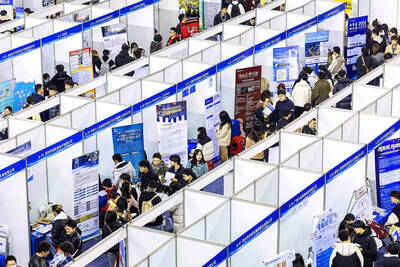
Stephen Garrett, a 27-year-old graduate student, always thought he would study in China, but first the country’s restrictive COVID-19 policies made it nearly impossible and now he has other concerns. The cost is one deterrent, but Garrett is more worried about restrictions on academic freedom and the personal risk of being stranded in China. He is not alone. Only about 700 American students are studying at Chinese universities, down from a peak of nearly 25,000 a decade ago, while there are nearly 300,000 Chinese students at US schools. Some young Americans are discouraged from investing their time in China by what they see

MAJOR DROP: CEO Tim Cook, who is visiting Hanoi, pledged the firm was committed to Vietnam after its smartphone shipments declined 9.6% annually in the first quarter Apple Inc yesterday said it would increase spending on suppliers in Vietnam, a key production hub, as CEO Tim Cook arrived in the country for a two-day visit. The iPhone maker announced the news in a statement on its Web site, but gave no details of how much it would spend or where the money would go. Cook is expected to meet programmers, content creators and students during his visit, online newspaper VnExpress reported. The visit comes as US President Joe Biden’s administration seeks to ramp up Vietnam’s role in the global tech supply chain to reduce the US’ dependence on China. Images on
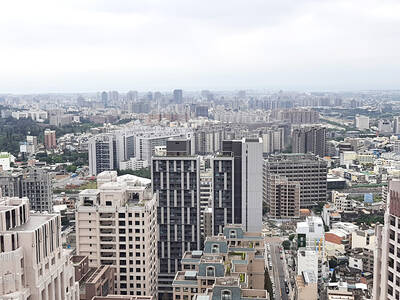
New apartments in Taiwan’s major cities are getting smaller, while old apartments are increasingly occupied by older people, many of whom live alone, government data showed. The phenomenon has to do with sharpening unaffordable property prices and an aging population, property brokers said. Apartments with one bedroom that are two years old or older have gained a noticeable presence in the nation’s six special municipalities as well as Hsinchu county and city in the past five years, Evertrust Rehouse Co (永慶房產集團) found, citing data from the government’s real-price transaction platform. In Taipei, apartments with one bedroom accounted for 19 percent of deals last
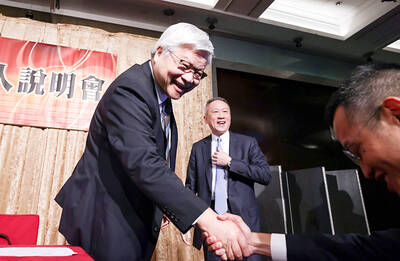
US CONSCULTANT: The US Department of Commerce’s Ursula Burns is a rarely seen US government consultant to be put forward to sit on the board, nominated as an independent director Taiwan Semiconductor Manufacturing Co (TSMC, 台積電), the world’s largest contract chipmaker, yesterday nominated 10 candidates for its new board of directors, including Ursula Burns from the US Department of Commerce. It is rare that TSMC has nominated a US government consultant to sit on its board. Burns was nominated as one of seven independent directors. She is vice chair of the department’s Advisory Council on Supply Chain Competitiveness. Burns is to stand for election at TSMC’s annual shareholders’ meeting on June 4 along with the rest of the candidates. TSMC chairman Mark Liu (劉德音) was not on the list after in December last


 RSS
RSS