


Asian stocks closed little changed on Friday, recovering from earlier losses which were prompted by the bombings on the London transport network that left at least 49 people dead.
Dealers said the bombings were not expected to impact on the global economy and while investors were mindful of the tragedy their attention had returned to market fundamentals by early afternoon.
Shares rallied in the Philippines on bargain hunting amid deep concerns for the leadership of President Gloria Arroyo who asked her cabinet to resign while Tokyo was lower following a steep fall in core private-sector machinery orders.

PHOTO: AP
Elsewhere, the markets were marking time with a watchful eye on oil prices which were again pushed beyond US$61 a barrel amid speculation it could rise beyond US$70 a barrel.
Taiwanese share prices closed 0.18 percent lower, giving up early gains on fresh concerns that foreign investors may continue to shun the market given increasing uncertainties about earnings prospects.
Dealers said the bomb attacks in London revived fears of a possible resurgence in global terrorism, but sentiment proved resilient on that front after the European and US markets recovered overnight after initial heavy losses on the news.
"The Taipei bourse was not really that affected by the London bombings, like most of our neighbors," said Alvin Teng (
As such, shares continued to consolidate in rangebound trading on earnings uncertainties both at home and on Wall Street, he said.
The market lacks momentum on expectations that foreign investors will not return to the trading floor en masse anytime soon, he said.
The TAIEX closed down 11.20 points at 6,201.40 on turnover of NT$72.43 billion (US$2.56 billion).
Taiwan Semiconductor Manufacturing Co (台積電) closed down NT$0.80 at NT$53.80, tracking the overnight declines in its New York-listed stock. Rival United Microelectronics Corp (聯電) was steady at NT$23.60.
Tokyo share prices gave up early gains to close 0.21 percent lower after much weaker-than-expected private sector May machinery orders undercut sentiment.
Dealers said the market had held up well on Wall Street's firmer overnight lead after the European and US bourses recovered some of the ground lost following the deadly bombings in London.
The view was that however tragic the attacks in London, they caused no major infrastructure damage and as long as they remained a one-off, investor confidence would remain reasonably solid.
On that basis, Tokyo shares had risen 0.54 percent in the morning session but then figures showing the private sector machinery orders fell 6.7 percent in May, compared with forecasts for a fall of 2.4 percent, spooked the market.
The NIKKEI-225 index fell 24.15 points to 11,565.99.
"Just after the blast news came in [Thursday,] Japanese institutional investors hedged massively in the stock futures, anticipating a fall," said Norihiro Fujito, a senior investment strategist at Mitsubishi Securities.
"But this morning, they found US stocks closed higher after initially falling" and so had to buy back their positions, he added.
In Seoul share prices closed 0.47 percent lower on a late sell-off by retail investors after the market hit a new high for the year on optimism about upcoming corporate results. The KOSPI index closed down 4.87 points at 1,021.95.
Hong Kong share prices closed 0.47 percent lower in cautious trade following the terrorist bombings in London but found some support in the resilient showing of European and US markets after the attacks. The Hang Seng Index closed down 66.34 points at 13,964.47.
Shanghai share prices closed 1.98 percent lower, resuming their slide in the absence of any fresh initiatives from the authorities to get the market out of a chronic slump. The Shanghai A-share Index fell 21.54 points to 1,069.13, while the Shenzhen A-share Index was down 6.89 points or 2.69 percent at 249.05. The benchmark Shanghai Composite Index, which covers both A- and B-shares, lost 20.61 points or 1.98 percent at 1,017.98.
In Sydney share prices closed little changed after recovering from an initial sell-down in the wake of the London bombings. The SP/ASX 200 closed down 4.8 points or 0.11 percent at 4,229.2.
Singapore share prices closed 0.16 percent higher on gains in select blue chip stocks as the market shrugged off the fall-out from the London bomb attacks, dealers said. The Straits Times Index rose 3.65 points to 2,215.99.
In Kuala Lumpur share prices closed down 0.37 percent on light profit-taking following weaker than expected May industrial output data. The composite index shed 3.35 points to 903.61.
In Bangkok share prices closed 0.78 percent higher, rebounding from sharp losses the previous day brought on by deep concern over the state of the Thai economy, dealers said.
The SET was licking its wounds after Thursday's plunge -- its worst performance this year and poorest since October, said Charoen Iampattanatham, an analyst at TSEC Securities.
The composite index rose 5.00 points to close at 643.31.
In Jakarta share prices closed slightly higher on a technical rebound after recent falls but volumes were thin amid fears of a continuing oil price rise and rising interest rates. The composite index closed up 2.154 points at 1,110.557.
In Manila share prices closed 1.57 percent higher, bouncing back from early losses after several ministers resigned and called on President Gloria Arroyo to step down. The composite index closed 28.96 points higher at 1,876.28.
In Wellington share prices closed down 0.15 percent. The NZSX-50 gross index fell 4.77 points to 3,257.52.
In Mumbai share prices rose 0.94 percent. The 30-share SENSEX rose 66.95 to close at 7,212.08.
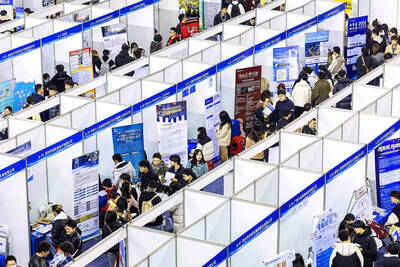
Stephen Garrett, a 27-year-old graduate student, always thought he would study in China, but first the country’s restrictive COVID-19 policies made it nearly impossible and now he has other concerns. The cost is one deterrent, but Garrett is more worried about restrictions on academic freedom and the personal risk of being stranded in China. He is not alone. Only about 700 American students are studying at Chinese universities, down from a peak of nearly 25,000 a decade ago, while there are nearly 300,000 Chinese students at US schools. Some young Americans are discouraged from investing their time in China by what they see

MAJOR DROP: CEO Tim Cook, who is visiting Hanoi, pledged the firm was committed to Vietnam after its smartphone shipments declined 9.6% annually in the first quarter Apple Inc yesterday said it would increase spending on suppliers in Vietnam, a key production hub, as CEO Tim Cook arrived in the country for a two-day visit. The iPhone maker announced the news in a statement on its Web site, but gave no details of how much it would spend or where the money would go. Cook is expected to meet programmers, content creators and students during his visit, online newspaper VnExpress reported. The visit comes as US President Joe Biden’s administration seeks to ramp up Vietnam’s role in the global tech supply chain to reduce the US’ dependence on China. Images on
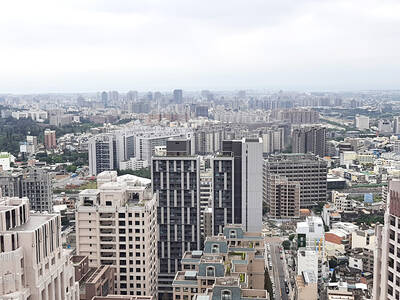
New apartments in Taiwan’s major cities are getting smaller, while old apartments are increasingly occupied by older people, many of whom live alone, government data showed. The phenomenon has to do with sharpening unaffordable property prices and an aging population, property brokers said. Apartments with one bedroom that are two years old or older have gained a noticeable presence in the nation’s six special municipalities as well as Hsinchu county and city in the past five years, Evertrust Rehouse Co (永慶房產集團) found, citing data from the government’s real-price transaction platform. In Taipei, apartments with one bedroom accounted for 19 percent of deals last
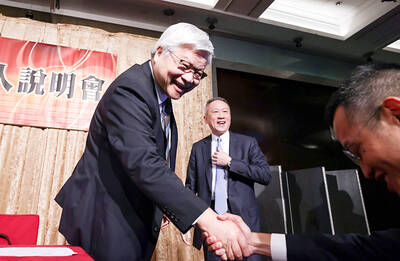
US CONSCULTANT: The US Department of Commerce’s Ursula Burns is a rarely seen US government consultant to be put forward to sit on the board, nominated as an independent director Taiwan Semiconductor Manufacturing Co (TSMC, 台積電), the world’s largest contract chipmaker, yesterday nominated 10 candidates for its new board of directors, including Ursula Burns from the US Department of Commerce. It is rare that TSMC has nominated a US government consultant to sit on its board. Burns was nominated as one of seven independent directors. She is vice chair of the department’s Advisory Council on Supply Chain Competitiveness. Burns is to stand for election at TSMC’s annual shareholders’ meeting on June 4 along with the rest of the candidates. TSMC chairman Mark Liu (劉德音) was not on the list after in December last


 RSS
RSS