


The only solution to the government's budget deficit is to reform the tax structure, Minister of Finance Lin Chuan (
The tax reform plan will cover the establishment of a minimum-tax scheme and a "green tax," as well as making adjustments to other forms of taxation such as income tax, business tax and inheritance tax. The two main issues concerning the proposed tax structure are equity and economic growth, Lin said.
The goal of taxation is to evenly redistribute wealth among the public, Lin said.
The government has been operating on a budget deficit since 1991, with the figure amounting to NT$337.3 billion (US$10.5 billion) this year, according to the Directorate General of Budget, Accounting and Statistics (DGBAS).
The exception was in 1998, when the government saw a surplus after the release of state-owned stocks into the market, which created revenue accounting for 23.8 percent of that year's GDP, while expenditures amounted to 23 percent, Lin said.
So far, the government's debt has reached a total of NT$3.99 trillion, DGBAS said.
Increasing tax rates to solve the deficit problem is no longer enough; the fundamental solution is to overhaul the current taxation structure, Lin said.
The budget deficit is the result of the government creating too many business incentive plans and tax premiums for certain industries, as well as loopholes in tax laws, according to Chen Tin-an (
A new tax structure is needed to support the country's future development, Chen said.
The minimum-tax scheme is a transitional plan aimed at promoting sustainable tax redistribution among the public, said Ho Chih-chin (何志欽), dean of the economics department at National Taiwan University.
The influence of changes in income-tax rates on the nation's tax revenue is small, while a value-added tax would have a more significant effect, Lin said.
In regard to the conception that inheritance tax is "stealing from the poor to aid the rich," Lin said that some of the policies are too loose, and they should be tightened.
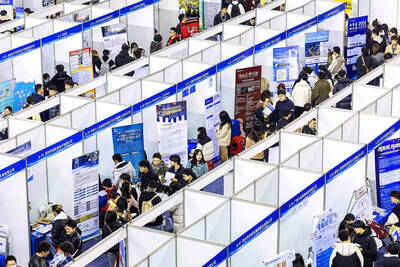
Stephen Garrett, a 27-year-old graduate student, always thought he would study in China, but first the country’s restrictive COVID-19 policies made it nearly impossible and now he has other concerns. The cost is one deterrent, but Garrett is more worried about restrictions on academic freedom and the personal risk of being stranded in China. He is not alone. Only about 700 American students are studying at Chinese universities, down from a peak of nearly 25,000 a decade ago, while there are nearly 300,000 Chinese students at US schools. Some young Americans are discouraged from investing their time in China by what they see
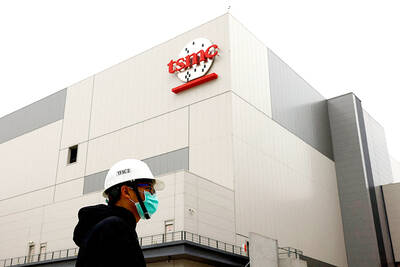
Taiwan Semiconductor Manufacturing Co (TSMC, 台積電), the world’s largest contract chipmaker, yesterday reported record sales for the first quarter, which analysts attributed to solid demand for emerging technologies. Consolidated revenue totaled NT$592.64 billion (US$18.51 billion) in the January-to-March period, up 16.5 percent from a year earlier, but down 5.26 percent from the previous quarter, TSMC said in a statement. The first-quarter revenue beat analysts’ average projection of NT$579.5 billion, Bloomberg News reported. That performance lends weight to expectations that the world’s most valuable chipmaker would return to solid growth this year after weathering a post-COVID-19-pandemic cratering of smartphone and computer sales. TSMC is budgeting
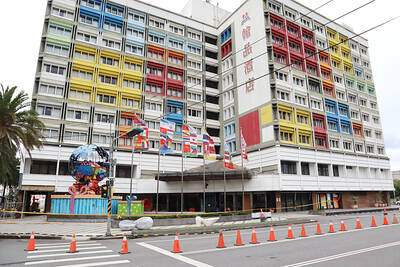
HUALIEN BRANCH: The company had been planning to rebuild the hotel before it was damaged in the quake and vowed to give affected employees the option to transfer The owner of Chateau de Chine Hualien (花蓮翰品酒店) is planning to lay off 86 workers after shutting down the hotel due to damage it sustained in a powerful earthquake on Wednesday last week, the Ministry of Labor said yesterday. The hotel has submitted a layoff report to the Hualien County Government and expects to let 69 workers go this month and 17 next month, the ministry said. LDC Hotels & Resorts Group (雲朗觀光集團), the owner of Chateau de Chine Hualien, confirmed the layoff plan in a statement yesterday. LDC said the hotel has been closed since Wednesday last week when the temblor occurred
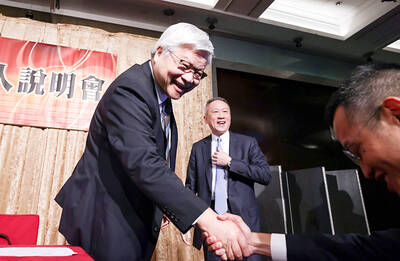
US CONSCULTANT: The US Department of Commerce’s Ursula Burns is a rarely seen US government consultant to be put forward to sit on the board, nominated as an independent director Taiwan Semiconductor Manufacturing Co (TSMC, 台積電), the world’s largest contract chipmaker, yesterday nominated 10 candidates for its new board of directors, including Ursula Burns from the US Department of Commerce. It is rare that TSMC has nominated a US government consultant to sit on its board. Burns was nominated as one of seven independent directors. She is vice chair of the department’s Advisory Council on Supply Chain Competitiveness. Burns is to stand for election at TSMC’s annual shareholders’ meeting on June 4 along with the rest of the candidates. TSMC chairman Mark Liu (劉德音) was not on the list after in December last


 RSS
RSS