


It's 29?C outside in Taipei, and Yeh Huey-ching (葉惠青), director-general of the Bureau of Energy under the Ministry of Economic Affairs is dressed casually as he walks into his office. It's a regular day at the office, but he wears a half-sleeve shirt with no tie.
The way Yeh -- as well as his colleagues -- are dressed is part of the government's move to reduce energy use. It is beginning by encouraging the bureaucratic rank-and-file to dress casually through the hot, sweltering summer.
"We were told not to wear ties during the workday unless we have important guests to meet," said Huang Tsung-chi (
This casual dress practice is part of the government's efforts to educate people to become less dependant on air conditioners, and so reduce energy consumption, a key issue Yeh and Minister of Economic Affairs Ho Mei-yueh (
The two-day conference is aimed at bringing together the government and the private sector to map out a national energy strategy in light of the implementation of the Kyoto global warming protocol, which came into effect in February, Ho said at a press conference on Saturday.
Six main themes will be discussed during the meeting this year, including ways to adjust the country's energy structure and promote the development of renewable energy, as well as measures to set standards for greenhouse gas emissions and establish quotas for local industries.
"Although Taiwan is not a signatory of the Kyoto Protocol, we feel it is necessary for us to keep in line with the international trend toward environmental protection as a citizen of the global community," Ho said.
In response to the protocol, Taiwan plans to cut carbon dioxide emissions by a total of 170 million tonnes by 2025, by enhancing consumption of liquefied-natural-gas (LNG), the use of renewable energy and by improving energy efficiency among various sectors, she said.
The Kyoto treaty is designed to reduce carbon dioxide emissions, in addition to emissions of five other gases such as methane, nitrous oxide and sulphur hexafluoride.
In Taiwan, carbon dioxide from the burning of fossil fuels accounts for 74 percent of annual greenhouse gas emissions. Worldwide, the nation ranks as the 22nd largest emitter of carbon dioxide, accounting for 1 percent of annual industrial emissions worldwide, according to the ministry's data.
"Taiwan's carbon dioxide emissions totaled 270 million tonnes last year and the number is still growing," Ho said. "The figure will grow to 530 million tonnes over the next two decades, if we did nothing at all."
The growth rate of carbon dioxide emissions is about 6 percent a year on average in Taiwan, compared to only 1 percent for countries in the Organization for Economic Cooperation and Development (OECD), Ho said.
The plan to cut carbon dioxide emissions may first be applied to the power-generation sector, which mainly uses coal, instead of fuel oil or LNG, according to Ho.
LNG produces about one-third to one-half less greenhouse gases per unit of electricity than a coal-fired power station, the ministry estimates.
Asked whether the proposed reduction in carbon dioxide emissions will take a toll on new investment in Taiwan, Ho said the government's strategy will focus on energy conservation and improving energy efficiency, in a bid to achieve long-term sustainable development.
Therefore, the government will ask that new investment projects use the most advanced and efficient production methods, and will also demand that existing manufacturers shoulder part of the responsibility by renewing their equipment to minimize greenhouse gas emissions, she said.
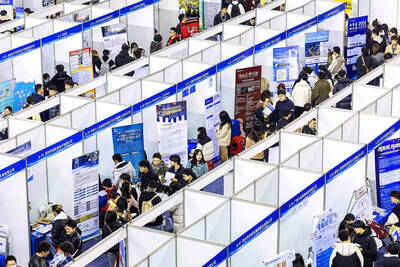
Stephen Garrett, a 27-year-old graduate student, always thought he would study in China, but first the country’s restrictive COVID-19 policies made it nearly impossible and now he has other concerns. The cost is one deterrent, but Garrett is more worried about restrictions on academic freedom and the personal risk of being stranded in China. He is not alone. Only about 700 American students are studying at Chinese universities, down from a peak of nearly 25,000 a decade ago, while there are nearly 300,000 Chinese students at US schools. Some young Americans are discouraged from investing their time in China by what they see

MAJOR DROP: CEO Tim Cook, who is visiting Hanoi, pledged the firm was committed to Vietnam after its smartphone shipments declined 9.6% annually in the first quarter Apple Inc yesterday said it would increase spending on suppliers in Vietnam, a key production hub, as CEO Tim Cook arrived in the country for a two-day visit. The iPhone maker announced the news in a statement on its Web site, but gave no details of how much it would spend or where the money would go. Cook is expected to meet programmers, content creators and students during his visit, online newspaper VnExpress reported. The visit comes as US President Joe Biden’s administration seeks to ramp up Vietnam’s role in the global tech supply chain to reduce the US’ dependence on China. Images on
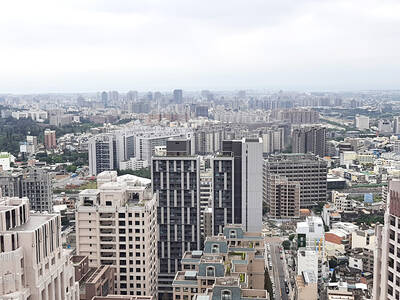
New apartments in Taiwan’s major cities are getting smaller, while old apartments are increasingly occupied by older people, many of whom live alone, government data showed. The phenomenon has to do with sharpening unaffordable property prices and an aging population, property brokers said. Apartments with one bedroom that are two years old or older have gained a noticeable presence in the nation’s six special municipalities as well as Hsinchu county and city in the past five years, Evertrust Rehouse Co (永慶房產集團) found, citing data from the government’s real-price transaction platform. In Taipei, apartments with one bedroom accounted for 19 percent of deals last
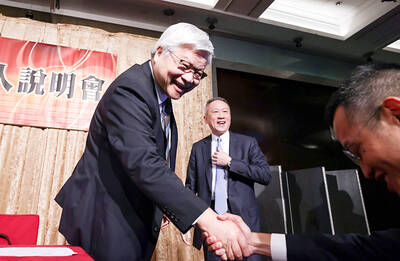
US CONSCULTANT: The US Department of Commerce’s Ursula Burns is a rarely seen US government consultant to be put forward to sit on the board, nominated as an independent director Taiwan Semiconductor Manufacturing Co (TSMC, 台積電), the world’s largest contract chipmaker, yesterday nominated 10 candidates for its new board of directors, including Ursula Burns from the US Department of Commerce. It is rare that TSMC has nominated a US government consultant to sit on its board. Burns was nominated as one of seven independent directors. She is vice chair of the department’s Advisory Council on Supply Chain Competitiveness. Burns is to stand for election at TSMC’s annual shareholders’ meeting on June 4 along with the rest of the candidates. TSMC chairman Mark Liu (劉德音) was not on the list after in December last


 RSS
RSS