


Human beings aren't the only ones with a head for heights as cats, dogs, even a few hamsters and ferrets, reach for the sky.
Virgin Atlantic's recently-launched Flying Paws scheme has already signed up a clutch of cats and dogs who get their own frequent-flyer book and a select few other airlines also cater for professionals whose commitments straddle far-flung continents and who can't bear to leave their pooch or moggie behind.
Flying rabbits, on the other hand, are a much rarer breed.

PHOTO: AFP
"Tickets, registration, vaccination and quarantine charges will cost around 400 euros [US$500], but I wouldn't dream of going without her," says Yoshie Karahashi, owner of Yahoo, a five-year-old dwarf rabbit.
The Guinness Book of Records has yet to award such an "accolade," but if it ever did, Yahoo would likely claim the prize for the most-traveled rabbit, embarking on Wednesday on a fifth jaunt from her Madrid home to Tokyo, 10,800km away.
By the time she returns in mid-September Yahoo, will have more than 100,000km on the clock.
Just getting a ticket for the little brown ball of fur with the floppy ears is an adventure in itself.
"Going from Spain via Paris is okay -- but Britain is especially strict, even if you have all the requisite documents," says Karahashi, a teacher of Spanish dance and part-time travel agent.
For starters, Yahoo needs her own passport from Spain's General Directorate of Agriculture and Food and a certificate of vaccination from the Official Madrid Veterinary College. On arrival at Madrid's Barajas international airport, customs merely glanced at the document provided by the Madrid government.
No mugshot is needed but the animal "passport" does include race -- dwarf rabbit, as well as color -- cinnamon, and sex -- female, along with certification that the requisite vaccines against myxomatosis and rabies have been administered.
Quarantine is a sore point.
In Yahoo's case, a full day must be spent in quarantine, "not including the day of admission or the day of release."
The process is repeated ahead of the return journey.
However, for dogs, the period can be as many as six days once in Japan
Quarantine apart, Yahoo's trip is not so different from that of her owner.
"She gets a bit jet-lagged, like me! For three days she is a bit stressed and the climate in Japan is different, so I will go straight to the vet and inject some vitamins," Karahashi says.
Check-in passes off without a hitch, though the upheaval of the taxi ride to the airport has set Yahoo trembling and she is clearly not a happy bunny at the prospect of an 18-hour trip via Paris.
"You have a rabbit. Okay, please place it on the weighing machine," says the Iberia ticketing clerk before handing over a receipt.
There's no inflight service for rabbits, so feeding time is a surreptitious affair.
"I will slip her some alfalfa or a bit of fruit," volunteers Karahashi, who says bemused -- and amused -- passengers warn her of approaching air hostesses while Yahoo enjoys a quick stretch out of her ventilated casket.
Ingesting food before flying has a major disadvantage, Karahashi says ruefully.
"The ticket price depends on her weight. So she has to go without water and food until they've registered her!" she says.
If Yahoo were human she'd already be in line for a free trip with air miles.
"I always try that. But so far, no go," sighs Karahashi.

Stephen Garrett, a 27-year-old graduate student, always thought he would study in China, but first the country’s restrictive COVID-19 policies made it nearly impossible and now he has other concerns. The cost is one deterrent, but Garrett is more worried about restrictions on academic freedom and the personal risk of being stranded in China. He is not alone. Only about 700 American students are studying at Chinese universities, down from a peak of nearly 25,000 a decade ago, while there are nearly 300,000 Chinese students at US schools. Some young Americans are discouraged from investing their time in China by what they see

Taiwan Transport and Storage Corp (TTS, 台灣通運倉儲) yesterday unveiled its first electric tractor unit — manufactured by Volvo Trucks — in a ceremony in Taipei, and said the unit would soon be used to transport cement produced by Taiwan Cement Corp (TCC, 台灣水泥). Both TTS and TCC belong to TCC International Holdings Ltd (台泥國際集團). With the electric tractor unit, the Taipei-based cement firm would become the first in Taiwan to use electric vehicles to transport construction materials. TTS chairman Koo Kung-yi (辜公怡), Volvo Trucks vice president of sales and marketing Johan Selven, TCC president Roman Cheng (程耀輝) and Taikoo Motors Group

MAJOR DROP: CEO Tim Cook, who is visiting Hanoi, pledged the firm was committed to Vietnam after its smartphone shipments declined 9.6% annually in the first quarter Apple Inc yesterday said it would increase spending on suppliers in Vietnam, a key production hub, as CEO Tim Cook arrived in the country for a two-day visit. The iPhone maker announced the news in a statement on its Web site, but gave no details of how much it would spend or where the money would go. Cook is expected to meet programmers, content creators and students during his visit, online newspaper VnExpress reported. The visit comes as US President Joe Biden’s administration seeks to ramp up Vietnam’s role in the global tech supply chain to reduce the US’ dependence on China. Images on
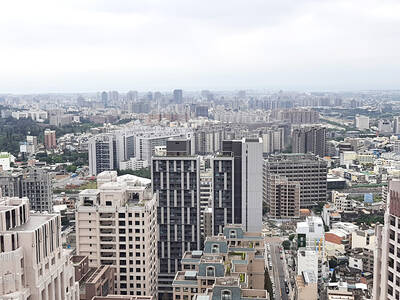
New apartments in Taiwan’s major cities are getting smaller, while old apartments are increasingly occupied by older people, many of whom live alone, government data showed. The phenomenon has to do with sharpening unaffordable property prices and an aging population, property brokers said. Apartments with one bedroom that are two years old or older have gained a noticeable presence in the nation’s six special municipalities as well as Hsinchu county and city in the past five years, Evertrust Rehouse Co (永慶房產集團) found, citing data from the government’s real-price transaction platform. In Taipei, apartments with one bedroom accounted for 19 percent of deals last


 RSS
RSS