


Tejano music bounced off the one-story buildings of this farming town and the smell of tamales filled the air as scores of revelers danced into the night outside the headquarters of the Coalition of Immokalee Workers.
The celebration marked a hard-fought, unlikely victory by a group of mostly Guatemalan and Mexican tomato pickers over one of the nation's fast-food giants, Taco Bell.
They led a four-year boycott against the chain until it agreed in March to pay US$0.01 more per 1 pound (0.45 kilograms) for Florida tomatoes and adopt a code of conduct that would allow Taco Bell to sever ties to suppliers who commit abuses against farmworkers.
With that triumph in hand, the Florida farmworkers group is turning to a larger target: the rest of the fast food industry. The coalition has sent letters to executives at McDonald's, Subway and Burger King asking them to follow Taco Bell's lead.
"When we started this, it was like man going to the moon -- nobody thought it was possible," said Lucas Benitez, a leader of the coalition. "With the help of people around the country, we have built a way to go to the moon ... Now we must continue moving forward."
Taco Bell, a subsidiary of Louisville-based YUM! Brands, estimates it will pay the Florida tomato growers an extra US$100,000, costs that won't be passed on to customers.
The fast-food chain, which buys 4.5 million kilograms of Florida tomatoes each year, has also agreed to help the farmworkers persuade the other fast food chains, and eventually supermarket retailers, to increase pay and monitor suppliers to make sure farmworkers aren't held against their will, beaten or forced into indentured servitude.
"This is an industrywide approach to get all the growers on board, and then also get all the quick-food restaurants and retail supermarkets to join with us in that effort," Taco Bell spokeswoman Laurie Schalow said.
Whether the other fast-food companies join Taco Bell is questionable, said Mark Sheridan, a restaurant analyst for Johnson Rice Inc in New Orleans.
"Anytime restaurant companies have permanent increases in the cost of doing business, they tend to pass that along to the consumer through some other efficiency or a raise in the prices," Sheridan said. "I think farmworkers are going to pay more when they eat at Taco Bell."
The extra cost of doing business with Florida growers could eventually force the fast food companies to look elsewhere to buy tomatoes, said Ray Gilmer, a spokesman for the Florida Fruit & Vegetable Association.
"Then the jobs in Florida are gone," Gilmer said.
McDonald's said it already has a code of conduct for suppliers that prohibits forced labor and child labor, and demands that workers receive fair compensation.
A Burger King spokeswoman said the company's chairman hasn't yet read the coalition's letter, but she noted the chain also has a code of conduct for suppliers.
Subway's spokeswoman said on Wednesday the company couldn't immediately comment since it had only received the letter the previous day.
"The victory over Taco Bell is huge," said Domingo Jacinto, a 40-year-old farmworker from Guatemala. "Taco Bell will be able to help us in persuading other companies."
Other workers aren't so sure.
"The reality is it's not going to change our situation, the conditions we live in," said Pedro Morales, a 34-year-old picker from Guatemala.
The Coalition of Immokalee Workers formed a dozen years ago to help increase the wages of the farmworkers, who earn as little as US$0.40 for every 14.5kg bucket of tomatoes picked, according to the group.
In the late 1990s, the coalition began investigating slavery cases in which farmworkers were beaten and held against their will by labor contractors.
A coalition member, Romeo Ramirez, went undercover to help authorities build a case, taking a job with labor contractors suspected of illegally detaining workers.
The coalition has helped investigate five slavery cases that have gone to trial and currently is in the middle of investigating three new cases in central and north Florida; coalition leaders won't provide details because the cases are ongoing.
The coalition turned its attention to Taco Bell in 2001 because of the large amounts of tomatoes bought by the chain and YUM! Brands. The coalition justified a boycott by arguing that the company leveraged its buying power to demand lower prices from tomato suppliers.

Stephen Garrett, a 27-year-old graduate student, always thought he would study in China, but first the country’s restrictive COVID-19 policies made it nearly impossible and now he has other concerns. The cost is one deterrent, but Garrett is more worried about restrictions on academic freedom and the personal risk of being stranded in China. He is not alone. Only about 700 American students are studying at Chinese universities, down from a peak of nearly 25,000 a decade ago, while there are nearly 300,000 Chinese students at US schools. Some young Americans are discouraged from investing their time in China by what they see

MAJOR DROP: CEO Tim Cook, who is visiting Hanoi, pledged the firm was committed to Vietnam after its smartphone shipments declined 9.6% annually in the first quarter Apple Inc yesterday said it would increase spending on suppliers in Vietnam, a key production hub, as CEO Tim Cook arrived in the country for a two-day visit. The iPhone maker announced the news in a statement on its Web site, but gave no details of how much it would spend or where the money would go. Cook is expected to meet programmers, content creators and students during his visit, online newspaper VnExpress reported. The visit comes as US President Joe Biden’s administration seeks to ramp up Vietnam’s role in the global tech supply chain to reduce the US’ dependence on China. Images on
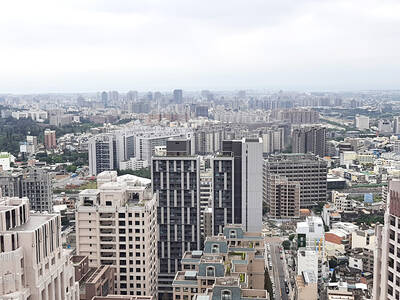
New apartments in Taiwan’s major cities are getting smaller, while old apartments are increasingly occupied by older people, many of whom live alone, government data showed. The phenomenon has to do with sharpening unaffordable property prices and an aging population, property brokers said. Apartments with one bedroom that are two years old or older have gained a noticeable presence in the nation’s six special municipalities as well as Hsinchu county and city in the past five years, Evertrust Rehouse Co (永慶房產集團) found, citing data from the government’s real-price transaction platform. In Taipei, apartments with one bedroom accounted for 19 percent of deals last
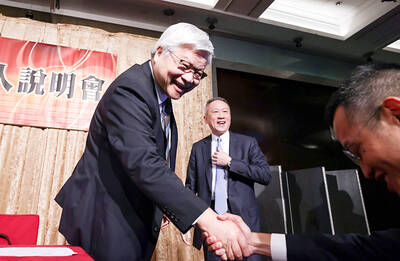
US CONSCULTANT: The US Department of Commerce’s Ursula Burns is a rarely seen US government consultant to be put forward to sit on the board, nominated as an independent director Taiwan Semiconductor Manufacturing Co (TSMC, 台積電), the world’s largest contract chipmaker, yesterday nominated 10 candidates for its new board of directors, including Ursula Burns from the US Department of Commerce. It is rare that TSMC has nominated a US government consultant to sit on its board. Burns was nominated as one of seven independent directors. She is vice chair of the department’s Advisory Council on Supply Chain Competitiveness. Burns is to stand for election at TSMC’s annual shareholders’ meeting on June 4 along with the rest of the candidates. TSMC chairman Mark Liu (劉德音) was not on the list after in December last


 RSS
RSS