


Banks in Australia and Singapore are the most advanced in the Asia-Pacific region in implementing the "Basel II" regulatory standards, a managing director of the Standard and Poor's rating agency said yesterday.
Banks in Hong Kong, Taiwan and Japan are making "good progress" in meeting Basel II standards, Ian Thompson of S&P's corporate and government ratings office told a seminar on the sidelines of an Asian Development Bank meeting here.
However, banks in China, Thailand and Malaysia appear to be taking a "gradual approach" in meeting the standards, set in June last year by a committee of central bankers of developed nations that met in the Swiss city of Basel.
But Thompson said "a common theme is that all the banking markets are making progress to that goal."
"The Asia-Pacific region has diverse banking systems at different stages of evolutionary development and vastly varying degrees of industry and economic risk. Reflecting this, the degree of preparedness for the implementation of Basel II among banking systems in the region varies widely, although all are making progress," Thompson said.
He stressed that implementing the Basel II standards was a "big job" which requires large resources and great effort.
Thompson said meeting the norms would help instil "a stronger credit culture in Asia" and would spur greater interest in risk management systems, technology and experts in the region.
The Basel II accord upgrades an earlier capital management system agreed upon by the central bankers in 1988. It seeks to set uniform standards in the way banks and banking regulators carry out risk management.
"With higher capital charges for higher risk, the main implication for borrowers in the Asia-Pacific region is that banks will gravitate to lower risk assets, unless they are adequately compensated for the higher risk," Thompson said.
Although banks will still support and lend to domestic organizations, Clifford Griep, executive managing director of S&P, told the same forum that the Basel II framework will discourage relationship lending, while encouraging a stricter ricing regime for risk and promote earlier recognition of problem loans.
Thompson pointed out that banks in Asia were still extremely diverse and many were "technically insolvent" but expressed hope the Basel II standards would help investors decide to recapitalize the banks if their problems were clear.
Thompson said that meeting the new norms would help avoid a repeat of the 1997 Asian financial crisis which, he said, was caused partly by undisciplined lending.
"As for the impact on credit ratings, lower rated banks with asset quality, capital, and risk management challenges could be rewarded with higher ratings over time, should the implementation of Basel II lead to recapitalization and enhanced risk management systems and culture," Thompson said.
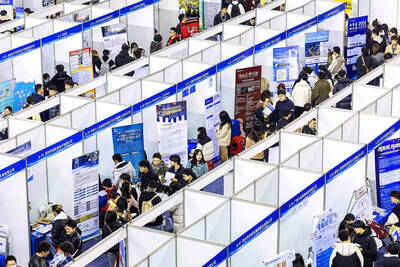
Stephen Garrett, a 27-year-old graduate student, always thought he would study in China, but first the country’s restrictive COVID-19 policies made it nearly impossible and now he has other concerns. The cost is one deterrent, but Garrett is more worried about restrictions on academic freedom and the personal risk of being stranded in China. He is not alone. Only about 700 American students are studying at Chinese universities, down from a peak of nearly 25,000 a decade ago, while there are nearly 300,000 Chinese students at US schools. Some young Americans are discouraged from investing their time in China by what they see
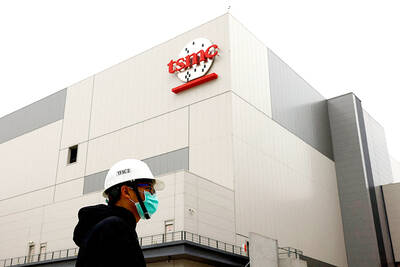
Taiwan Semiconductor Manufacturing Co (TSMC, 台積電), the world’s largest contract chipmaker, yesterday reported record sales for the first quarter, which analysts attributed to solid demand for emerging technologies. Consolidated revenue totaled NT$592.64 billion (US$18.51 billion) in the January-to-March period, up 16.5 percent from a year earlier, but down 5.26 percent from the previous quarter, TSMC said in a statement. The first-quarter revenue beat analysts’ average projection of NT$579.5 billion, Bloomberg News reported. That performance lends weight to expectations that the world’s most valuable chipmaker would return to solid growth this year after weathering a post-COVID-19-pandemic cratering of smartphone and computer sales. TSMC is budgeting

MAJOR DROP: CEO Tim Cook, who is visiting Hanoi, pledged the firm was committed to Vietnam after its smartphone shipments declined 9.6% annually in the first quarter Apple Inc yesterday said it would increase spending on suppliers in Vietnam, a key production hub, as CEO Tim Cook arrived in the country for a two-day visit. The iPhone maker announced the news in a statement on its Web site, but gave no details of how much it would spend or where the money would go. Cook is expected to meet programmers, content creators and students during his visit, online newspaper VnExpress reported. The visit comes as US President Joe Biden’s administration seeks to ramp up Vietnam’s role in the global tech supply chain to reduce the US’ dependence on China. Images on
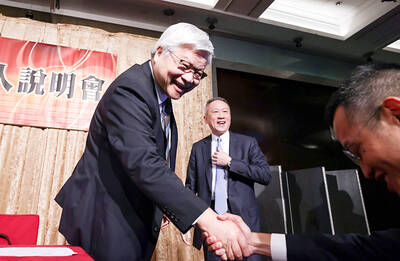
US CONSCULTANT: The US Department of Commerce’s Ursula Burns is a rarely seen US government consultant to be put forward to sit on the board, nominated as an independent director Taiwan Semiconductor Manufacturing Co (TSMC, 台積電), the world’s largest contract chipmaker, yesterday nominated 10 candidates for its new board of directors, including Ursula Burns from the US Department of Commerce. It is rare that TSMC has nominated a US government consultant to sit on its board. Burns was nominated as one of seven independent directors. She is vice chair of the department’s Advisory Council on Supply Chain Competitiveness. Burns is to stand for election at TSMC’s annual shareholders’ meeting on June 4 along with the rest of the candidates. TSMC chairman Mark Liu (劉德音) was not on the list after in December last


 RSS
RSS