


If any of Rodney Eddins' accounting clients want his undivided attention at work first thing in the morning, they should shun e-mail or his telephone answering machine. Instead, they should send him a fax.
"The first thing I look at when I arrive is the incoming tray of my fax machine," said Eddins, a certified public accountant in Orlando, Florida, who has had his own practice for a decade. "If there's paper there, I feel like I have to look at it."
Only after he sorts through the morning's faxes -- though most on a recent day were ads like one for a workplace deodorizing service -- does Eddins log on to his computer and listen to his phone messages.
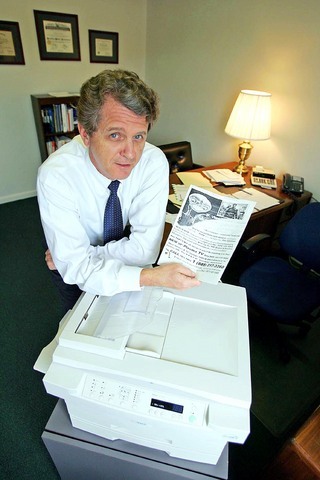
PHOTO: THE NEW YORK TIMES
Still, like many other people, Eddins readily acknowledges a tortured relationship with his fax machine. Finding it essential for transmitting sensitive accounting documents and forms that require signatures, like tax returns, he grudgingly tolerates the noise and mess, not to mention the deluge of junk faxes.
"I actually hate my fax machine," he said. "But I need it."
In an office world that has gone largely digital, hand-held and wireless, the fax machine is ancient technology that just won't go away. No one shows off her fax machine the way she might, say, a BlackBerry. Yet the fax persists as a mockery of the much-predicted paperless society.
"Back in the mid-1990s, when e-mail was really coming into its own, we had high-priced consultants telling us that the fax was going the way of the horse and buggy," said Jonathan Bees, then a product manager for office machines at Konica; he is now editor in chief of Better Buys for Business magazine. Among the products he reviews for consumers these days are fax machines. "They're better than ever -- quieter, faster and with clearer reproduction," he said. "They haven't been passed by, after all."
Some 1.5 million fax machines were sold in the US last year for use at both businesses and homes, according to the Consumer Electronics Association, based in Arlington, Virginia. Manufacturers estimate that they sold 500,000 more machines that combined a fax function with other functions, like copying and scanning.
Although sales of stand-alone fax machines are well below their peak of 3.6 million in 1997, some manufacturers say that if the multi-use machines are included, demand has been rising of late.
"We have been seeing an increase in fax sales for the last four or five years," said Paul Fountain, marketing product manager at Hewlett-Packard in San Diego.
In 1994, Hewlett-Packard left the fax market, believing the predictions of impending obsolescence. But, Fountain said, "We came back in 1998 because we realized the fax was not going away."
While fax machines are not as prevalent as computers in the workplace or home offices, Bill Young, a communications coach at the Strickland Group in New York City, said, "The fax has important functions that e-mail simply hasn't been able to take over."
Those would include reproducing signatures on documents like contracts, business proposals and medical prescriptions.
Another factor in the fax's favor is security.
"With a fax, you don't have to worry about computer hackers or someone stealing the password to the recipient's e-mail," Young said. "As long as there's a person at the receiving fax ready to remove the paper, the message is confidential." (Some computers have the capacity to convert the image of an incoming fax to e-mail, but that method loses the privacy advantage.)
Falling prices have helped to maintain the fax's popularity.
"The fax machine you would buy at Costco or Staples 10 years ago for the home office would typically cost about US$200," Fountain said. "Better machines are available today for US$45."
The US$200 machine a decade ago would have been a stand-alone fax. Now, Hewlett offers the Fax 1050 -- a combination fax, copier and answering machine -- for US$99.
But faxes priced at US$100 and less can have at least one drawback: they typically transmit and print at a rate of only about four pages a minute. More money buys more speed, among other things. One business model from Sharp is the FO DC525, which costs US$3,000 and transmits and prints 20 pages a minute.
Commercial machines are available for mass faxing of more than 100 pages a minute. But the prices of such machines can reach US$70,000, and they are usually more the size of mainframe computers than office machines, so you won't find them in the fax aisle at Staples.
All of this has come too late to benefit the fax's inventor, the Scottish physicist Alexander Bain. He patented the first primitive fax machine in 1843, some 30 years before the telephone. Called the "recording telegraph," Bain's invention used a stylus attached to a pendulum, which passed over metal type to sense light or dark spots on the plated "document" being sent. A pendulum on the receiving device made a stain on chemically treated paper when electric charges were sent on a telegraph line. But Bain's innovation came nearly 100 years before the Information Age, and there was little demand for it. He died poor.
Bain might have been mortified at one problem with today's fax machines: their vulnerability to their own version of junk mail. Junk faxers can tie up machines and delay important messages, and some critics label them thieves.
"They can steal a lot of paper from recipients who don't even want to get their ads," said Lawrence Markey, a lawyer at the Foundation for Taxpayer and Consumer Rights in Santa Monica, California.
He started suing junk faxers in 2001, in California small-claims courts. Such litigation is painstaking, he said.
"I have collected about US$5,000 so far from various companies," he said, "not nearly enough to compensate for my time."
One plus, though, he said, is that junk faxers don't seem to be dialing his number as often.
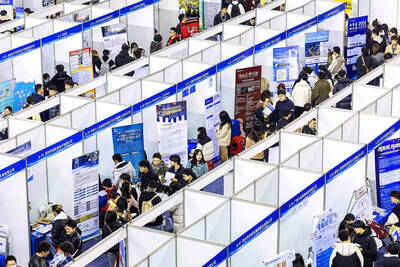
Stephen Garrett, a 27-year-old graduate student, always thought he would study in China, but first the country’s restrictive COVID-19 policies made it nearly impossible and now he has other concerns. The cost is one deterrent, but Garrett is more worried about restrictions on academic freedom and the personal risk of being stranded in China. He is not alone. Only about 700 American students are studying at Chinese universities, down from a peak of nearly 25,000 a decade ago, while there are nearly 300,000 Chinese students at US schools. Some young Americans are discouraged from investing their time in China by what they see
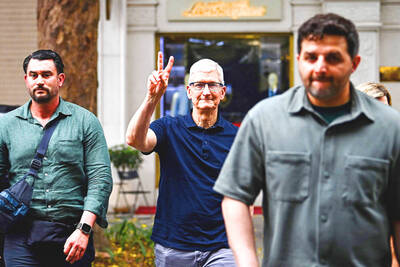
MAJOR DROP: CEO Tim Cook, who is visiting Hanoi, pledged the firm was committed to Vietnam after its smartphone shipments declined 9.6% annually in the first quarter Apple Inc yesterday said it would increase spending on suppliers in Vietnam, a key production hub, as CEO Tim Cook arrived in the country for a two-day visit. The iPhone maker announced the news in a statement on its Web site, but gave no details of how much it would spend or where the money would go. Cook is expected to meet programmers, content creators and students during his visit, online newspaper VnExpress reported. The visit comes as US President Joe Biden’s administration seeks to ramp up Vietnam’s role in the global tech supply chain to reduce the US’ dependence on China. Images on
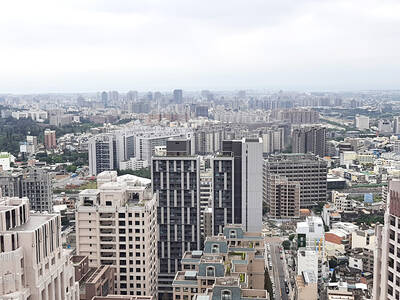
New apartments in Taiwan’s major cities are getting smaller, while old apartments are increasingly occupied by older people, many of whom live alone, government data showed. The phenomenon has to do with sharpening unaffordable property prices and an aging population, property brokers said. Apartments with one bedroom that are two years old or older have gained a noticeable presence in the nation’s six special municipalities as well as Hsinchu county and city in the past five years, Evertrust Rehouse Co (永慶房產集團) found, citing data from the government’s real-price transaction platform. In Taipei, apartments with one bedroom accounted for 19 percent of deals last
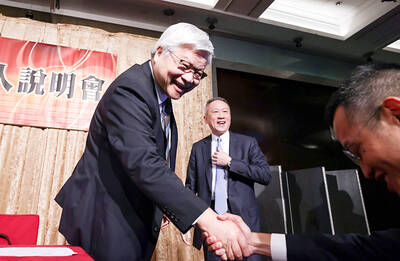
US CONSCULTANT: The US Department of Commerce’s Ursula Burns is a rarely seen US government consultant to be put forward to sit on the board, nominated as an independent director Taiwan Semiconductor Manufacturing Co (TSMC, 台積電), the world’s largest contract chipmaker, yesterday nominated 10 candidates for its new board of directors, including Ursula Burns from the US Department of Commerce. It is rare that TSMC has nominated a US government consultant to sit on its board. Burns was nominated as one of seven independent directors. She is vice chair of the department’s Advisory Council on Supply Chain Competitiveness. Burns is to stand for election at TSMC’s annual shareholders’ meeting on June 4 along with the rest of the candidates. TSMC chairman Mark Liu (劉德音) was not on the list after in December last


 RSS
RSS