


The Squamish Indian reservation in Vancouver has 800 people on a waiting list for housing. Some of the roads are unpaved, and the unemployment rate is almost triple the national average. Tribe leader Harold Calla says that's about to change.
The Squamish will be among the first native groups to raise money in the C$33 billion (US$27 billion) municipal bond market under legislation Canadian Governor General Adrienne Clarkson signed into law yesterday. By pooling property taxes to back the borrowing, the tribes expect an A1 credit rating from Moody's Investors Service, in line with the province of Quebec and New York State.
"It's taking us from the Middle Ages to the 21st century," said Calla, 56, the Squamish councilor who is chairman of the First Nations Financial Management Board's advisory panel in Vancouver. "Without this initiative, we have no place to go to get that money," he said in a March 8 interview in Ottawa.
The financings will be a global first for Indian tribes, going beyond US natives who sell debt backed by projects such as casinos, according to Tim Raybould, 38, senior policy adviser to the First Nations Finance Authority in Kelowna, British Columbia.
Standard & Poor's rates bonds sold by 10 US Indian tribes such as Florida's Seminoles, and nine are rated below investment grade, or junk. The Seminole bonds are rated BB, two levels below investment grade.
The municipal bonds will allow Canada's native groups to reduce their credit costs as they raise about C$120 million over the next five years. Until now, tribes have relied on bank loans, paying as much as 5 percentage points more than bond rates, when they can even get financing, Calla said.
The Squamish want to fund a C$42 million development plan for their 3,300 members, including a new business district, condominiums and access roads.
Canada's 1 million Aboriginals have infant mortality rates two to three times higher than the average for the rest of the country's 31 million people, according to the Canadian Center for Policy Alternatives, a research group in Ottawa. Youth suicide rates are five to eight times greater.
Across the country, half of Aboriginal housing needs to be repaired or replaced, and some tribes lack clean water and sewers, according to federal government estimates.
"Our issue is simple in theory: Our social problems stem from our poor economies," C.T. "Manny" Jules, a former chief of the Kamloops Indian Band who helped create the law, told members of parliament on Feb. 22.
The native group's financial and social troubles may make it harder for them to sell bonds at low rates because investors will be concerned about getting repaid, said Jonathan Kesselman, a public policy professor at Simon Fraser University in Vancouver, and author of a paper on Aboriginal taxation.
"Being a new instrument, being something related to First Nations in Canada, which have had at least their unfair share of stories about financial mismanagement, there may be some reservations that ordinary commercial lenders might have," Kesselman said in a March 22 interview.
About 16 percent of Canada's 614 tribes levy property taxes, allowing them to sell municipal bonds.
Six tribal leaders opposed the final bill, arguing it would allow the federal government to shirk responsibility for funding native groups. The government will spend C$8.8 billion on Aboriginal groups this fiscal year.
Canada "is cunningly divesting itself" of Constitutional and treaty obligations to assist natives, Eric Large of the Saddle Lake First Nation in Alberta said at a March 8 Senate hearing.
David Rubinoff, a Canadian provincial and municipal bond analyst at Moody's in Toronto said he couldn't say how the bonds would be rated until the groups request a rating.
Canadian natives may get a higher rating than US tribes because casino revenue isn't as reliable as property taxes, said Perry Israel, a lawyer at Orrick, Herrington & Sutcliffe LLP in Sacramento, California, who works on native financing.
"We are trying to get the rating agencies more comfortable with gaming revenue," Israel said on March 22. "If you are using real property taxes, my guess is they would be treated well by the rating agencies."
The new law includes measures aimed at ensuring bondholders get paid. Each of the tribes must put money into a reserve fund to cover any shortfall in property taxes. Canadian tribes collect C$44 million a year in such levies.
The law creates four agencies to manage investments, and help tribes set finance and tax policies. They will approve borrowing limits and can take over tax policies of a band that doesn't make its payments to bondholders.
"There will be fairly stringent qualifications for a band to be able to join," Valerie Blair, director of Canadian public finance ratings at Standard & Poor's in Toronto, said in an interview last month.
Moody's, Standard & Poor's and RBC Capital Markets advised the tribal leaders, who spent more than a decade preparing the law.
"Based on what we were discussing with them at the time, we felt they could get an investment grade credit rating," said Mike Butler, a director at RBC Capital Markets in Toronto, in an interview last month.
The new law requires almost all the money raised be used for projects such as roads, housing and sewers.
"We probably would take a look at such a security. We like infrastructure," Robert Featherby, vice president of fixed income at Jones Heward Investment Counsel Inc in Toronto, said earlier this month. Featherby helps manage the equivalent of US$1.2 billion.

Stephen Garrett, a 27-year-old graduate student, always thought he would study in China, but first the country’s restrictive COVID-19 policies made it nearly impossible and now he has other concerns. The cost is one deterrent, but Garrett is more worried about restrictions on academic freedom and the personal risk of being stranded in China. He is not alone. Only about 700 American students are studying at Chinese universities, down from a peak of nearly 25,000 a decade ago, while there are nearly 300,000 Chinese students at US schools. Some young Americans are discouraged from investing their time in China by what they see
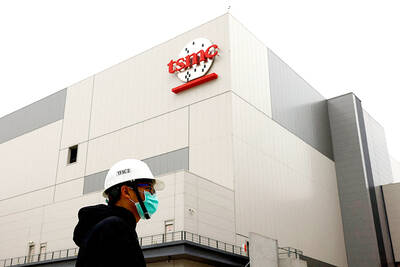
Taiwan Semiconductor Manufacturing Co (TSMC, 台積電), the world’s largest contract chipmaker, yesterday reported record sales for the first quarter, which analysts attributed to solid demand for emerging technologies. Consolidated revenue totaled NT$592.64 billion (US$18.51 billion) in the January-to-March period, up 16.5 percent from a year earlier, but down 5.26 percent from the previous quarter, TSMC said in a statement. The first-quarter revenue beat analysts’ average projection of NT$579.5 billion, Bloomberg News reported. That performance lends weight to expectations that the world’s most valuable chipmaker would return to solid growth this year after weathering a post-COVID-19-pandemic cratering of smartphone and computer sales. TSMC is budgeting

MAJOR DROP: CEO Tim Cook, who is visiting Hanoi, pledged the firm was committed to Vietnam after its smartphone shipments declined 9.6% annually in the first quarter Apple Inc yesterday said it would increase spending on suppliers in Vietnam, a key production hub, as CEO Tim Cook arrived in the country for a two-day visit. The iPhone maker announced the news in a statement on its Web site, but gave no details of how much it would spend or where the money would go. Cook is expected to meet programmers, content creators and students during his visit, online newspaper VnExpress reported. The visit comes as US President Joe Biden’s administration seeks to ramp up Vietnam’s role in the global tech supply chain to reduce the US’ dependence on China. Images on
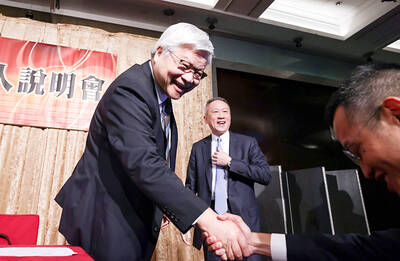
US CONSCULTANT: The US Department of Commerce’s Ursula Burns is a rarely seen US government consultant to be put forward to sit on the board, nominated as an independent director Taiwan Semiconductor Manufacturing Co (TSMC, 台積電), the world’s largest contract chipmaker, yesterday nominated 10 candidates for its new board of directors, including Ursula Burns from the US Department of Commerce. It is rare that TSMC has nominated a US government consultant to sit on its board. Burns was nominated as one of seven independent directors. She is vice chair of the department’s Advisory Council on Supply Chain Competitiveness. Burns is to stand for election at TSMC’s annual shareholders’ meeting on June 4 along with the rest of the candidates. TSMC chairman Mark Liu (劉德音) was not on the list after in December last


 RSS
RSS