


To Wu Tsann-kuen (
The retailer held four press conferences in the last three days to deny its alleged unlawful selling of shares of its US unit Eupa International Inc, and the raid merely served to hurt its reputation and worry its suppliers.
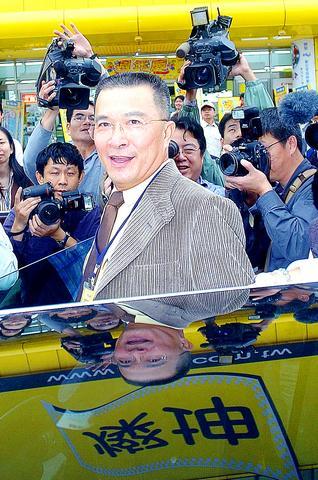
PHOTO: YEH CHIH-MING, TAIPEI TIMES
Wu, who was inspecting Tsann Kuen's distribution and logistics operations in China when the company was raided, rushed back home on Saturday, hoping to control the damage.
"[Our operations] are absolutely in accordance with the law," Wu, 53, told reporters outside the headquarters building in Neihu, Taipei.
He said the company obeyed the US' over-the-counter and NASDAQ regulations, which were made stricter after the eruption of the Enron scandal.
Again, he denied that Tsann Kuen and its affiliated companies have ever sold any Eupa shares in Taiwan and that Eupa's stocks acquired by local investors had anything to do with them.
Wu, who is scheduled to meet prosecutors today at the Taipei District Prosecutors' Office, hinted that the whole dispute could have resulted from share sales by Eupa's other shareholders. A few days ago, he was reportedly telling prosecutors that the shares in question were forgeries.
Tsann Kuen is now facing probes for illegally selling its US over-the-counter stocks, registered under the name of Eupa, to the public in Taiwan three years ago while claiming that Eupa would be upgraded to trade on the NASDAQ market. That sale, which allegedly was in violation of the Securities and Exchange Law (
Born in 1951 in Kaohsiung, the son of a peasant working for the state-run Taiwan Sugar Corp (台糖), Wu is a self-made businessman. He served as a procurement officer at a local steel mill between 1973 and 1974 and worked as an airline technician at Japan Asia Airways between 1974 and 1976 before founding Tsann Kuen in 1976. The company started out as a home-appliance manufacturer and branched into the retailing sector over 10 years ago.
Wu's tough characteristics, however, have earned him as much praise as criticism. To beat his rivals, he often filled the marketplace with the lowest prices, which forced others to follow suit.
His strong determination and firm refusal to admit defeat came from his family upbringing, as his mother told him in his childhood to fight back, instead of crying helplessly, if somebody bullied him. In addition, he was anxious to apply every new theory he learnt in class to his organization, following his earning an EMBA (executive master of business administration) degree at the National Taiwan University in 2001.
For instance, the company introduced a lay-off program among some of its 148 outlets in Taiwan, inspired by Microsoft Corp's policy of maintaining a manpower circulation of 5 percent in a bid to stimulate the performance of employees.
But such fickleness and policy flip-flops seemed to cause resentment among staffers as well as organizational instability, a Chinese-language business daily reported over the weekend.
On the other hand, Wu has foreseen the development of the vast Chinese market and hopes to reproduce his success in Taiwan across the Strait.
Positioning his company as a world-leading factory and retailing channel, in April last year he established three manufacturing bases in Shanghai, Xiamen and Zhangzhou. The company received orders for home appliances to the annual value of US$600 million and made huge inroads in the Chinese electronics retail market.
In August, he said the company planned to open three new stores in Shanghai and increase its Chinese outlets to 70 from 51, and increase its stores in Taiwan to 160 from 148 by the end of this year.
However, analysts such as Chen Yen-liang (陳彥良) at Yuanta Core Pacific Capital Management (元大京華) expressed concern about the company's loose management style in a risky expansion scheme.
"The management of logistic systems and the cultivation of talent are issues affecting the company's ambitious and rapid expansion in China," Chen told the Taipei Times earlier this year. "It took Wu seven to eight years to break even in Taiwan, but whether his aggressive expansion in China will meet with the same type of success is yet to be seen."
To nobody's surprise, Tsann Kuen suffered under the high costs of managing over 40 outlets scattered throughout China. This prompted it to slow down its expansion and consolidate its stores in the Shanghai, Fujian and Xiamen areas, said company spokesman Ted Chen (陳彥君).
The company posted consolidated revenue of NT$24.9 billion in the first half of this year and hopes to achieve annual sales of NT$60 billion this year, he said.
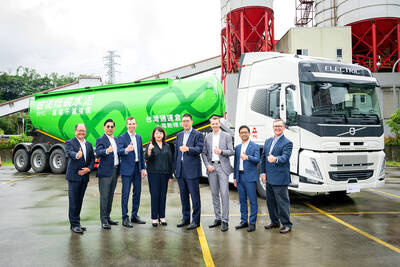
Taiwan Transport and Storage Corp (TTS, 台灣通運倉儲) yesterday unveiled its first electric tractor unit — manufactured by Volvo Trucks — in a ceremony in Taipei, and said the unit would soon be used to transport cement produced by Taiwan Cement Corp (TCC, 台灣水泥). Both TTS and TCC belong to TCC International Holdings Ltd (台泥國際集團). With the electric tractor unit, the Taipei-based cement firm would become the first in Taiwan to use electric vehicles to transport construction materials. TTS chairman Koo Kung-yi (辜公怡), Volvo Trucks vice president of sales and marketing Johan Selven, TCC president Roman Cheng (程耀輝) and Taikoo Motors Group
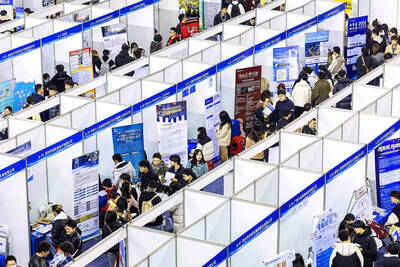
Stephen Garrett, a 27-year-old graduate student, always thought he would study in China, but first the country’s restrictive COVID-19 policies made it nearly impossible and now he has other concerns. The cost is one deterrent, but Garrett is more worried about restrictions on academic freedom and the personal risk of being stranded in China. He is not alone. Only about 700 American students are studying at Chinese universities, down from a peak of nearly 25,000 a decade ago, while there are nearly 300,000 Chinese students at US schools. Some young Americans are discouraged from investing their time in China by what they see

MAJOR DROP: CEO Tim Cook, who is visiting Hanoi, pledged the firm was committed to Vietnam after its smartphone shipments declined 9.6% annually in the first quarter Apple Inc yesterday said it would increase spending on suppliers in Vietnam, a key production hub, as CEO Tim Cook arrived in the country for a two-day visit. The iPhone maker announced the news in a statement on its Web site, but gave no details of how much it would spend or where the money would go. Cook is expected to meet programmers, content creators and students during his visit, online newspaper VnExpress reported. The visit comes as US President Joe Biden’s administration seeks to ramp up Vietnam’s role in the global tech supply chain to reduce the US’ dependence on China. Images on
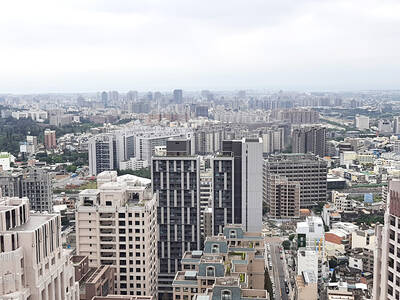
New apartments in Taiwan’s major cities are getting smaller, while old apartments are increasingly occupied by older people, many of whom live alone, government data showed. The phenomenon has to do with sharpening unaffordable property prices and an aging population, property brokers said. Apartments with one bedroom that are two years old or older have gained a noticeable presence in the nation’s six special municipalities as well as Hsinchu county and city in the past five years, Evertrust Rehouse Co (永慶房產集團) found, citing data from the government’s real-price transaction platform. In Taipei, apartments with one bedroom accounted for 19 percent of deals last


 RSS
RSS