


Brushing aside Chinese warnings of a possible challenge to the WTO, a senior American trade official said Friday that the US would limit apparel imports if American manufacturers provided evidence that such restrictions were needed.
Grant Aldonas, the undersecretary of commerce for international trade, said he expected US manufacturers to start filing requests for import restrictions with his agency as soon as next week.
"If they can justify it and have the evidence, we're going to enforce the trade laws" by imposing restrictions, Aldonas said at a news conference after talks in Xiamen, China, with Chinese officials.
The filings, an attempt by US apparel manufacturers to inject the issue of Chinese imports into the presidential campaign, are likely to kick off a squabble between Beijing and Washington over whether the US is living up to its commitments.
The US and other industrialized nations agreed in late 1993 to remove quotas on textile and apparel imports from developing countries at the end of this year, as part of the same deal that created the WTO. But the US also negotiated in 1993, and in subsequent bilateral talks with China and other trading partners, to preserve its own trade laws. The laws include provisions for the imposition of "safeguard" limits on surges in imports that hurt a US industry, if the domestic industry requests such limits.
A policy of pledging to remove quotas but then reimposing limits if imports surge could be challenged before the WTO.
The Chinese apparel industry has been especially upset by the prospect that safeguard limits might be imposed based on the threat of a surge in imports, rather than an actual surge. Aldonas responded on Friday by saying that the US would only enforce trade laws that it had previously negotiated to preserve, and that the laws allow restrictions in anticipation of surges.
He said that in some textile and apparel categories, where limits have already been removed, "what we've seen is surges of 24,000 percent."
By invoking safeguards for specific categories in which domestic producers are threatened, the US will allow a free-for-all in its market among producers of myriad other garments that US producers barely make anymore. Many apparel industry executives have said that with the lifting of quotas, efficient Chinese producers may come to dominate many of these categories at the expense of other countries -- like Vietnam, Cambodia or Bangladesh -- that used to have a guaranteed share of the US market through their quota rights.
Jim Leonard, the deputy assistant US secretary of commerce for textiles and apparel, said that once a group of manufacturers seeks safeguards, the process for approving them typically takes 105 days. If safeguards are imposed, then imports are still allowed to rise by 7.5 percent, and may be allowed to rise somewhat more based on negotiations with the exporting country.
If safeguards are to be imposed, Aldonas said, having them in place by the end of the year would help to prevent "a rush to the border" by exporters.
He also denied this week that the US was trying to persuade China to impose "voluntary" restrictions on exports.
WTO rules effectively ban such arrangements.
Aldonas was to some extent drawing a technical distinction. US officials have acknowledged pointing out to Chinese officials that a surge in apparel exports to the US could upset American manufacturers, who might then file trade cases with the Commerce Department.

Stephen Garrett, a 27-year-old graduate student, always thought he would study in China, but first the country’s restrictive COVID-19 policies made it nearly impossible and now he has other concerns. The cost is one deterrent, but Garrett is more worried about restrictions on academic freedom and the personal risk of being stranded in China. He is not alone. Only about 700 American students are studying at Chinese universities, down from a peak of nearly 25,000 a decade ago, while there are nearly 300,000 Chinese students at US schools. Some young Americans are discouraged from investing their time in China by what they see

MAJOR DROP: CEO Tim Cook, who is visiting Hanoi, pledged the firm was committed to Vietnam after its smartphone shipments declined 9.6% annually in the first quarter Apple Inc yesterday said it would increase spending on suppliers in Vietnam, a key production hub, as CEO Tim Cook arrived in the country for a two-day visit. The iPhone maker announced the news in a statement on its Web site, but gave no details of how much it would spend or where the money would go. Cook is expected to meet programmers, content creators and students during his visit, online newspaper VnExpress reported. The visit comes as US President Joe Biden’s administration seeks to ramp up Vietnam’s role in the global tech supply chain to reduce the US’ dependence on China. Images on
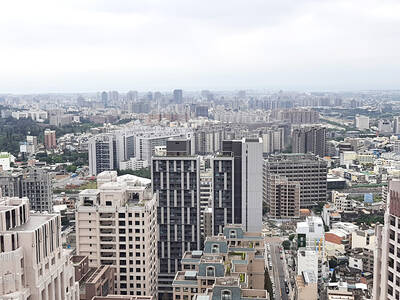
New apartments in Taiwan’s major cities are getting smaller, while old apartments are increasingly occupied by older people, many of whom live alone, government data showed. The phenomenon has to do with sharpening unaffordable property prices and an aging population, property brokers said. Apartments with one bedroom that are two years old or older have gained a noticeable presence in the nation’s six special municipalities as well as Hsinchu county and city in the past five years, Evertrust Rehouse Co (永慶房產集團) found, citing data from the government’s real-price transaction platform. In Taipei, apartments with one bedroom accounted for 19 percent of deals last
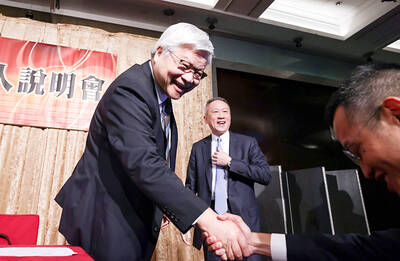
US CONSCULTANT: The US Department of Commerce’s Ursula Burns is a rarely seen US government consultant to be put forward to sit on the board, nominated as an independent director Taiwan Semiconductor Manufacturing Co (TSMC, 台積電), the world’s largest contract chipmaker, yesterday nominated 10 candidates for its new board of directors, including Ursula Burns from the US Department of Commerce. It is rare that TSMC has nominated a US government consultant to sit on its board. Burns was nominated as one of seven independent directors. She is vice chair of the department’s Advisory Council on Supply Chain Competitiveness. Burns is to stand for election at TSMC’s annual shareholders’ meeting on June 4 along with the rest of the candidates. TSMC chairman Mark Liu (劉德音) was not on the list after in December last


 RSS
RSS