


US stocks this month dropped to their lows for the year as crude-oil prices surged to records. William Hummer is betting that both these trends are about to reverse themselves.
Concern will dissipate in the next two months about possible disruptions in oil supplies from war, terrorism and political disputes, said Hummer, chief economist at Wayne Hummer Investments LLC. The resulting decline in crude will lift share prices by 15 percent by the end of the year, he said.

PHOTO: REUTERS
"The market is being held hostage by oil prices," said Hummer, who helps manage US$1.5 billion for the Chicago-based firm. His outlook on oil: "The bubble will break."
Last week's stock-market performance suggests other investors share his view. The Standard & Poor's 500 Index rose 3.2 percent, its biggest gain in 10 months, to 1098.35 even as oil prices reached records every day. Delta Air Lines Inc and retailers such as Home Depot Inc. and Best Buy Co led the gain.
The Dow Jones Industrial Average recorded its best weekly performance since May 2003 by rising 2.9 percent to 10,110.14. The Nasdaq Composite added 4.6 percent to 1838.02.
Stocks rallied even as concern that clashes in Iraq may disrupt the country's oil exports boosted crude prices. Oil for September delivery climbed to a record closing high of US$48.70 a barrel in New York on Thursday. The contract peaked at US$49 on Friday before dropping 1.7 percent.
Crude has risen 47 percent this year, prompting forecasts that higher energy costs would curtail spending on other goods and services, slowing the economy and crimping profit growth.
Ethan Harris and Joseph Abate, economists at Lehman Brothers Inc, last week lowered their forecasts for economic growth for the second time in a week. They cited the surge in oil prices.
The S&P 500 reached this year's low on Aug. 12 at 1063.23, down 4.4 percent for the year. Analysts lowered profit estimates for next year, according to Thomson Financial. They now predict 9.9 percent growth on average for S&P 500 companies, down from 10.6 percent on July 1.
Ups and Downs
Stocks have generally fallen this quarter on days that oil prices have risen, and rebounded when crude has slipped.
The S&P 500 has an inverse correlation of 0.7 with crude-oil futures in New York, Bloomberg data shows. The nearer the number is to one, the closer the relationship between the two. The figure rises to 0.74 when tracked from March 11, the day that bombs set in Spain killed more than 190 people and rekindled worldwide terrorism fears.
The correlation last year was 0.33, signaling that crude's moves had much less to do with stocks' performance. Oil gained 4.2 percent for the year as the S&P 500 jumped 26 percent.
Terrorism fears brought about by conflict in Iraq and events such as the US political conventions and the Athens Olympics have added US$10 to US$15 a barrel to the price of oil, said James Paulsen, the chief investment strategist at Wells Capital Management.
"I would argue that market action this year is tied to terror fears, rather than fundamentals," said Paulsen, who oversees US$125 billion in Minneapolis. "The reason there is a high correlation between oil and the stock market is because oil spikes when terrorism fears spike."
Stocks are 15 percent undervalued, Paulsen said.
Hummer said he expects oil prices to decline at the start of September, when the Republican convention ends and summer-vacation demand for gasoline in the US weakens. Crude futures may drop as low as US$40 a barrel, he said.
The commodity may also fall as global economic expansion slows, reducing demand, said Hummer. Lehman's Harris and Abate reduced their estimate for US growth next year to 3.3 percent from 3.7 percent. In Japan, the economy expanded in the second quarter at a 1.7 percent annual rate, down from a 6.6 percent pace in the first quarter.
On Thursday, the government will publish weekly figures on initial jobless claims. The University of Michigan's index of consumer sentiment is due Friday.
Six companies in the S&P 500 will release quarterly results during the next five days, including H.J. Heinz Co, the world's biggest ketchup maker, and H&R Block Inc, the largest US tax preparer.
Not everyone believes stocks' slide this year are largely because of the rising cost of oil.
"We concede that energy prices are a factor, but we strongly dispute the view that it is the main or dominant issue," wrote Tobias Levkovich, an equity strategist for Citigroup Global Markets Inc in New York.
The most important issue is earnings, he wrote, and stocks may drop further this year because "investors set excessively high hurdles for companies to beat." He predicted the S&P 500 will fall another 6 percent by year-end.

Stephen Garrett, a 27-year-old graduate student, always thought he would study in China, but first the country’s restrictive COVID-19 policies made it nearly impossible and now he has other concerns. The cost is one deterrent, but Garrett is more worried about restrictions on academic freedom and the personal risk of being stranded in China. He is not alone. Only about 700 American students are studying at Chinese universities, down from a peak of nearly 25,000 a decade ago, while there are nearly 300,000 Chinese students at US schools. Some young Americans are discouraged from investing their time in China by what they see

MAJOR DROP: CEO Tim Cook, who is visiting Hanoi, pledged the firm was committed to Vietnam after its smartphone shipments declined 9.6% annually in the first quarter Apple Inc yesterday said it would increase spending on suppliers in Vietnam, a key production hub, as CEO Tim Cook arrived in the country for a two-day visit. The iPhone maker announced the news in a statement on its Web site, but gave no details of how much it would spend or where the money would go. Cook is expected to meet programmers, content creators and students during his visit, online newspaper VnExpress reported. The visit comes as US President Joe Biden’s administration seeks to ramp up Vietnam’s role in the global tech supply chain to reduce the US’ dependence on China. Images on
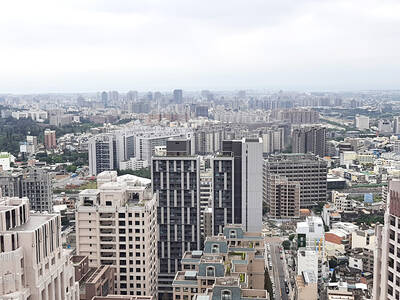
New apartments in Taiwan’s major cities are getting smaller, while old apartments are increasingly occupied by older people, many of whom live alone, government data showed. The phenomenon has to do with sharpening unaffordable property prices and an aging population, property brokers said. Apartments with one bedroom that are two years old or older have gained a noticeable presence in the nation’s six special municipalities as well as Hsinchu county and city in the past five years, Evertrust Rehouse Co (永慶房產集團) found, citing data from the government’s real-price transaction platform. In Taipei, apartments with one bedroom accounted for 19 percent of deals last

US CONSCULTANT: The US Department of Commerce’s Ursula Burns is a rarely seen US government consultant to be put forward to sit on the board, nominated as an independent director Taiwan Semiconductor Manufacturing Co (TSMC, 台積電), the world’s largest contract chipmaker, yesterday nominated 10 candidates for its new board of directors, including Ursula Burns from the US Department of Commerce. It is rare that TSMC has nominated a US government consultant to sit on its board. Burns was nominated as one of seven independent directors. She is vice chair of the department’s Advisory Council on Supply Chain Competitiveness. Burns is to stand for election at TSMC’s annual shareholders’ meeting on June 4 along with the rest of the candidates. TSMC chairman Mark Liu (劉德音) was not on the list after in December last


 RSS
RSS