


News that Microsoft Corp discussed a merger with business software giant SAP AG of Germany has focused new attention on Microsoft's limited success in a market it would love to conquer.
Microsoft is rejiggering plans to cater to the more specialized needs of small businesses, part of a wider effort to find new revenue streams to augment its traditional cash cows. The hope is to score with accounting and other software that Microsoft is not traditionally known for. The target customer: companies with fewer than 1,000 employees.
The most recent changes -- including putting the Microsoft Business Solutions unit under the direct control of chief executive Steve Ballmer -- come as the company concedes it has not been able to beat the competition as it hoped.
Microsoft made its first big push in the market several years ago, with the US$1.1 billion acquisition of Great Plains Software Inc, a longtime player in a fragmented sector lacking a dominant leader. Microsoft believes the market includes as many as 40 million companies worldwide.
Now the segment is more important because Microsoft's big moneymakers -- the Windows operating system and Office software -- have grown so dominant that their respective markets are getting saturated. Microsoft's stock price has remained relatively flat in recent years.
Chris Alliegro, lead analyst with independent research firm Directions on Microsoft, believes Microsoft sees small and mid-sized business software as the "potential next big revenue wave."
But despite Microsoft's potential power -- including around US$60 billion in cash to fund acquisitions or product research -- selling to small and mid-sized companies hasn't come easily.
Microsoft's chief financial officer, John Connors, told analysts the Business Solutions division, MBS, had the weakest results of Microsoft's seven units in the most recent quarter. It met expectations but continued to lose money -- US$65 million on revenue of US$153 million.
The unit was created out of acqusitions of Great Plains and Denmark's Navision, combined with some of Microsoft's own small-business software. That's left it with a wide array of products catering to specialized needs, such as accounting and customer relationship management, for niche businesses like mom-and-pop manufacturers or small firms needing broad support.
As the company has tried to fold in its acquisitions and train its sales force, some analysts say the unit has lacked strong direction.
"At the end of the day, I think they need a better strategy," said Rob Enderle, principal analyst with the Enderle Group.
One such strategy could be to try to grab more overall business from other big companies that sell business-related software, facing off with the likes of Oracle Corp and Germany's SAP.
In defending its hostile takeover bid for rival PeopleSoft Inc in a federal antitrust case in San Francisco, Oracle is arguing that it faces an impending threat from Microsoft.
Mindful that Oracle's lawyers would be mentioning its merger talks with SAP, Microsoft disclosed Monday that it had made an overture to SAP. The talks didn't get far, the company said, as Microsoft decided such a marriage would be too difficult.
Orlando Ayala, a Microsoft sales star recently named chief operating officer of MBS, insists that businesses with 1,000 employees or less are a "sweet spot" rife with untapped potential.
Still, he says he's concerned that companies like Oracle will try to muscle into that turf, joining current competitors such as Intuit Inc and Salesforce.com. Also lurking is IBM Corp, which makes most of its money selling hardware, software and technology services to big organizations but has made a goal of getting more action from small businesses.
Ayala says MBS's growth has been stymied by the distractions of reorganizing the division. He says recent moves, which included some layoffs, are "not a retrenchment" but rather a sign that "we are putting the pedal to the metal."

Stephen Garrett, a 27-year-old graduate student, always thought he would study in China, but first the country’s restrictive COVID-19 policies made it nearly impossible and now he has other concerns. The cost is one deterrent, but Garrett is more worried about restrictions on academic freedom and the personal risk of being stranded in China. He is not alone. Only about 700 American students are studying at Chinese universities, down from a peak of nearly 25,000 a decade ago, while there are nearly 300,000 Chinese students at US schools. Some young Americans are discouraged from investing their time in China by what they see

MAJOR DROP: CEO Tim Cook, who is visiting Hanoi, pledged the firm was committed to Vietnam after its smartphone shipments declined 9.6% annually in the first quarter Apple Inc yesterday said it would increase spending on suppliers in Vietnam, a key production hub, as CEO Tim Cook arrived in the country for a two-day visit. The iPhone maker announced the news in a statement on its Web site, but gave no details of how much it would spend or where the money would go. Cook is expected to meet programmers, content creators and students during his visit, online newspaper VnExpress reported. The visit comes as US President Joe Biden’s administration seeks to ramp up Vietnam’s role in the global tech supply chain to reduce the US’ dependence on China. Images on

New apartments in Taiwan’s major cities are getting smaller, while old apartments are increasingly occupied by older people, many of whom live alone, government data showed. The phenomenon has to do with sharpening unaffordable property prices and an aging population, property brokers said. Apartments with one bedroom that are two years old or older have gained a noticeable presence in the nation’s six special municipalities as well as Hsinchu county and city in the past five years, Evertrust Rehouse Co (永慶房產集團) found, citing data from the government’s real-price transaction platform. In Taipei, apartments with one bedroom accounted for 19 percent of deals last
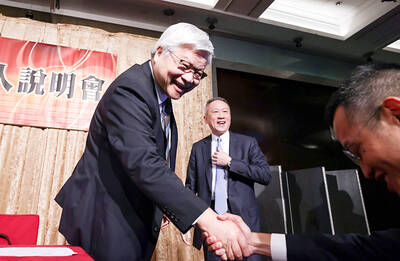
US CONSCULTANT: The US Department of Commerce’s Ursula Burns is a rarely seen US government consultant to be put forward to sit on the board, nominated as an independent director Taiwan Semiconductor Manufacturing Co (TSMC, 台積電), the world’s largest contract chipmaker, yesterday nominated 10 candidates for its new board of directors, including Ursula Burns from the US Department of Commerce. It is rare that TSMC has nominated a US government consultant to sit on its board. Burns was nominated as one of seven independent directors. She is vice chair of the department’s Advisory Council on Supply Chain Competitiveness. Burns is to stand for election at TSMC’s annual shareholders’ meeting on June 4 along with the rest of the candidates. TSMC chairman Mark Liu (劉德音) was not on the list after in December last


 RSS
RSS