


Asian stocks slid for the first week in three, led by Kyocera Corp and Samsung Electronics Co, amid concern rising global oil prices and possible interest rate increases in China will slow economic growth.
"Higher oil prices certainly won't be welcomed by the market, certainly not at a time when you have fears of a rate hike in China," said Makoto Sakuma, who helps manage the equivalent of US$3.6 billion at Asahi Life Asset Management Co in Tokyo.

PHOTO: AP
The Morgan Stanley Capital International Asia-Pacific Index, which tracks the performance of more than 900 stocks in the region, slid 2.6 percent to 86.74 in the week just ended. It was the first weekly drop since the five days ended May 14.
For the week, Japan's Nikkei 225 Stock Average fell 1.6 percent, while the broader Topix index slid 1.5 percent. Benchmarks in Japan, South Korea, Hong Kong, Thailand and Indonesia had their first weekly declines in three.
The MSCI Asia-Pacific index has lost 6 percent in the past month on concern rising crude oil prices will hamper economic growth in countries such as Japan and South Korea that import most of their oil. There also are concerns China may raise interest rates to curb inflation.
Kyocera, the world's largest maker of ceramic packaging used to protect finished microchips, fell 3.4 percent and Samsung, the world's No. 2 semiconductor maker, slid 7.5 percent. Both stocks had their first weekly drop in two weeks.
South Korea's biggest airline, Korean Air Co, dropped 7.1 percent for the week. The company has said that for every dollar increase in fuel prices, its annual costs rise about 30 billion won (US$26 million). Singapore Airlines Ltd, the national carrier, dropped 2.9 percent in the same period. Cathay Pacific Airways Ltd, Hong Kong's largest carrier, declined 3.1 percent.
Crude futures traded on the New York Mercantile Exchange rose to a record US$42.45 a barrel on Wednesday, the highest price since trading began in 1983, after the killing of 22 people in a key Saudi Arabian oil-producing region last weekend raised concern that further attacks might disrupt shipments.
Woodside Petroleum Ltd paced weekly gains among regional producers and explorers. Woodside, Australia's second-largest oil and gas company, ended the week 3.8 percent higher. Japan Petroleum Exploration Co, the nation's biggest producer by market value, surged 15 percent, its biggest weekly advance since it started publicly trading in December.
OPEC on Thursday said it would boost its production target by 2 million barrels a day, and may add 500,000 barrels a day in August in an effort to prevent high prices from curbing global economic growth.
Stocks also fell after a report in Hong Kong's South China Morning Post fueled concern that Chinese interest rates will increase soon. Credit Suisse First Boston and Goldman Sachs Group Inc said China may raise interest rates as soon as next month.
One "risk going forward is clearly the Chinese are in the process of trying to slow the economy," said Richard Saler, who helps manage $1.2 billion of international equities at ING Investments in New York. "Even a soft landing might have a material impact."
China has no immediate plans to raise interest rates as it has other policy tools at its disposal to curb inflation, the central bank said on Thursday.
Japanese banks declined after the Nihon Keizai Shimbun said the Financial Services Agency may require UFJ Holdings Inc. to meet stricter oversight requirements as it probes possible breaches of disclosure rules.
"UFJ has to provide investors with assurances that it's going to seriously turn around its business," said Shigeharu Shiraishi, who oversees the equivalent of US$15 billion at SG Yamaichi Asset Management Co in Tokyo. "Concern that UFJ doesn't have a clear view of how to tackle its problems is worsening market sentiment."
For the week, UFJ, the only one of Japan's four largest banks to report a loss last fiscal year, lost 6.9 percent. Mizuho Financial Group Inc, the nation's largest bank, fell 5.7 percent, its first weekly drop in three weeks.
The Jakarta Composite Index fell 4.9 percent for the week on concern a weaker rupiah will push up inflation, prompting an increase in interest rates that may slow growth.
PT Indocement Tunggal Prakarsa, Indonesia's second-biggest cement maker by volume, slumped 9.4 percent. Indocement had foreign currency debt equivalent to 4.62 trillion rupiah as of March 31 this year. PT Telekomunikasi Indonesia, the biggest company on the exchange, tumbled 7.4 percent on concerns a weaker rupiah will make it more expensive to pay its debt or fund expansion.
Banking stocks also fell on concern central bank measures to prop up the local currency will soak up funds they could have been used for lending. PT Bank Mandiri, the country's largest lender, plunged 12 percent in the five days ended yesterday.
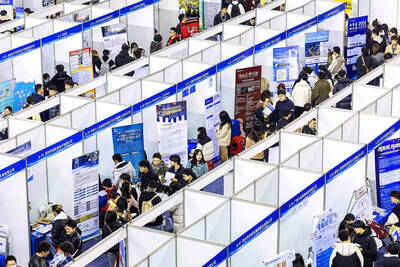
Stephen Garrett, a 27-year-old graduate student, always thought he would study in China, but first the country’s restrictive COVID-19 policies made it nearly impossible and now he has other concerns. The cost is one deterrent, but Garrett is more worried about restrictions on academic freedom and the personal risk of being stranded in China. He is not alone. Only about 700 American students are studying at Chinese universities, down from a peak of nearly 25,000 a decade ago, while there are nearly 300,000 Chinese students at US schools. Some young Americans are discouraged from investing their time in China by what they see

MAJOR DROP: CEO Tim Cook, who is visiting Hanoi, pledged the firm was committed to Vietnam after its smartphone shipments declined 9.6% annually in the first quarter Apple Inc yesterday said it would increase spending on suppliers in Vietnam, a key production hub, as CEO Tim Cook arrived in the country for a two-day visit. The iPhone maker announced the news in a statement on its Web site, but gave no details of how much it would spend or where the money would go. Cook is expected to meet programmers, content creators and students during his visit, online newspaper VnExpress reported. The visit comes as US President Joe Biden’s administration seeks to ramp up Vietnam’s role in the global tech supply chain to reduce the US’ dependence on China. Images on
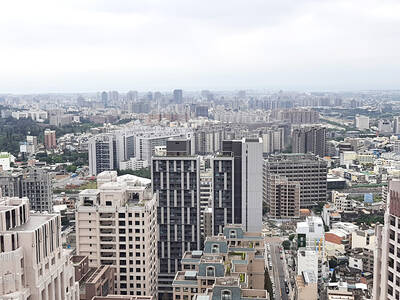
New apartments in Taiwan’s major cities are getting smaller, while old apartments are increasingly occupied by older people, many of whom live alone, government data showed. The phenomenon has to do with sharpening unaffordable property prices and an aging population, property brokers said. Apartments with one bedroom that are two years old or older have gained a noticeable presence in the nation’s six special municipalities as well as Hsinchu county and city in the past five years, Evertrust Rehouse Co (永慶房產集團) found, citing data from the government’s real-price transaction platform. In Taipei, apartments with one bedroom accounted for 19 percent of deals last
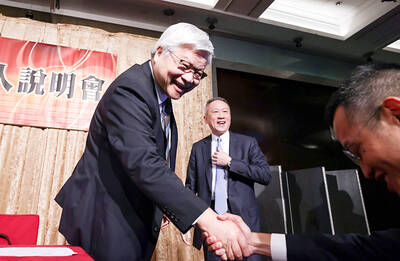
US CONSCULTANT: The US Department of Commerce’s Ursula Burns is a rarely seen US government consultant to be put forward to sit on the board, nominated as an independent director Taiwan Semiconductor Manufacturing Co (TSMC, 台積電), the world’s largest contract chipmaker, yesterday nominated 10 candidates for its new board of directors, including Ursula Burns from the US Department of Commerce. It is rare that TSMC has nominated a US government consultant to sit on its board. Burns was nominated as one of seven independent directors. She is vice chair of the department’s Advisory Council on Supply Chain Competitiveness. Burns is to stand for election at TSMC’s annual shareholders’ meeting on June 4 along with the rest of the candidates. TSMC chairman Mark Liu (劉德音) was not on the list after in December last


 RSS
RSS