


Wu Ying (
"We're facing regular power cuts," said Wu, who's also chief executive officer of UTStarcom China Ltd. "We used to work from Monday to Friday. We had to change the shifts to have some workers in on Saturdays and Sundays."
UTStarcom China and Shanghai-based Internet service provider Sina Corp (新浪) are bracing for more disruption as leading electricity producers such as Huaneng Power International Inc (華能國際電力) and Datang International Power Generation Co (大唐國際發電) struggle to meet demand.
Power consumption rose 17 percent in the first quarter from a year earlier, outstripping the record 16 percent growth in power output, the Shanghai Securities News newspaper reported last month, citing China's top planning ministry.
"The power situation is getting worse," said James Liu, a fund manager who helps oversee US$2.3 billion at APS Asset Management Ltd in Shanghai. "Now 24 out of 31 provinces are facing power outages and rationing. Last year it was 22."
Last summer, power failures swept two-thirds of China, disrupting production at companies from General Motors Corp's car plant in Shanghai to Coca-Cola Co's Hangzhou bottling plant.
Detroit-based General Motors will wait for the Shanghai government's power-consumption forecasts before setting its production schedule this summer, said Xue Hao, a spokesman at Shanghai Automotive Industry Corp (上海汽車), China's biggest carmaker and one of the US company's partners.
General Motors shut its Shanghai plant for two days last year and banned employees from using washroom hand-dryers to help authorities save power.
"Shanghai is more prepared now than last year," said Peter Borger, president of Siemens Shanghai Mobile Communications Ltd. "Nevertheless it will affect certain industries."
Power failures in late July and August at Hangzhou BC Foods Co (
Economic growth averaging 9 percent over the past decade has left China short of 30,000 megawatts of generation capacity, according to the planning ministry.
Growing shortages helped prompt China's banking regulator April 30 to tell banks to stop lending to power-hungry industries such as aluminum and automaking. That crackdown was widened Friday to include textiles, petrochemicals and pharmaceuticals.
Sina chief executive Wang Yan (
An April power cut in Beijing "was meant to be a planned four-hour cut, but we weren't warned," Wang said.
"We came to the office and there was no power, so our workers had to go home. It's been happening regularly," Wang said.
The government's control measures may halt investment in some energy-intensive industries, said Wu of Alameda, California-based UTStarcom, which vies with Siemens AG and Ericsson AB to sell equipment to phone companies.
"That could ease our power problems," he said.
Some foreign investors have agreements with local governments to ensure power supplies, said Mark Mobius, who oversees more than US$13 billion in emerging-market assets at Templeton Asset Management Ltd.
"In China, new investors usually get preferential treatment," said Mobius, who is Templeton's managing director. "We heard from a few companies that they were guaranteed by the local government to have adequate power supplies on their new investments."
Taiwan Semiconductor Manufacturing Co (
Tseng Fan-chen (曾繁城), the deputy chief executive, said he's confident of having enough power.
"We have a good relationship with the Shanghai government," he said.
UTStarcom China, whose parent is based in Alameda, California, and Nan Ya Plastics Corp (
Nan Ya Plastics, Taiwan's biggest plastics maker, set aside US$114 million to expand in China and is installing generators at factories making polyester fibers, textiles and plastics.
"Almost all our plants are self-sufficient," said Wu Chia-chau (
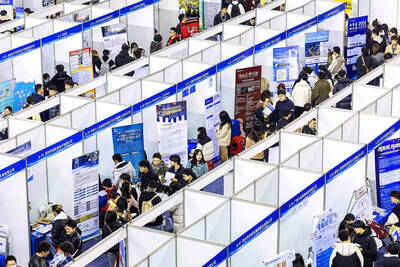
Stephen Garrett, a 27-year-old graduate student, always thought he would study in China, but first the country’s restrictive COVID-19 policies made it nearly impossible and now he has other concerns. The cost is one deterrent, but Garrett is more worried about restrictions on academic freedom and the personal risk of being stranded in China. He is not alone. Only about 700 American students are studying at Chinese universities, down from a peak of nearly 25,000 a decade ago, while there are nearly 300,000 Chinese students at US schools. Some young Americans are discouraged from investing their time in China by what they see
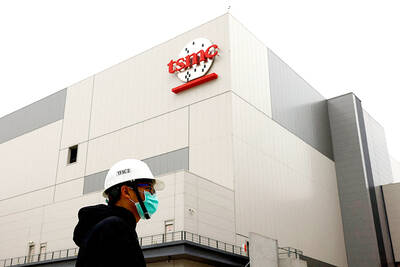
Taiwan Semiconductor Manufacturing Co (TSMC, 台積電), the world’s largest contract chipmaker, yesterday reported record sales for the first quarter, which analysts attributed to solid demand for emerging technologies. Consolidated revenue totaled NT$592.64 billion (US$18.51 billion) in the January-to-March period, up 16.5 percent from a year earlier, but down 5.26 percent from the previous quarter, TSMC said in a statement. The first-quarter revenue beat analysts’ average projection of NT$579.5 billion, Bloomberg News reported. That performance lends weight to expectations that the world’s most valuable chipmaker would return to solid growth this year after weathering a post-COVID-19-pandemic cratering of smartphone and computer sales. TSMC is budgeting
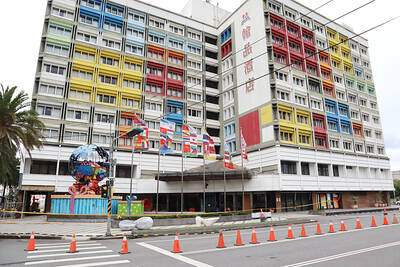
HUALIEN BRANCH: The company had been planning to rebuild the hotel before it was damaged in the quake and vowed to give affected employees the option to transfer The owner of Chateau de Chine Hualien (花蓮翰品酒店) is planning to lay off 86 workers after shutting down the hotel due to damage it sustained in a powerful earthquake on Wednesday last week, the Ministry of Labor said yesterday. The hotel has submitted a layoff report to the Hualien County Government and expects to let 69 workers go this month and 17 next month, the ministry said. LDC Hotels & Resorts Group (雲朗觀光集團), the owner of Chateau de Chine Hualien, confirmed the layoff plan in a statement yesterday. LDC said the hotel has been closed since Wednesday last week when the temblor occurred
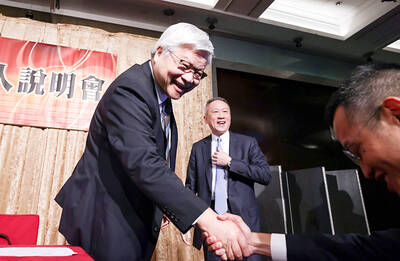
US CONSCULTANT: The US Department of Commerce’s Ursula Burns is a rarely seen US government consultant to be put forward to sit on the board, nominated as an independent director Taiwan Semiconductor Manufacturing Co (TSMC, 台積電), the world’s largest contract chipmaker, yesterday nominated 10 candidates for its new board of directors, including Ursula Burns from the US Department of Commerce. It is rare that TSMC has nominated a US government consultant to sit on its board. Burns was nominated as one of seven independent directors. She is vice chair of the department’s Advisory Council on Supply Chain Competitiveness. Burns is to stand for election at TSMC’s annual shareholders’ meeting on June 4 along with the rest of the candidates. TSMC chairman Mark Liu (劉德音) was not on the list after in December last


 RSS
RSS