


Concern is growing among China-based Taiwanese enterprises that new measures curbing credit to cool the high-flying Chinese economy will retard new investment projects there, industry leaders said yesterday.
Beijing hopes the measures will contain growth by preventing lenders offering excessive credit to key sectors including machinery, building materials, petrochemicals, light industry, textiles, pharmaceuticals and printing.
"I guess the effect [of China's squeeze on home loans] should be felt to a certain extent," said Earl Ho (侯貞雄), chairman of the Chinese National Federation of Industries (工總), which represents some 90,000 Taiwanese companies.
"It's hard to gauge how big the impact will be as those measures just took effect. We're monitoring developments closely now," he said.
The association is undertaking a survey on the impact of the changes, he added.
Chia Hsin Cement Corp (嘉新水泥), which is affected by the change in policy, said it is seeking some US$40 million -- half of the total US$80 million needed for a new plant -- in bank loans from multinational lenders in response to Beijing's clamp on credit growth, company spokesman Wei Yun-sun (魏雲孫) said.
"It is more efficient to borrow from foreign financial institutions," Wei said.
The Taiwanese cement supplier has already secured half of the necessary capital for a new factory in Jiangsu through its Hong Kong unit, Chia Hsin Cement Greater China Holding Corp (嘉新水泥中國控股), Wei said.
Compared to more directly affected industries such as steel and cement, Taiwanese high-tech companies were unlikely to suffer greatly, said Luo Huai-jia (羅懷家), executive director of the Taiwan Electrical and Electronic Manufacturers' Association (電電公會).
The association will keep a close eye on Beijing's direction, Luo said.
"What concerns us most now is whether Beijing will heighten credit control by restricting bank loans using machinery and letters of credit as collateral, which is a common way for Taiwanese exporters to get financial support from Chinese lenders," Luo said.
Some Taiwanese companies choose to borrow from offshore branches of local lenders, but this only accounts for a small portion of tech companies, he added.
"I'm quite optimistic. I don't think China's curbs will affect new investment by [Taiwanese] companies as long as there is demand," said Paul Hsu (許博惟), an analyst with Insight Pacific Investment Research (月涵投顧).
Demand for steel, for example, could fall, but Hsu said that the Chinese government would be unlikely to inhibit the construction of infrastructure in the hinterland.
However, Hsu said Beijing's move to slow down land requisition for industrial use could pose a threat to Taiwanese companies.
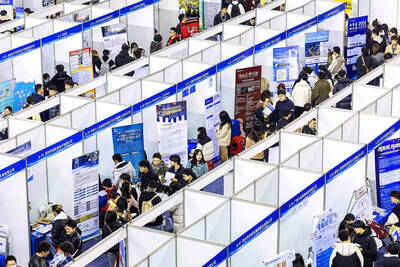
Stephen Garrett, a 27-year-old graduate student, always thought he would study in China, but first the country’s restrictive COVID-19 policies made it nearly impossible and now he has other concerns. The cost is one deterrent, but Garrett is more worried about restrictions on academic freedom and the personal risk of being stranded in China. He is not alone. Only about 700 American students are studying at Chinese universities, down from a peak of nearly 25,000 a decade ago, while there are nearly 300,000 Chinese students at US schools. Some young Americans are discouraged from investing their time in China by what they see

MAJOR DROP: CEO Tim Cook, who is visiting Hanoi, pledged the firm was committed to Vietnam after its smartphone shipments declined 9.6% annually in the first quarter Apple Inc yesterday said it would increase spending on suppliers in Vietnam, a key production hub, as CEO Tim Cook arrived in the country for a two-day visit. The iPhone maker announced the news in a statement on its Web site, but gave no details of how much it would spend or where the money would go. Cook is expected to meet programmers, content creators and students during his visit, online newspaper VnExpress reported. The visit comes as US President Joe Biden’s administration seeks to ramp up Vietnam’s role in the global tech supply chain to reduce the US’ dependence on China. Images on
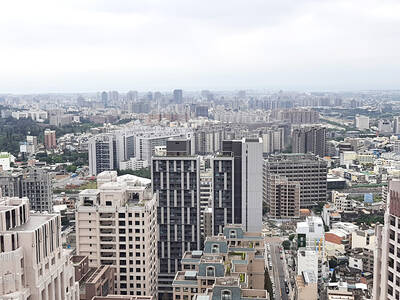
New apartments in Taiwan’s major cities are getting smaller, while old apartments are increasingly occupied by older people, many of whom live alone, government data showed. The phenomenon has to do with sharpening unaffordable property prices and an aging population, property brokers said. Apartments with one bedroom that are two years old or older have gained a noticeable presence in the nation’s six special municipalities as well as Hsinchu county and city in the past five years, Evertrust Rehouse Co (永慶房產集團) found, citing data from the government’s real-price transaction platform. In Taipei, apartments with one bedroom accounted for 19 percent of deals last
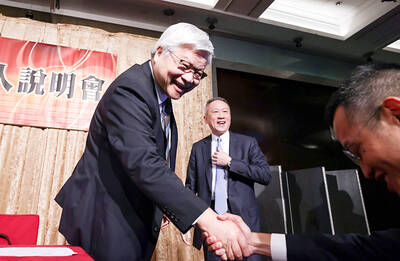
US CONSCULTANT: The US Department of Commerce’s Ursula Burns is a rarely seen US government consultant to be put forward to sit on the board, nominated as an independent director Taiwan Semiconductor Manufacturing Co (TSMC, 台積電), the world’s largest contract chipmaker, yesterday nominated 10 candidates for its new board of directors, including Ursula Burns from the US Department of Commerce. It is rare that TSMC has nominated a US government consultant to sit on its board. Burns was nominated as one of seven independent directors. She is vice chair of the department’s Advisory Council on Supply Chain Competitiveness. Burns is to stand for election at TSMC’s annual shareholders’ meeting on June 4 along with the rest of the candidates. TSMC chairman Mark Liu (劉德音) was not on the list after in December last


 RSS
RSS