


The US announced Friday an explosion of 600,000 new jobs in March and April, casting aside the slur of a "jobless recovery" and igniting interest rate rise speculation.
The jobs boom also brought some pre-election political relief to President George W. Bush.
The economy churned out 288,000 new jobs in April, far more than the 165,000 predicted by private analysts, the Labor Department said.
In March, employers took on an upwardly revised 337,000 -- substantially more than first thought and the biggest number since October 1990.
The unemployment rate, measured by a separate survey, eased to 5.6 percent in April from 5.7 percent in March.
"The numbers are spectacular: across the board gains, upward revisions in previous months, confirming that the US economic expansion has a lot of momentum," said BMO Financial Group analyst Sal Guatieri.
The news set up expectations that Federal Reserve Chairman Alan Greenspan could raise key interest rates as early as the June 29-to-June 30 meeting of the Federal Open Market Committee.
"I think this report definitely advances the timing of a Fed rate increase, probably into the summer and possible early summer -- possibly at the next FOMC meeting," Guatieri said.
That prospect worried investors, who pushed Wall Street's blue-chip Dow Jones industrials average down 123.92 points, or 1.21 percent, to finish at 10,117.34.
At a meeting Tuesday, Federal Reserve policymakers held the federal funds target rate at a 1958 low of 1 percent but, faced with a humming economy, said rates can eventually rise at a "measured" pace.
Bush, under pressure because of the photographic revelations that US troops humiliated naked and hooded Iraqi prisoners in a jail near Baghdad, took comfort from the employment report.
"The economy has overcome a lot because the entrepreneurial spirit is strong. We've overcome a lot because of good policy," Bush said. "Since last August we've added 1.1 million new jobs. People are finding work in this country. The tax relief we've passed is working."
His presumptive Democratic challenger in the Nov. 2 presidential vote, Senator John Kerry, has targeted Bush's jobs record, and recent polls showed the economy was one of the president's weakest points.
"The longest jobless recovery during the post-war period is over and a self-reinforcing economic expansion has arrived," said Wells Fargo Banks chief economist Sung Won Sohn.
Prices on the federal funds futures markets indicated an 86-percent probability of a rate rise in June.
But Sohn said the following Federal Reserve meeting Aug. 10 was a more likely date for rates to go up because there few signs yet of upward pressure on wages.
The employment report showed the average work week in April was unchanged from March at 33.7 hours. Average weekly earnings climbed US$1.68 to US$525.38.
The steeper-than-expected jobs expansion added to a recent string of strong economic figures.
Surveys by the Institute for Supply Management this week showed the services industry running at the fastest pace since the polling began in July 1997, and manufacturers growing for the 11th consecutive month.
Stunning advances in productivity, or output for each hour worked, had been partly blamed for allowing employers to shut the door on new workers in the past years.

Taiwan Transport and Storage Corp (TTS, 台灣通運倉儲) yesterday unveiled its first electric tractor unit — manufactured by Volvo Trucks — in a ceremony in Taipei, and said the unit would soon be used to transport cement produced by Taiwan Cement Corp (TCC, 台灣水泥). Both TTS and TCC belong to TCC International Holdings Ltd (台泥國際集團). With the electric tractor unit, the Taipei-based cement firm would become the first in Taiwan to use electric vehicles to transport construction materials. TTS chairman Koo Kung-yi (辜公怡), Volvo Trucks vice president of sales and marketing Johan Selven, TCC president Roman Cheng (程耀輝) and Taikoo Motors Group
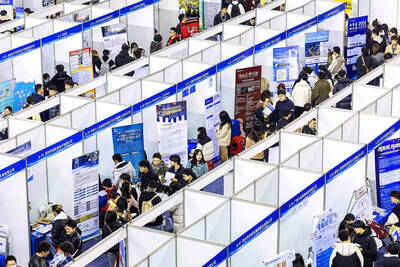
Stephen Garrett, a 27-year-old graduate student, always thought he would study in China, but first the country’s restrictive COVID-19 policies made it nearly impossible and now he has other concerns. The cost is one deterrent, but Garrett is more worried about restrictions on academic freedom and the personal risk of being stranded in China. He is not alone. Only about 700 American students are studying at Chinese universities, down from a peak of nearly 25,000 a decade ago, while there are nearly 300,000 Chinese students at US schools. Some young Americans are discouraged from investing their time in China by what they see

MAJOR DROP: CEO Tim Cook, who is visiting Hanoi, pledged the firm was committed to Vietnam after its smartphone shipments declined 9.6% annually in the first quarter Apple Inc yesterday said it would increase spending on suppliers in Vietnam, a key production hub, as CEO Tim Cook arrived in the country for a two-day visit. The iPhone maker announced the news in a statement on its Web site, but gave no details of how much it would spend or where the money would go. Cook is expected to meet programmers, content creators and students during his visit, online newspaper VnExpress reported. The visit comes as US President Joe Biden’s administration seeks to ramp up Vietnam’s role in the global tech supply chain to reduce the US’ dependence on China. Images on
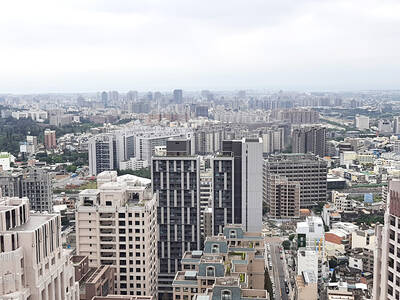
New apartments in Taiwan’s major cities are getting smaller, while old apartments are increasingly occupied by older people, many of whom live alone, government data showed. The phenomenon has to do with sharpening unaffordable property prices and an aging population, property brokers said. Apartments with one bedroom that are two years old or older have gained a noticeable presence in the nation’s six special municipalities as well as Hsinchu county and city in the past five years, Evertrust Rehouse Co (永慶房產集團) found, citing data from the government’s real-price transaction platform. In Taipei, apartments with one bedroom accounted for 19 percent of deals last


 RSS
RSS