


Carrefour Taiwan, which operates the nation's largest hypermarket chain, formally opened its 32nd outlet in Taipei yesterday, as the retailer fine-tunes its selection of store locations in order to compete head-to-head with rivals RT-Mart (
The new outlet, near the Core Pacific City Mall (京華城), is part of the company's strategy to move the battle toward city-center areas from suburban regions amid cutthroat competition among hypermarkets.
Carrefour's new strategy raised eyebrows following statements Tuesday by Douglas Hsu (
Carrefour generated more than NT$50 billion (US$1.52 billion) in sales last year. The retailer currently has two-thirds of its outlets near city centers and the remaining one-third in suburbs.
"We are very flexible in selecting possible locations for new outlets. In densely populated areas, customer spending capability is also higher," said Allan Tien (田中玉), spokesman for Carrefour Taiwan.
"Compared with Taipei, the competition in Taichung and Kaohsiung is even fiercer. Especially in downtown Taichung, 12 hypermarkets are scrambling for market share," Tien said.
Easy access and adequate parking are important for downtown stores, according to consumers.
"I enjoy shopping here because I live nearby and can come here on weekdays to avoid crowds," said a housewife, surnamed Wu, who was pushing a full cart of fresh food and home appliances at the newly opened Carrefour yesterday.
Another consumer said it is really convenient to have a hypermarket near her house. "I already bought stuff yesterday and came again today to shop for my friends," Carol Wang (
Hypermarkets popping up near city centers have raised concerns that traditional markets and supermarkets might get squeezed out, but a market watcher said that each category's different features leave each type of market room to develop.
"Taiwan has the highest density of hypermarkets among Asia-
Pacific countries, with one such outlet for every 229,000 people.
"Nearly 50 percent of families spend more in hypermarkets than they do at other types of food retailers," Jennifer Wang (
According to a report issued yesterday by AC Nielsen Taiwan, 54 percent of Taiwanese household spending is on fresh foodstuffs, such as seafood and vegetables, and 80 percent of people visit traditional markets to make purchases, Wang said.
The 2004 ACNielsen Shopper Trends survey was conducted among 15,000 people aged between 15 and 65 in 14 Asia-Pacific nations.
The government's effort to promote an updated image of traditional marketplaces has also helped boost customer traffic there, according to Wang.
"Therefore, hypermarkets need to put effort into increasing the variety of fresh food available, as this is the key to increasing customer visits," she said.
Tien agreed, saying, "This is an important link in the sector. It will help bring back customers every one or two days," different from the weekend-visit concept emphasized by rivals.
Fresh food accounts for 15 percent of Carrefour's revenues and Tien said the company would introduce more products to further consolidate its status.
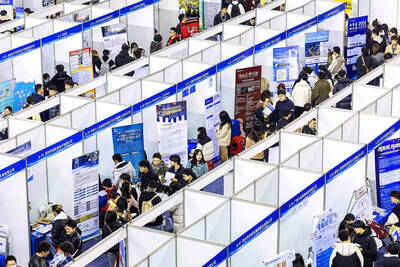
Stephen Garrett, a 27-year-old graduate student, always thought he would study in China, but first the country’s restrictive COVID-19 policies made it nearly impossible and now he has other concerns. The cost is one deterrent, but Garrett is more worried about restrictions on academic freedom and the personal risk of being stranded in China. He is not alone. Only about 700 American students are studying at Chinese universities, down from a peak of nearly 25,000 a decade ago, while there are nearly 300,000 Chinese students at US schools. Some young Americans are discouraged from investing their time in China by what they see

MAJOR DROP: CEO Tim Cook, who is visiting Hanoi, pledged the firm was committed to Vietnam after its smartphone shipments declined 9.6% annually in the first quarter Apple Inc yesterday said it would increase spending on suppliers in Vietnam, a key production hub, as CEO Tim Cook arrived in the country for a two-day visit. The iPhone maker announced the news in a statement on its Web site, but gave no details of how much it would spend or where the money would go. Cook is expected to meet programmers, content creators and students during his visit, online newspaper VnExpress reported. The visit comes as US President Joe Biden’s administration seeks to ramp up Vietnam’s role in the global tech supply chain to reduce the US’ dependence on China. Images on
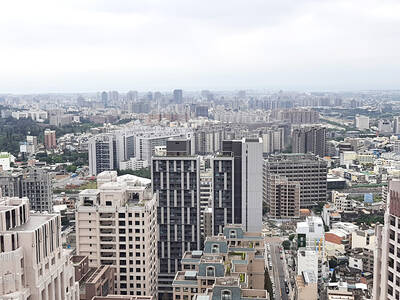
New apartments in Taiwan’s major cities are getting smaller, while old apartments are increasingly occupied by older people, many of whom live alone, government data showed. The phenomenon has to do with sharpening unaffordable property prices and an aging population, property brokers said. Apartments with one bedroom that are two years old or older have gained a noticeable presence in the nation’s six special municipalities as well as Hsinchu county and city in the past five years, Evertrust Rehouse Co (永慶房產集團) found, citing data from the government’s real-price transaction platform. In Taipei, apartments with one bedroom accounted for 19 percent of deals last
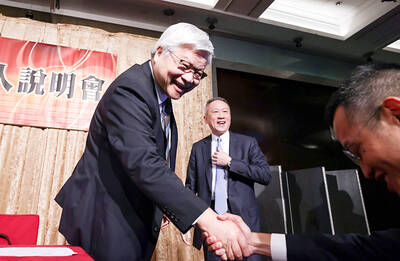
US CONSCULTANT: The US Department of Commerce’s Ursula Burns is a rarely seen US government consultant to be put forward to sit on the board, nominated as an independent director Taiwan Semiconductor Manufacturing Co (TSMC, 台積電), the world’s largest contract chipmaker, yesterday nominated 10 candidates for its new board of directors, including Ursula Burns from the US Department of Commerce. It is rare that TSMC has nominated a US government consultant to sit on its board. Burns was nominated as one of seven independent directors. She is vice chair of the department’s Advisory Council on Supply Chain Competitiveness. Burns is to stand for election at TSMC’s annual shareholders’ meeting on June 4 along with the rest of the candidates. TSMC chairman Mark Liu (劉德音) was not on the list after in December last


 RSS
RSS