


Taiwanese companies are recognized for their original-equipment manufacturing (OEM) cost-down advantages, but they should go into design and move to brand-name manufacturing, a world-renowned French designer said yesterday in Taipei.
Taiwanese OEMs are capable of developing world-class brands to compete with well-known US and European brands in the market, Philippe Starck, chief vision officer of Hong Kong-based designing and marketing consultancy The Key, said at a forum held by the semi-official Taiwan Design Center (
"When I asked various companies how to put my ideas into products they asked me to design, they always tell me to go to Taiwan, because that's where everything is made," he told a packed house of industry representatives and journalists yesterday.
"In this way, I believe Tai-wanese manufacturers are full of potential to bring their quality products to the world with their own names if proper branding and marketing strategies were in place," he said.
Starck, 55, is recognized for his numerous product designs including architecture and interior, furniture, high-tech products, vehicles, clothing, foodstuff, stationary and accessories.
Saying design is key to the success of the company and the product, Starck hopes The Key can help prop up Asian companies from OEM to "OBM" -- own brand management -- rather than remain subcontractors for large Western of Japanese corporations.
"The ground should be owned by people who work on it," he said.
Romain Hatchuel, chief executive officer (CEO) of The Key and former global director of business development for Euro RSCG Worldwide, the world's fifth largest advertising and marketing services group, said OBM is not merely an option, but an irreversible trend.
Citing an analysis by Business Week magazine, Hatchuel said that the world's top 100 consumer goods and retail companies recorded sales of US$3,578 billion in 2002 and profits of US$228 billion, while top 100 OEMs in the Asia- Pacific region that supplied products to the companies reported pnly US$85 billion in sales, with total profits of US$4 billion in the same year.
"The brand is the new asset that enables a company to create a stronger and longer-lasting relationship with the customer, as well as selling its products at a higher price," Hatchuel said.
He cited another example, saying that Samsung Electronics Co, a South Korean electronics maker that was also an OEM several years ago, successfully transformed itself into an OBM and become the world's 25th most-valuable brand in the world.
As Western brands are sagging due to a lack of authenticity and ethics over the past years, Asian brands that represent original technological products have great opportunities to grab Western consumers, Hatchuel said.
To move forward, Gilles Mangin, chief marketing officer of The Key, said the key for OEMs is to boost their own identity and differentiation among end consumers, either to do it themselves, or having experienced consulting agencies to provide a total solution.
Tony Chang (張光民), CEO of the Taiwan Design Center, which was launched on Feb. 17, said many local OEMs are aware of the importance of branding and looked for help from the center.
Since the center has only 60 staff members right now it might not be able to meet the demand.
Chang said he is considering recruiting 20 more design experts, as well as forging alliances with specialist firms such as The Key.
"As home of the world's manufacturing industry, we hope to have more marketable brand names af-ter Acer, Giant and BenQ," Chang said.
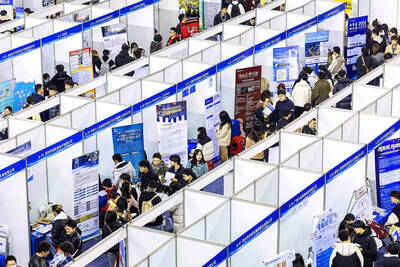
Stephen Garrett, a 27-year-old graduate student, always thought he would study in China, but first the country’s restrictive COVID-19 policies made it nearly impossible and now he has other concerns. The cost is one deterrent, but Garrett is more worried about restrictions on academic freedom and the personal risk of being stranded in China. He is not alone. Only about 700 American students are studying at Chinese universities, down from a peak of nearly 25,000 a decade ago, while there are nearly 300,000 Chinese students at US schools. Some young Americans are discouraged from investing their time in China by what they see
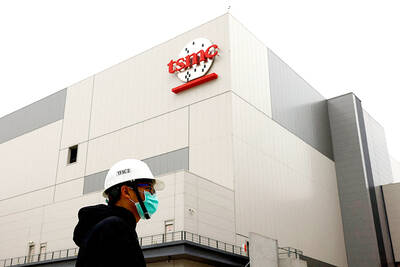
Taiwan Semiconductor Manufacturing Co (TSMC, 台積電), the world’s largest contract chipmaker, yesterday reported record sales for the first quarter, which analysts attributed to solid demand for emerging technologies. Consolidated revenue totaled NT$592.64 billion (US$18.51 billion) in the January-to-March period, up 16.5 percent from a year earlier, but down 5.26 percent from the previous quarter, TSMC said in a statement. The first-quarter revenue beat analysts’ average projection of NT$579.5 billion, Bloomberg News reported. That performance lends weight to expectations that the world’s most valuable chipmaker would return to solid growth this year after weathering a post-COVID-19-pandemic cratering of smartphone and computer sales. TSMC is budgeting
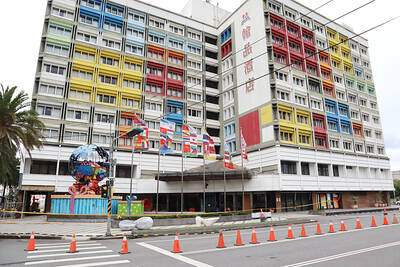
HUALIEN BRANCH: The company had been planning to rebuild the hotel before it was damaged in the quake and vowed to give affected employees the option to transfer The owner of Chateau de Chine Hualien (花蓮翰品酒店) is planning to lay off 86 workers after shutting down the hotel due to damage it sustained in a powerful earthquake on Wednesday last week, the Ministry of Labor said yesterday. The hotel has submitted a layoff report to the Hualien County Government and expects to let 69 workers go this month and 17 next month, the ministry said. LDC Hotels & Resorts Group (雲朗觀光集團), the owner of Chateau de Chine Hualien, confirmed the layoff plan in a statement yesterday. LDC said the hotel has been closed since Wednesday last week when the temblor occurred
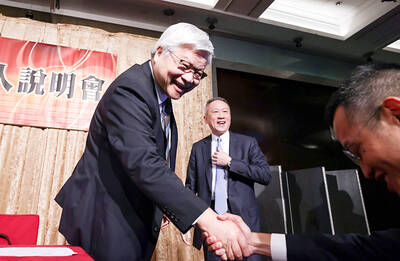
US CONSCULTANT: The US Department of Commerce’s Ursula Burns is a rarely seen US government consultant to be put forward to sit on the board, nominated as an independent director Taiwan Semiconductor Manufacturing Co (TSMC, 台積電), the world’s largest contract chipmaker, yesterday nominated 10 candidates for its new board of directors, including Ursula Burns from the US Department of Commerce. It is rare that TSMC has nominated a US government consultant to sit on its board. Burns was nominated as one of seven independent directors. She is vice chair of the department’s Advisory Council on Supply Chain Competitiveness. Burns is to stand for election at TSMC’s annual shareholders’ meeting on June 4 along with the rest of the candidates. TSMC chairman Mark Liu (劉德音) was not on the list after in December last


 RSS
RSS