


Central bank Governor Perng Fai-nan (彭淮南), 65, says averting currency swings is one of his most important tasks.
"When the foreign exchange market is disturbed by irregular factors, the central bank is required to enter the market and make appropriate adjustments," he told lawmakers on Wednesday, four days after President Chen Shui-bian's (陳水扁) narrow victory in a presidential election spurred mass public protests and opposition calls for a recount.
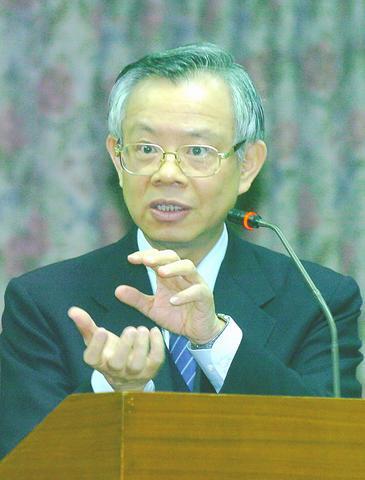
TAIPEI TIMES FILE PHOTO
Perng said the central bank bought New Taiwan dollars on Monday, helping hold the currency steady since the election. He's not working alone to limit damage to markets: Minister of Finance Lin Chuan (林全), 52, tapped a NT$500 billion (US$15 billion) government fund to support share prices on Tuesday for the first time since 2000. That halted the benchmark index's 9.4 percent slide on Monday and Tuesday, the biggest two-day loss in two-and-a half years.
Perng's control of the currency explains why the NT dollar has fluctuated just 17 percent against the US dollar since he took office in February 1998, compared with a 43 percent swing in the Japanese yen, a 55 percent range for the Korean won and a 43 percent variation in the Thai baht.
"They are very interventionist by nature," said James Malcolm, a regional currency analyst at J.P. Morgan Chase & Co in Singapore.
"During the events over the past few days, they came in very quickly to provide support for the currency," he said.
Taiwan's stocks and currency fell after the election as protesters faced off with riot police in Taipei demanding a recount of votes.
The NT dollar was up NT$0.004 to close at NT$33.274 against the US dollar on Friday. The currency declined 0.1 percent for the week.
The government's decision to use the stock-support fund helped Taiwan's benchmark stock index rise 0.7 percent Wednesday. On Friday, TAIEX was down 0.4 percent to 6,132.62.
"In times of crisis, it's often best to have a fund to strengthen the markets and dampen the impact," said Michael Preiss, chief investment strategist at CFC Securities Ltd in Hong Kong.
Even so, the government and central bank won't be able to release money into Taiwan's markets for long enough to avert eventual declines, according to investors including Jacky Choi, who helps manage US$2.2 billion at Value Partners Ltd, including Taiwanese stocks.
"It has helped support the market, but there's really very little they can do to sustain it," Choi said. "The government needs to move quickly to regain political stability. Investors are more concerned about that."
Perng told lawmakers on Wednesday the central bank has "unlimited" funds to defend the NT dollar and pledged to keep the currency stable. Taiwan's record US$224.8 billion in foreign-currency reserves at the end of last month was the world's third-largest.
Taiwan's markets may continue to need government support as the political impasse between the Democratic Progressive Party and Chinese Nationalist Party (KMT) Chairman Lien Chan (連戰) deepens.
Perng, a 33-year central bank veteran with a master's degree in economics from the University of Minnesota, was named governor in February 1998 after his predecessor died in a plane crash.
Before that, Perng was chairman of the International Commercial Bank of China (中國商銀) and Central Trust of Chin (中央信託局).
Perng has kept Taiwan's interest-rate policy in line with that of the US, cutting the benchmark interest rate to a record 1.375 percent in 15 reductions between December 2000 and June last year. That leaves buying and selling the currency as his main policy tool.
On Friday, the central bank left its key interest rate unchanged at a record low. The bank kept its rediscount rate, charged to commercial lenders for 10-day loans, at 1.375 percent at its quarterly policy meeting.
The governor made his first public pledge to bolster the currency in August 1998, saying the bank would "step in to restore market order whenever the currency fails to reflect economic fundamentals."
The NT dollar had slid 19 percent in the previous 12 months amid Asia's financial crisis. The South Korean won fell 38 percent in the same period as the country sought a US$60 billion international bailout, and the Thai baht fell 29 percent before interest rates were raised to as much as 25 percent.
In March 2000, Perng said the bank was prepared to buy NT dollars after Chen won the last presidential election, stoking concerns among investors about a potential military standoff with China.
On Sept. 12, 2001, the day after terrorist attacks on the US, the central bank again said it was ready to defend the currency. The NT dollar strengthened against its US counterpart in the two days following the attacks.
The central bank has also used less direct tactics to curb currency swings.
Perng's deputy, Hsu Yi-hsiung (徐義雄), said in July 2001 that the bank objects to currency analysts releasing their currency forecasts to the media.
"Banks are free to advise clients about their predictions of the New Taiwan dollar," Hsu said in an interview at the time. "But we object to expressing views to the press to create a trend."

Stephen Garrett, a 27-year-old graduate student, always thought he would study in China, but first the country’s restrictive COVID-19 policies made it nearly impossible and now he has other concerns. The cost is one deterrent, but Garrett is more worried about restrictions on academic freedom and the personal risk of being stranded in China. He is not alone. Only about 700 American students are studying at Chinese universities, down from a peak of nearly 25,000 a decade ago, while there are nearly 300,000 Chinese students at US schools. Some young Americans are discouraged from investing their time in China by what they see
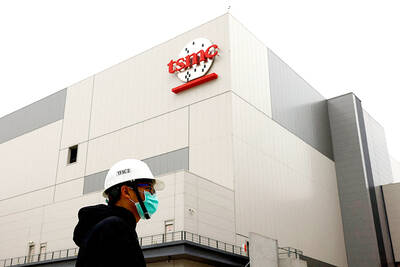
Taiwan Semiconductor Manufacturing Co (TSMC, 台積電), the world’s largest contract chipmaker, yesterday reported record sales for the first quarter, which analysts attributed to solid demand for emerging technologies. Consolidated revenue totaled NT$592.64 billion (US$18.51 billion) in the January-to-March period, up 16.5 percent from a year earlier, but down 5.26 percent from the previous quarter, TSMC said in a statement. The first-quarter revenue beat analysts’ average projection of NT$579.5 billion, Bloomberg News reported. That performance lends weight to expectations that the world’s most valuable chipmaker would return to solid growth this year after weathering a post-COVID-19-pandemic cratering of smartphone and computer sales. TSMC is budgeting

MAJOR DROP: CEO Tim Cook, who is visiting Hanoi, pledged the firm was committed to Vietnam after its smartphone shipments declined 9.6% annually in the first quarter Apple Inc yesterday said it would increase spending on suppliers in Vietnam, a key production hub, as CEO Tim Cook arrived in the country for a two-day visit. The iPhone maker announced the news in a statement on its Web site, but gave no details of how much it would spend or where the money would go. Cook is expected to meet programmers, content creators and students during his visit, online newspaper VnExpress reported. The visit comes as US President Joe Biden’s administration seeks to ramp up Vietnam’s role in the global tech supply chain to reduce the US’ dependence on China. Images on
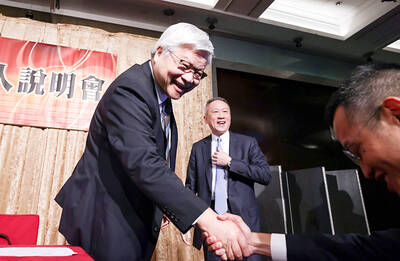
US CONSCULTANT: The US Department of Commerce’s Ursula Burns is a rarely seen US government consultant to be put forward to sit on the board, nominated as an independent director Taiwan Semiconductor Manufacturing Co (TSMC, 台積電), the world’s largest contract chipmaker, yesterday nominated 10 candidates for its new board of directors, including Ursula Burns from the US Department of Commerce. It is rare that TSMC has nominated a US government consultant to sit on its board. Burns was nominated as one of seven independent directors. She is vice chair of the department’s Advisory Council on Supply Chain Competitiveness. Burns is to stand for election at TSMC’s annual shareholders’ meeting on June 4 along with the rest of the candidates. TSMC chairman Mark Liu (劉德音) was not on the list after in December last


 RSS
RSS