


Conrad Black, the embattled newspaper magnate, testified on Friday that he was duped, coerced and ultimately threatened by the independent directors of Hollinger International into agreeing to resign as its chief executive last November and to repay millions of dollars in payments that it considered improper.
But in testifying for the first time during the trial, which is intended to determine whether he can proceed with plans to sell his controlling interest in the company, Black conceded that he signed regulatory documents in recent years that might have misled shareholders about the size of those payments and the circumstances under which they were obtained.
Though ordinarily an outspoken figure prone to statements of bombast -- he had bragged outside a book signing last year that the value of his shares was skyrocketing as the company's controversies grew -- Black was strikingly subdued in nearly six hours of testimony in Chancery Court here in Delaware, where Hollinger International is chartered. Hunching his broad shoulders over the witness stand and occasionally closing his eyes tightly to consider his answers, Black was instructed at least three times by Vice Chancellor Leo Strine to move a microphone closer to his mouth so his voice could be heard.
For Black, a Canadian who transformed a small mining company into an operator of more than 100 newspapers, including The Daily Telegraph of London and The Jerusalem Post, the proceedings stood in stark contrast to the life he has cultivated for several decades: that of a worldly and sophisticated entrepreneur who renounced his Canadian citizenship to become a British lord and a fixture in political and social circles on both sides of the Atlantic.
"I have been horribly defamed and, in fact, I've been characterized and stigmatized as an embezzler," he told the court, which was crammed with reporters and lawyers, some of them arbitrageurs, who had begun lining up two hours before the courtroom doors opened. "I am trying, apart from the direct legal proceeding, to retrieve my reputation as an honest man."
Aside from whatever fascination there is with Black, the case here is being closely followed by corporate governance experts because it pits his rights as a controlling shareholder of a public company -- one who holds about 30 percent of the company's stock, but controls 70 percent of its vote -- against the rights of a board responsible for representing all shareholders.
The independent board members of Hollinger, who have been operating the company since Black agreed to resign as chief executive in November, have asked the court to effectively block the sale of his controlling stake to David and Frederick Barclay, a pair of British entrepreneurs. The board members hope to sell the company's assets in an orderly fashion. They contend that the sale of those assets, including perhaps The Telegraph, The Post and The Chicago Sun-Times, would benefit all shareholders, as opposed to only Black.
Black has filed a countersuit here, arguing that as the controlling shareholder he has the right to amend the company's bylaws as he did last month to preclude the asset sales. He has also asked the court to invalidate a so-called poison pill provision that the board adopted last month, which would create so many new shares in the company that the Barclays' voting majority, in the event they bought Black's stake, would disappear.
Strine, who concluded the three-day trial after Black finished his testimony late Friday, has said he will rule in the case by next Friday.
A critical document in the case is the memorandum that Black signed in November, in which he promised to support a sale of assets by the board and not to sell his own stake -- held by a separate company called Hollinger Inc -- unless the holding company was on the brink of "material default or insolvency."
Earlier Friday, Peter White, the co-chief executive officer of Hollinger Inc, testified that the holding company was indeed nearing insolvency. If that were the case, Black might be found to have the right to sell his controlling stake to the Barclays.
But upon cross-examination, White acknowledged that the holding company's most pressing financial obligation, a US$7 million interest payment due March 1, could essentially be met by asking Black and his associates to repay personal loans made by the company. Moreover, White confirmed that the parent company's assets were vast, including more than US$400 million worth of stock in Hollinger.
Black has also asked the court to effectively negate the November agreement in its entirety, because, he testified Friday, the independent board members had misled him into signing it. In the agreement, he acknowledged he had received payments of about US$7 million in recent years, ostensibly tied to noncompete agreements, that were either unauthorized or insufficiently disclosed.
But Black maintained on Friday that he had not been given sufficient time in November to review all relevant documents before signing the agreement. Indeed, he said his lawyers had recently unearthed documents suggesting that some of those payments had been authorized by at least some board members.
Those documents, he said, had created sufficient doubt in his mind that he began to question his "moral or legal" obligation to keep the promise that he would repay that money.
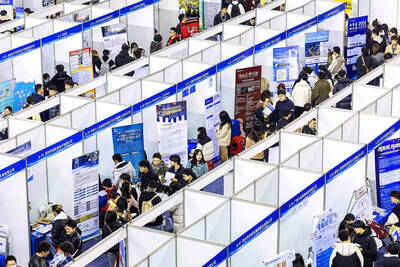
Stephen Garrett, a 27-year-old graduate student, always thought he would study in China, but first the country’s restrictive COVID-19 policies made it nearly impossible and now he has other concerns. The cost is one deterrent, but Garrett is more worried about restrictions on academic freedom and the personal risk of being stranded in China. He is not alone. Only about 700 American students are studying at Chinese universities, down from a peak of nearly 25,000 a decade ago, while there are nearly 300,000 Chinese students at US schools. Some young Americans are discouraged from investing their time in China by what they see

MAJOR DROP: CEO Tim Cook, who is visiting Hanoi, pledged the firm was committed to Vietnam after its smartphone shipments declined 9.6% annually in the first quarter Apple Inc yesterday said it would increase spending on suppliers in Vietnam, a key production hub, as CEO Tim Cook arrived in the country for a two-day visit. The iPhone maker announced the news in a statement on its Web site, but gave no details of how much it would spend or where the money would go. Cook is expected to meet programmers, content creators and students during his visit, online newspaper VnExpress reported. The visit comes as US President Joe Biden’s administration seeks to ramp up Vietnam’s role in the global tech supply chain to reduce the US’ dependence on China. Images on
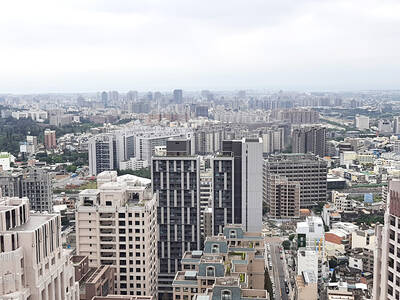
New apartments in Taiwan’s major cities are getting smaller, while old apartments are increasingly occupied by older people, many of whom live alone, government data showed. The phenomenon has to do with sharpening unaffordable property prices and an aging population, property brokers said. Apartments with one bedroom that are two years old or older have gained a noticeable presence in the nation’s six special municipalities as well as Hsinchu county and city in the past five years, Evertrust Rehouse Co (永慶房產集團) found, citing data from the government’s real-price transaction platform. In Taipei, apartments with one bedroom accounted for 19 percent of deals last
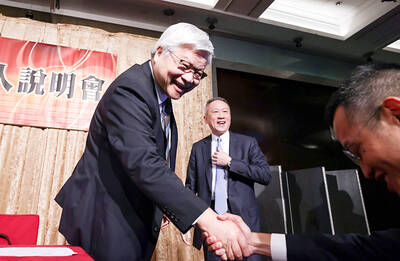
US CONSCULTANT: The US Department of Commerce’s Ursula Burns is a rarely seen US government consultant to be put forward to sit on the board, nominated as an independent director Taiwan Semiconductor Manufacturing Co (TSMC, 台積電), the world’s largest contract chipmaker, yesterday nominated 10 candidates for its new board of directors, including Ursula Burns from the US Department of Commerce. It is rare that TSMC has nominated a US government consultant to sit on its board. Burns was nominated as one of seven independent directors. She is vice chair of the department’s Advisory Council on Supply Chain Competitiveness. Burns is to stand for election at TSMC’s annual shareholders’ meeting on June 4 along with the rest of the candidates. TSMC chairman Mark Liu (劉德音) was not on the list after in December last


 RSS
RSS