


Taiwan's world-leading foundries, or manufacturers of custom-made semiconductors, are expected to see dramatic growth in sales this year far ahead of the industry in general, but may have problems expanding their facilities to meet rising demand, analysts said.
"Our forecast is for 18.5 percent growth in the semiconductor industry worldwide this year," said Rick Hsu (
BNP is predicting that UMC's revenues will grow by almost 22 percent this year, and TSMC's by one third.
Over at Deutsche Bank in Taipei the call is for between 26 and 27 percent revenue growth at TSMC and UMC.
As last year drew to a close, international research firms predicted a strong rebound in the US$200 billion worldwide semiconductor market after the worst slump in the industry's history in 2001 and 2002. International Data Corp and Gartner Inc forecast growth rates of between 18 percent and 20 percent this year. In-Stat/MDR is more bullish, calling for almost 26 percent growth.
"Stronger than expected mobile phone and PC shipments have stabilized average selling prices and increased capacity utilization rates among suppliers," the IDC said in a report on Dec. 31. "IDC expects that unit shipments will grow in double digits this year and next year for both mobile phones and PCs, which will drive a healthy growth cycle for over half of the semiconductor industry."
Taiwan's foundries have been humming at near full capacity since the last quarter of last year.
"Both foundries are operating at close to 100 percent capacity, so the focus this year will be on increasing the base and expanding capacity," Nomura's Hsu said. "Whoever ramps up quickly will be the winner."
Hsu added that there are concerns that if the foundries increase their capacity too rapidly, there will be overcapacity in the second half of the year, putting downward pressure on prices and profits.
The makers of the equipment used to make computer chips are looking at a very good year this year as chip manufacturers expand their facilities.
"The outlook for 2004 is bright," said Klaus-Dieter Rinnen, managing vice president for Gartner's semiconductor manufacturing and design research group in a statement last month.
"The return of a corporate investment cycle, a PC upgrade cycle that is gaining steam, a broad-based recovery in end-user applications, low inventories and tight manufacturing capacity all are converging to provide for strong growth in all equipment segments," he said.
But equipment makers -- which downsized drastically during the last downturn -- may not have enough stock to supply the machines the foundries need to increase their manufacturing capacity. The waiting time for some essential machines has increased from six months last year to nine this year, analysts said.
"Even if the foundries place orders in the second quarter, they may not get their equipment this year," Hsu said. "This is a potential bottleneck."
Another bottleneck could appear in the manufacture of the disks of silicon, or wafers, from which chips are cut. The supply of wafers measuring 8 inches (200mm) across could be pinched as foundries concentrate on more efficient 12-inch (300mm) wafers.
Some chipmakers have decided to halt the expansion of 8-inch plants, despite the fact that orders are still coming in for the less advanced chips that are still used in a wide range of products from computers to printers.
"TSMC and UMC already decided their expansion schedule for their 12-inch fabs this year, so they should be OK, but if they want to expand beyond this, there could be a problem finding equipment," BNP's Ying said.
"A concern for this year is the added competition from China, especially [Shanghai-based] Semiconductor Manufacturing International Corp [SMIC, 中芯國際集成電路]," Ying said. "This upturn could be difficult as Taiwanese foundries could raise prices before, but they won't be too aggressive on price this time as competition from China has increased."
A report from Deutsche Bank agrees that TSMC and UMC may not be able to raise prices despite running at full capacity.
"Many investors are concerned about the lack of blended ASP [average selling price] increase despite extremely high utilization rates at TSMC," a Jan. 5 report said.
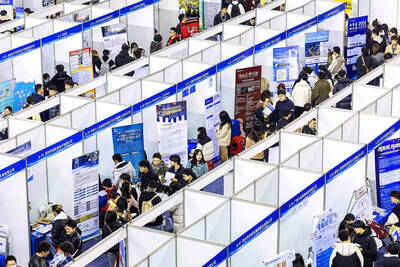
Stephen Garrett, a 27-year-old graduate student, always thought he would study in China, but first the country’s restrictive COVID-19 policies made it nearly impossible and now he has other concerns. The cost is one deterrent, but Garrett is more worried about restrictions on academic freedom and the personal risk of being stranded in China. He is not alone. Only about 700 American students are studying at Chinese universities, down from a peak of nearly 25,000 a decade ago, while there are nearly 300,000 Chinese students at US schools. Some young Americans are discouraged from investing their time in China by what they see

MAJOR DROP: CEO Tim Cook, who is visiting Hanoi, pledged the firm was committed to Vietnam after its smartphone shipments declined 9.6% annually in the first quarter Apple Inc yesterday said it would increase spending on suppliers in Vietnam, a key production hub, as CEO Tim Cook arrived in the country for a two-day visit. The iPhone maker announced the news in a statement on its Web site, but gave no details of how much it would spend or where the money would go. Cook is expected to meet programmers, content creators and students during his visit, online newspaper VnExpress reported. The visit comes as US President Joe Biden’s administration seeks to ramp up Vietnam’s role in the global tech supply chain to reduce the US’ dependence on China. Images on
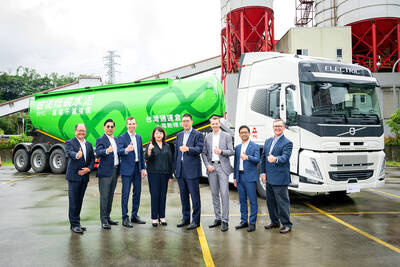
Taiwan Transport and Storage Corp (TTS, 台灣通運倉儲) yesterday unveiled its first electric tractor unit — manufactured by Volvo Trucks — in a ceremony in Taipei, and said the unit would soon be used to transport cement produced by Taiwan Cement Corp (TCC, 台灣水泥). Both TTS and TCC belong to TCC International Holdings Ltd (台泥國際集團). With the electric tractor unit, the Taipei-based cement firm would become the first in Taiwan to use electric vehicles to transport construction materials. TTS chairman Koo Kung-yi (辜公怡), Volvo Trucks vice president of sales and marketing Johan Selven, TCC president Roman Cheng (程耀輝) and Taikoo Motors Group
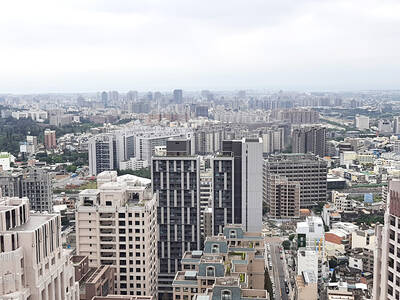
New apartments in Taiwan’s major cities are getting smaller, while old apartments are increasingly occupied by older people, many of whom live alone, government data showed. The phenomenon has to do with sharpening unaffordable property prices and an aging population, property brokers said. Apartments with one bedroom that are two years old or older have gained a noticeable presence in the nation’s six special municipalities as well as Hsinchu county and city in the past five years, Evertrust Rehouse Co (永慶房產集團) found, citing data from the government’s real-price transaction platform. In Taipei, apartments with one bedroom accounted for 19 percent of deals last


 RSS
RSS