


The dollar fell as doubts grew yesterday that the G7 would move to support it, while Asian stocks stalled as investors focused on weakness in US tech earnings over strong results in financial stocks.
Persistent concerns about the US current account deficit also helped soften the dollar, traders said. The euro bought US$1.2688 by 7am, up from a one-month low of US$1.2350 hit late last week.
The dollar weakened against the yen to around ¥106.78, just off last week's three-year lows around ¥105.70.
Tokyo stocks gave up early gains after electronics components makers, such as Alps Electric Co Ltd, fell following disappointing earnings by their US peers.
"Banks and corporations are taking profits on their shareholdings ahead of bookclosings [at the end of March], and that selling is cancelling out buying by foreign investors, who are still pretty bullish on Japanese shares," said Norihiro Fujito, a senior investment strategist at Mitsubishi Securities.
The tech-sensitive Nikkei average ended down 0.02 percent at 11,000.70, after a 0.91 percent decline in the previous session and well below its morning high of 11,115.13.
Alps Electric sank 4.97 percent after the US hard-disk drive industry leader Seagate Technology warned that current-quarter earnings would fall below analyst expectations.
A rebound in National Australia Bank and gains in other major banks helped drive Australia's benchmark stock index to its highest close in 19 months. The benchmark S&P/ASX 200 index rose 0.6 percent to 3,326.6.
Most other markets in Asia were closed for the Lunar New Year.
In Europe, early estimates indicated rises of 14 to 16 points on London's FTSE, 10 to 26 points on Germany's Dax and between two and 24 points on France's Cac-40.
Traders were keenly awaiting results from the world's top mobile phone maker Nokia, due at 11am, which were expected to show solid Christmas sales, but also increased competition from Asian competitors such as Samsung Electronics and LG Electronics.
Foreign exchange dealers expected more choppy trade as the market seeks hints about whether, if at all, policymakers from the G7 industrial countries nations will express a concerted view on the dollar's weakness at their meeting in Florida on Feb. 6 and 7.
"European officials started screaming about the euro's strength, but looking at what happened after the G7 in Dubai, I don't think they want to mention anything explicitly this time," said Toru Umemoto, a Morgan Stanley currency strategist in Tokyo.
At the Dubai meeting, G7 ministers called for more flexible exchange rates, a call the market perceived was aimed at Asia but which, in the weeks that followed, drove the dollar down against the euro.
Meanwhile, data showed foreign investors bought a record amount of Japanese bonds last week and analysts said they would keep on buying as long as the yen looked likely to climb higher.
Foreign investors bought a net ¥767 billion (US$7.18 billion) of Japanese bonds in the holiday-shortened week of Jan. 12 to 16 after net purchases of ¥61.2 billion the previous week, Ministry of Finance data showed yesterday.
Japanese government bond (JGB) prices rose yesterday following a good result at a ¥500 billion (US$4.7 billion) 20-year JGB auction.
The price of key 10-year JGB futures for March delivery rose 0.22 point to ¥138.79, while the benchmark 10-year JGB yield fell two basis points on the day to 1.315 percent.
In Asia, NYMEX crude oil futures rebounded ahead of the release of weekly US oil inventory data, clawing back most of the previous day's one percent drop.
Crude prices are near 10-month highs amid a sustained US cold spell and with US commercial crude oil inventories at their lowest level since 1975.
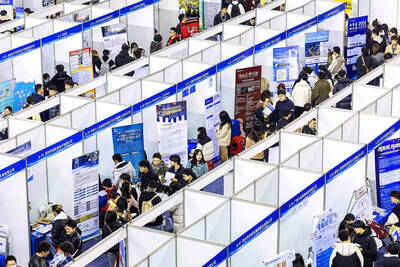
Stephen Garrett, a 27-year-old graduate student, always thought he would study in China, but first the country’s restrictive COVID-19 policies made it nearly impossible and now he has other concerns. The cost is one deterrent, but Garrett is more worried about restrictions on academic freedom and the personal risk of being stranded in China. He is not alone. Only about 700 American students are studying at Chinese universities, down from a peak of nearly 25,000 a decade ago, while there are nearly 300,000 Chinese students at US schools. Some young Americans are discouraged from investing their time in China by what they see

MAJOR DROP: CEO Tim Cook, who is visiting Hanoi, pledged the firm was committed to Vietnam after its smartphone shipments declined 9.6% annually in the first quarter Apple Inc yesterday said it would increase spending on suppliers in Vietnam, a key production hub, as CEO Tim Cook arrived in the country for a two-day visit. The iPhone maker announced the news in a statement on its Web site, but gave no details of how much it would spend or where the money would go. Cook is expected to meet programmers, content creators and students during his visit, online newspaper VnExpress reported. The visit comes as US President Joe Biden’s administration seeks to ramp up Vietnam’s role in the global tech supply chain to reduce the US’ dependence on China. Images on
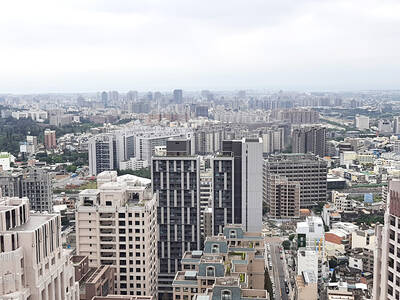
New apartments in Taiwan’s major cities are getting smaller, while old apartments are increasingly occupied by older people, many of whom live alone, government data showed. The phenomenon has to do with sharpening unaffordable property prices and an aging population, property brokers said. Apartments with one bedroom that are two years old or older have gained a noticeable presence in the nation’s six special municipalities as well as Hsinchu county and city in the past five years, Evertrust Rehouse Co (永慶房產集團) found, citing data from the government’s real-price transaction platform. In Taipei, apartments with one bedroom accounted for 19 percent of deals last
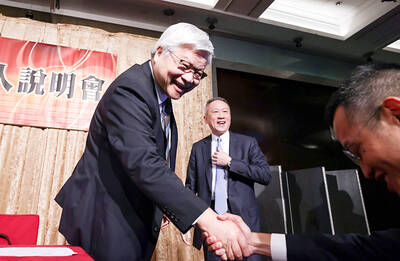
US CONSCULTANT: The US Department of Commerce’s Ursula Burns is a rarely seen US government consultant to be put forward to sit on the board, nominated as an independent director Taiwan Semiconductor Manufacturing Co (TSMC, 台積電), the world’s largest contract chipmaker, yesterday nominated 10 candidates for its new board of directors, including Ursula Burns from the US Department of Commerce. It is rare that TSMC has nominated a US government consultant to sit on its board. Burns was nominated as one of seven independent directors. She is vice chair of the department’s Advisory Council on Supply Chain Competitiveness. Burns is to stand for election at TSMC’s annual shareholders’ meeting on June 4 along with the rest of the candidates. TSMC chairman Mark Liu (劉德音) was not on the list after in December last


 RSS
RSS