


Gigabyte Technology Co (
"We're forced to join the war, as our major rivals already cut prices earlier this year. If we didn't do it, we would have no market share, which would mean no profit at all," Gigabyte spokesman Tony Liao (
Despite worries that expanding its market share will be at the expanse of profitability, "we're attempting to reduce the impact of gross margin decline by increasing shipments," Liao said.
Gigabyte currently has about a 10.3 percent market share in the Greater China region, behind Elitegroup Computer Systems Co's (
Gigabyte didn't elaborate on how wide the possible price cuts would be for its motherboard-product lineup yesterday.
But its announcement weighed on Asustek and Gigabyte shares, which fell by 1.29 percent and 1.68 percent, respectively, to close at NT$76.5 and NT$58.5 each on the TAIEX.
Gigabyte's announcement came amid forecasts of quickening growth for the global motherboard industry next year. Global shipments of motherboards used for desktop computers are expected to rise by 8 percent to around 14 million units next year, according to MIC. Global motherboard shipments grew by less than 6 percent to 13 million units this year from last year, it said.
The price war among the nation's motherboard manufacturers -- initiated by Asustek Computer Inc (
"The stiffer price competition next year will lead to a decline in the already razor-thin gross margin and will prompt a faster consolidation of Taiwan's struggling motherboard industry," said Grace Chen (陳星嘉), an analyst at Insight Pacific Investment Research (月涵投顧).
Chen expected Micro-Star International Co (微星) to suffer the brunt of the price war, citing Micro-Star's weak brand strength.
But another analyst said it is still too early to say which company will sustain the most serious blow.
"We won't have a clearer picture until 2005," said Jones Wang (王源錦), a deputy manager of ABN-ABRO Asset Management Taiwan. But the sector is facing a bigger decline of gross margins, as the average gross margin for manufacturers may slide to around 5 percent next year from about 8 percent this year, he added.
Signs of consolidation within the sector began to emerge in the middle of this year, with some small motherboard plants already starting to farm out production at lower costs and focus entirely on boosting branded product sales in Europe's clone markets, said MIC analyst Chris Wei (魏傳虔).
"A shakeup in the industry is foreseeable, but it will only mean product diversification for those motherboard companies, rather than a complete disappearance," Wei explained.
Motherboard products only accounted for 30 to 40 percent of Asustek's sales, while notebook computers contributed the bulk of its sales this year, said a company official, who requested anonymity.
Elitegroup expected to see its laptop computer sales outpace it motherboard sales next year, said Mike Chou (
Elitegroup, which bore the brunt of the price war in the first half, said January to November sales fell sharply by 26.69 percent to NT$43.44 billion from a year.
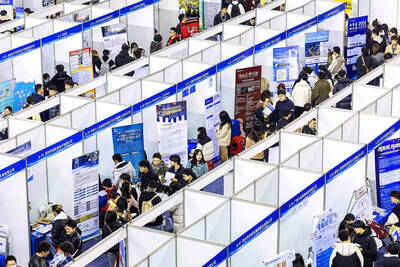
Stephen Garrett, a 27-year-old graduate student, always thought he would study in China, but first the country’s restrictive COVID-19 policies made it nearly impossible and now he has other concerns. The cost is one deterrent, but Garrett is more worried about restrictions on academic freedom and the personal risk of being stranded in China. He is not alone. Only about 700 American students are studying at Chinese universities, down from a peak of nearly 25,000 a decade ago, while there are nearly 300,000 Chinese students at US schools. Some young Americans are discouraged from investing their time in China by what they see

MAJOR DROP: CEO Tim Cook, who is visiting Hanoi, pledged the firm was committed to Vietnam after its smartphone shipments declined 9.6% annually in the first quarter Apple Inc yesterday said it would increase spending on suppliers in Vietnam, a key production hub, as CEO Tim Cook arrived in the country for a two-day visit. The iPhone maker announced the news in a statement on its Web site, but gave no details of how much it would spend or where the money would go. Cook is expected to meet programmers, content creators and students during his visit, online newspaper VnExpress reported. The visit comes as US President Joe Biden’s administration seeks to ramp up Vietnam’s role in the global tech supply chain to reduce the US’ dependence on China. Images on
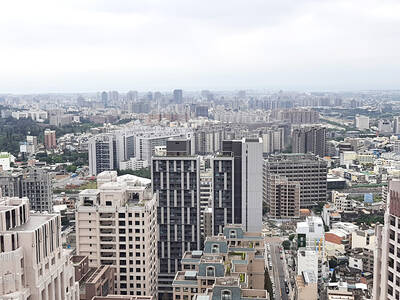
New apartments in Taiwan’s major cities are getting smaller, while old apartments are increasingly occupied by older people, many of whom live alone, government data showed. The phenomenon has to do with sharpening unaffordable property prices and an aging population, property brokers said. Apartments with one bedroom that are two years old or older have gained a noticeable presence in the nation’s six special municipalities as well as Hsinchu county and city in the past five years, Evertrust Rehouse Co (永慶房產集團) found, citing data from the government’s real-price transaction platform. In Taipei, apartments with one bedroom accounted for 19 percent of deals last
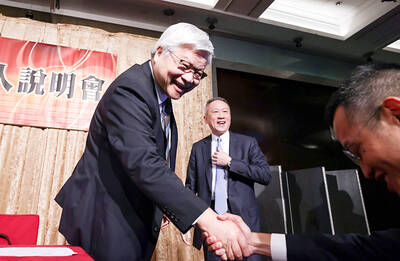
US CONSCULTANT: The US Department of Commerce’s Ursula Burns is a rarely seen US government consultant to be put forward to sit on the board, nominated as an independent director Taiwan Semiconductor Manufacturing Co (TSMC, 台積電), the world’s largest contract chipmaker, yesterday nominated 10 candidates for its new board of directors, including Ursula Burns from the US Department of Commerce. It is rare that TSMC has nominated a US government consultant to sit on its board. Burns was nominated as one of seven independent directors. She is vice chair of the department’s Advisory Council on Supply Chain Competitiveness. Burns is to stand for election at TSMC’s annual shareholders’ meeting on June 4 along with the rest of the candidates. TSMC chairman Mark Liu (劉德音) was not on the list after in December last


 RSS
RSS