


Beef importers yesterday expressed mixed reactions toward the discovery of mad cow disease in the US. Some said the ban on US imports may presage a pick-up in other markets, while others were concerned over a possible consumer backlash to all beef products.
"US beef accounts for around 20 percent of Taiwan's beef imports, while Australia and New Zealand have a more than 70 percent market share," said Tracy Lee (
Yung Yeh Glory imports over 1,633 tonnes of beef from Australia and New Zealand annually.
"Although there exists an opportunity for Australian and New Zealand's beef imports to expand their market share following the ban on US beef products, importers may face a potential shortage of beef products from both Australia and New Zealand," Lee said.
Australia and New Zealand's beef exports to Taiwan comprise only 5 percent of their total beef exports.
Lee said importers in Japan and South Korea -- which have higher rates of beef consumption than Taiwan and are the main export destinations for antipodean beef -- have been rushing to contact Australia and New Zealand for beef products to fulfil their domestic needs.
"With few available stocks at hand to meet the market's dem-ands after Lunar New Year, and a possible scarcity of supplies from import countries, prices of beef products from Australia and New Zealand may rise in the future," Lee said.
Another importer agreed, saying that the losses of American beef importers may not necessarily be the gain of others.
"The appearance of mad cow disease may destroy consumer confidence in all imported beef products no matter where the beef's origin is, and this harms the entire beef industry," said an official, who asked to remain anonymous, at Keeper Group (欣伯國際). Keeper imports meats from several countries, including the US, Australia and New Zealand.
With a growing awareness of the concept of food safety, most consumers choose to purchase beef imported from countries other than the US.
"I think I will put the US steaks I just grabbed back in the freezer and choose another country's beef product," said a 28-year-old office employee surnamed Chang, who was shopping for Christmas Eve dinner at a supermarket in Breeze Center (
"My family and I will stop eating all beef products until authorities confirm it is safe," said Eleanor Chen (
While consumers' worries about beef imports are rising, local retailers said they have not considered withdrawing US beef from the sales floor.
"According to a Department of Health announcement, beef imported into Taiwan before Dec. 24 can still be sold in the market," said Huang Kuan-I (黃冠怡), RT-Mart's (大潤發) marketing specialist.
"Our beef from the US was imported prior to the incident and we would not withdraw these products from the shelves," Huang added.
Wellcome supermarket said it would expand the supplies of Australian and New Zealand beef it offers to consumers. Cosco Taiwan said they would also continue offering US beef unless authorities give a mandatory order to stop selling beef imported from the US.
Mad cow disease is also known as bovine spongiform encephalopathy or BSE. The BSE case which was detected in the US may not have any negative impact on consumers' impressions of imported beef, according to the National Animal Industry Foundation (中央畜產會) under the Council of Agriculture.
"A BSE case occurred in Canada earlier this year and did not deter Taiwanese people's consumption of imported beef or related products," said the foundation. "We do not expect this incident will cause a significant slide in the market's needs or prices of imported beef."
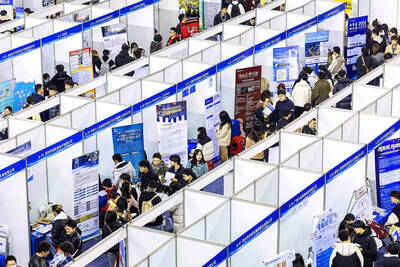
Stephen Garrett, a 27-year-old graduate student, always thought he would study in China, but first the country’s restrictive COVID-19 policies made it nearly impossible and now he has other concerns. The cost is one deterrent, but Garrett is more worried about restrictions on academic freedom and the personal risk of being stranded in China. He is not alone. Only about 700 American students are studying at Chinese universities, down from a peak of nearly 25,000 a decade ago, while there are nearly 300,000 Chinese students at US schools. Some young Americans are discouraged from investing their time in China by what they see
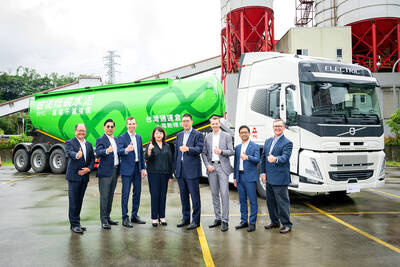
Taiwan Transport and Storage Corp (TTS, 台灣通運倉儲) yesterday unveiled its first electric tractor unit — manufactured by Volvo Trucks — in a ceremony in Taipei, and said the unit would soon be used to transport cement produced by Taiwan Cement Corp (TCC, 台灣水泥). Both TTS and TCC belong to TCC International Holdings Ltd (台泥國際集團). With the electric tractor unit, the Taipei-based cement firm would become the first in Taiwan to use electric vehicles to transport construction materials. TTS chairman Koo Kung-yi (辜公怡), Volvo Trucks vice president of sales and marketing Johan Selven, TCC president Roman Cheng (程耀輝) and Taikoo Motors Group

MAJOR DROP: CEO Tim Cook, who is visiting Hanoi, pledged the firm was committed to Vietnam after its smartphone shipments declined 9.6% annually in the first quarter Apple Inc yesterday said it would increase spending on suppliers in Vietnam, a key production hub, as CEO Tim Cook arrived in the country for a two-day visit. The iPhone maker announced the news in a statement on its Web site, but gave no details of how much it would spend or where the money would go. Cook is expected to meet programmers, content creators and students during his visit, online newspaper VnExpress reported. The visit comes as US President Joe Biden’s administration seeks to ramp up Vietnam’s role in the global tech supply chain to reduce the US’ dependence on China. Images on
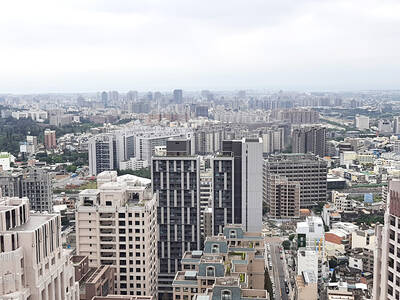
New apartments in Taiwan’s major cities are getting smaller, while old apartments are increasingly occupied by older people, many of whom live alone, government data showed. The phenomenon has to do with sharpening unaffordable property prices and an aging population, property brokers said. Apartments with one bedroom that are two years old or older have gained a noticeable presence in the nation’s six special municipalities as well as Hsinchu county and city in the past five years, Evertrust Rehouse Co (永慶房產集團) found, citing data from the government’s real-price transaction platform. In Taipei, apartments with one bedroom accounted for 19 percent of deals last


 RSS
RSS