


Linux operating systems, an alternative to the market-dominating Microsoft Windows, is expected to enjoy huge growth in the next few years, as governments and corporations gradually adopt the open-source platform to save costs and improve efficiency, an IBM Corp official said.
"Linux's stability and reliability make it a fast growing operating system with strong market traction in recent years," Shintaro Nezuka, IBM's director of Linux sales and marketing division, told a press conference yesterday.
Linux, which can be copied and modified for free, is generally held to be almost indestructible and by far the most reliable core for the world's computer systems.
Expecting great potential in open-source software development, IBM pumped in US$1 billion in developing the Linux platform in 2001 and built up over 4,000 applications to provide end-to-end solutions for customers, Nezuka said.
The company's investment in Linux-based applications has paid off, as it has become a popular operation system among enterprises, Nezuka said.
During the first three quarters of the year, shipments of Linux-based servers increased by 51.4 percent from the same period last year, Nezuka said, citing a report from research firm IDC. Worldwide shipments of Linux servers are expected to exceed 2.1 million units, worth up to US$6.5 billion, IDC said.
The Linux system is also popular among governments. Germany, for example, contracted IBM to offer Linux-based computer systems in government departments last year to enhance computer security and lower dependence on Microsoft, whose Windows platform is considered unstable and is frequently being attacked by computer hackers.
The Linux trend has also extended to Asian countries. In September, the governments of Japan, Korea and China decided to co-develop Linux, including versions that handle Asian languages better, to replace the lock-in Windows platform for large-scale use.
Last month, IT groups from the three countries met in Osaka, Japan and set the agenda for the three-way collaboration.
China, one of the world's fastest-growing technology markets, gave the system a further boost after its government announced last month that it will build a domestic software industry around Linux.
"I believe Taiwan is doing the same thing," Nezuka said. "No one government or enterprise wants to risk depending on one single system."
Indeed, Taiwan launched a government-sponsored Web site -- www.oss.org.tw -- in early October to promote open-source software development including Linux, as the government aims to increase its NT$120 million software industry 100-fold within five years.
Nezuka painted a bright future for Linux, saying the system would soon be applied to desktop computers for personal use, after the system can be completely compatible with popular programs such as Word and Excel.
However, Nezuka said Linux is not defect-free, as it may also be a target of crackers if the system dominates the market like Windows now.
Pamela Chang (張培虆), a public relations official at Microsoft, said the company respects decisions made by governments and corporations, but disputed Linux can help them to save money than Windows.
“Linux is widely regarded as 'free' because there is no or little cost associated with software acquisition, but the system is not any cheaper than Windows when adding all IT costs,” Chang said.
Chang cited a report by IDC, which compares the five-year total cost of ownership (TCO) of Microsoft Windows 2000 server environments with that of Linux server environments. It found that Microsoft Windows 2000 offers 11.22
percent lower total cost than a Linux solution in network infrastructure, print serving, file serving and security applications.
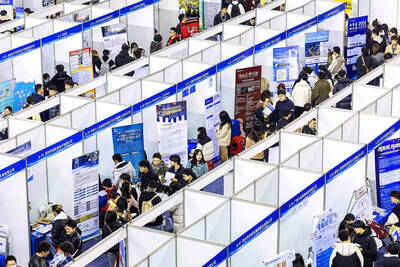
Stephen Garrett, a 27-year-old graduate student, always thought he would study in China, but first the country’s restrictive COVID-19 policies made it nearly impossible and now he has other concerns. The cost is one deterrent, but Garrett is more worried about restrictions on academic freedom and the personal risk of being stranded in China. He is not alone. Only about 700 American students are studying at Chinese universities, down from a peak of nearly 25,000 a decade ago, while there are nearly 300,000 Chinese students at US schools. Some young Americans are discouraged from investing their time in China by what they see

MAJOR DROP: CEO Tim Cook, who is visiting Hanoi, pledged the firm was committed to Vietnam after its smartphone shipments declined 9.6% annually in the first quarter Apple Inc yesterday said it would increase spending on suppliers in Vietnam, a key production hub, as CEO Tim Cook arrived in the country for a two-day visit. The iPhone maker announced the news in a statement on its Web site, but gave no details of how much it would spend or where the money would go. Cook is expected to meet programmers, content creators and students during his visit, online newspaper VnExpress reported. The visit comes as US President Joe Biden’s administration seeks to ramp up Vietnam’s role in the global tech supply chain to reduce the US’ dependence on China. Images on

New apartments in Taiwan’s major cities are getting smaller, while old apartments are increasingly occupied by older people, many of whom live alone, government data showed. The phenomenon has to do with sharpening unaffordable property prices and an aging population, property brokers said. Apartments with one bedroom that are two years old or older have gained a noticeable presence in the nation’s six special municipalities as well as Hsinchu county and city in the past five years, Evertrust Rehouse Co (永慶房產集團) found, citing data from the government’s real-price transaction platform. In Taipei, apartments with one bedroom accounted for 19 percent of deals last
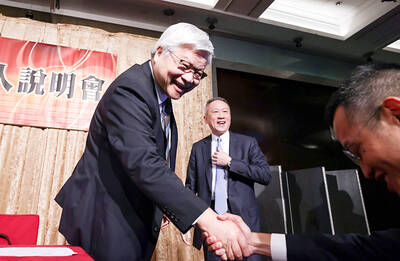
US CONSCULTANT: The US Department of Commerce’s Ursula Burns is a rarely seen US government consultant to be put forward to sit on the board, nominated as an independent director Taiwan Semiconductor Manufacturing Co (TSMC, 台積電), the world’s largest contract chipmaker, yesterday nominated 10 candidates for its new board of directors, including Ursula Burns from the US Department of Commerce. It is rare that TSMC has nominated a US government consultant to sit on its board. Burns was nominated as one of seven independent directors. She is vice chair of the department’s Advisory Council on Supply Chain Competitiveness. Burns is to stand for election at TSMC’s annual shareholders’ meeting on June 4 along with the rest of the candidates. TSMC chairman Mark Liu (劉德音) was not on the list after in December last


 RSS
RSS