


General Motors said on Friday that it stood a good chance of ending the year with its pension plans for American employees fully financed, after beginning the year with the biggest deficit of any company.
While the rising stock market helped GM's pension funds, the company accomplished this feat mostly by taking extraordinary measures to raise cash for the funds. It is contributing much of the US$17.5 billion raised in an unusual bond offering earlier in the year. In addition, GM is infusing US$4.1 billion from the sale of its Hughes Electronics unit to the News Corp, a deal it expects to complete soon.
Many other large companies continue to cope with pension deficits. Because several years of data are used in pension fund calculations, some of these companies will probably have to make big cash contributions in the coming year. Even if stock prices continue to rise, they will still be incorporating the effects of adverse market conditions over the last few years.
But John Devine, GM's vice chairman and chief financial officer, said on Friday that he believed GM's experience showed that most companies could find ways to keep their pension obligations under control, and would do so voluntarily. Congress and the Bush administration should therefore abstain from far-reaching changes in the pension laws, he said.
"We don't believe the wholesale reform of pension rules is necessary," Devine said in a conference call with securities analysts and the media.
The last three years have been the worst for America's corporate pension funds in the postwar era, and business groups and the Bush administration have been discussing a variety of possible changes in the pension laws. GM's pension funds have been closely watched, because they had a shortfall of almost US$19 billion at the beginning of the year -- by far the largest deficit in the private sector.
Bush administration officials have advocated tightening the pension laws, but Devine and other GM executives said that they favored modest changes, and that demands to shore up company pension funds would hurt the competitive position of American business.
"Frankly, if we make a wholesale reform, it could be a step backward," he said.
Some companies, like certain large airlines and old-line manufacturers, cannot afford to make pension contributions. GM has put US$14.4 billion of the total bond proceeds into its US pension funds, according to a report supplied by the company. That, combined with the anticipated US$4.1 billion from the sale of Hughes, would make a total pension contribution of US$18.5 billion for the year. The contribution did not affect GM's executive pension plans or its pension obligations to workers outside the US, officials said.
The US$18.5 billion contributions would have been more than enough to close the US$17.8 billion shortfall the American plans had at the beginning of the year, but several factors added to GM's pension obligations over the course of the year, according to the company. Its workers built up their future benefits by about US$6 billion, a new labor contract with the United Auto Workers added US$2.1 billion in obligations, and interest rates fell, increasing obligations. GM succeeded in closing those gaps by achieving an 18 percent return on its pension assets, which added US$10.8 billion in investment income.
David Zion, an analyst with Credit Suisse First Boston, said he thought GM's example might prompt other companies to consider whether they could sell bonds and put the proceeds in their pension funds.
"They've got a healthier pension plan, much healthier than it was at the end of last year," said Zion, who has specialized in studies of the pension obligations of companies in the S&P 500. "But they do have another form of debt that they've used to make the pension fund healthier. That's the balance."
The GM officials said their handling of the pension funds carried a number of advantages. The company still has a large debt that will come due over time; instead of having to divert a substantial share of its operating revenue to the pension funds, GM will now have to pay the investors who bought its bonds. But having bond debt instead of pension debt will improve GM's cash flow over the short term, said GM's treasurer, Walter Borst.
If GM had not issued bonds and made a giant pension contribution now, he said, the company would have had to make regular contributions each year for the next five years, totaling about US$17.2 billion, to keep the funds compliant with the law. And if GM had failed to make those contributions, it would have owed special fees to the government's pension insurance program.
Now, the company does not expect to be required to make any contributions for the rest of the decade, Borst said. Each year, GM's work force accumulates about US$6.3 billion of future pension benefits, he said, and the company expects its average investment returns on the pension portfolio to more than cover that amount. He said the company is assuming a 9 percent annual return on its pension portfolio over the long term, for an average annual investment gain of US$7.2 billion.
The company will reap tax deductions for the contributions. And an accounting rule allows it to include the hypothetical 9 percent return when calculating the effect of pension activity on its reported income.
Even with these improvements, the executives said pension activity would continue to depress earnings for a time. They said pretax pension expense would be US$1.5 billion next year, compared with an estimated US$2.6 billion this year.
While bolstering assets in the pension plans, GM officials said they were also taking new steps to reduce the volatility of those investments. Allen Reed, chief executive of GM Asset Management, which manages the pension funds, said that since 1987, GM's pension investments have gained as much as 23 percent in some years and lost as much as 7 percent in others. The company plans to change its investment strategy to reduce those sharp swings.
Reed said the fund could not increase its bond holdings, even though doing so might reduce volatility, because bond investments would not yield the sought-after 9 percent annual returns.

Stephen Garrett, a 27-year-old graduate student, always thought he would study in China, but first the country’s restrictive COVID-19 policies made it nearly impossible and now he has other concerns. The cost is one deterrent, but Garrett is more worried about restrictions on academic freedom and the personal risk of being stranded in China. He is not alone. Only about 700 American students are studying at Chinese universities, down from a peak of nearly 25,000 a decade ago, while there are nearly 300,000 Chinese students at US schools. Some young Americans are discouraged from investing their time in China by what they see
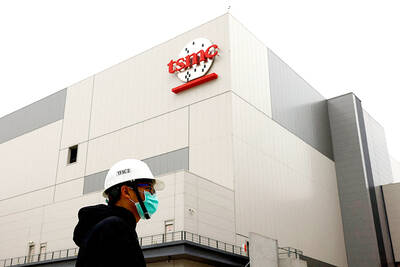
Taiwan Semiconductor Manufacturing Co (TSMC, 台積電), the world’s largest contract chipmaker, yesterday reported record sales for the first quarter, which analysts attributed to solid demand for emerging technologies. Consolidated revenue totaled NT$592.64 billion (US$18.51 billion) in the January-to-March period, up 16.5 percent from a year earlier, but down 5.26 percent from the previous quarter, TSMC said in a statement. The first-quarter revenue beat analysts’ average projection of NT$579.5 billion, Bloomberg News reported. That performance lends weight to expectations that the world’s most valuable chipmaker would return to solid growth this year after weathering a post-COVID-19-pandemic cratering of smartphone and computer sales. TSMC is budgeting

MAJOR DROP: CEO Tim Cook, who is visiting Hanoi, pledged the firm was committed to Vietnam after its smartphone shipments declined 9.6% annually in the first quarter Apple Inc yesterday said it would increase spending on suppliers in Vietnam, a key production hub, as CEO Tim Cook arrived in the country for a two-day visit. The iPhone maker announced the news in a statement on its Web site, but gave no details of how much it would spend or where the money would go. Cook is expected to meet programmers, content creators and students during his visit, online newspaper VnExpress reported. The visit comes as US President Joe Biden’s administration seeks to ramp up Vietnam’s role in the global tech supply chain to reduce the US’ dependence on China. Images on
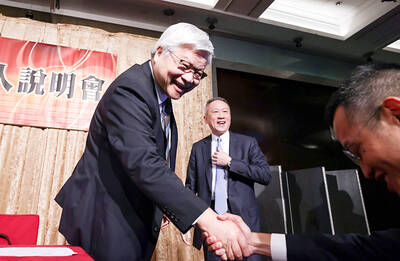
US CONSCULTANT: The US Department of Commerce’s Ursula Burns is a rarely seen US government consultant to be put forward to sit on the board, nominated as an independent director Taiwan Semiconductor Manufacturing Co (TSMC, 台積電), the world’s largest contract chipmaker, yesterday nominated 10 candidates for its new board of directors, including Ursula Burns from the US Department of Commerce. It is rare that TSMC has nominated a US government consultant to sit on its board. Burns was nominated as one of seven independent directors. She is vice chair of the department’s Advisory Council on Supply Chain Competitiveness. Burns is to stand for election at TSMC’s annual shareholders’ meeting on June 4 along with the rest of the candidates. TSMC chairman Mark Liu (劉德音) was not on the list after in December last


 RSS
RSS