


Banks here should adopt integrated circuit (IC) cards which combine the functions of cash-withdrawal, credit, cash advances, and smart debit on one card, a veteran in the financial application system industry said over the weekend, adding that this would make it easier for Taiwanese consumers to connect to future international standards.
"It is estimated that the banks would need to spend up to NT$15 billion on converting the current ATM card system, including cards, ATMs as well as the computer systems, into the integrated circuited (IC) card system as the authorities demand," Stony Yen (
"Banks would need to pay an additional NT$10 billion for an IC credit card system in the face of the future credit card conversion requirement by 2006," Yen added.
In a bid to resolve the increasingly severe problems of card fraud in Taiwan, the Ministry of Finance ruled in October that the more than 600 million magnetic cards currently in circulation need to be converted into more secure IC cards by next June.
COMBO CARDS
International credit card issuers like Visa and MasterCard are also promoting the conversion of current magnetic credit cards into IC ones by 2006.
"Taiwan's banks would save the cost and customers' troubles by adopting a combo card system by taking this opportunity," Yen said.
GemFor Tech last week launched its Chip Data Preparation System (CDPS) as a platform for combo IC cards for local banks.
Because of the accelerated rate of card conversion, Taiwan's cardholders may encounter some inconveniences when using IC cards or IC credit cards abroad, the industry veteran said.
"Taiwan's cardholders may confront time-out problems when using IC credit cards overseas because the system to be adopted by Taiwan to read IC cards and IC credit cards would be the so-called FISC I system while the international community will utilize FISC II in the future," Yen said.
When asked to comment on this potential problem on Friday, the MOF-funded Financial Information Service Co (
The company stressed that IC cards would still retain their magnetic strip on the back of the card for cardholders' convenience when abroad.
"The retained magnetic strip on the IC card's back will facilitate Taiwan's cardholders using IC cards for money withdrawals or transfers at overseas ATMs with Cirrus or Plus functions," said Pan Wei-chung (
POINTLESS CHANGE?
However, the preservation of the magnetic strip has sparked a debate about whether the problem of information theft to produce fake cards will remain.
The Financial Information Service, which was set up to oversee the automation of banking services, has urged local banks to install anti-record facilities at local ATMs in a bid to prevent the recorded information in the magnetic strip of new IC cards getting into the hands of criminals, Pan added.
"One of the practical measures to avoid such a problem is that banks do not write the information into the strips until cardholders ask for it before travelling overseas and delete the information right after they come back from abroad," GemFor's Yen said.

Stephen Garrett, a 27-year-old graduate student, always thought he would study in China, but first the country’s restrictive COVID-19 policies made it nearly impossible and now he has other concerns. The cost is one deterrent, but Garrett is more worried about restrictions on academic freedom and the personal risk of being stranded in China. He is not alone. Only about 700 American students are studying at Chinese universities, down from a peak of nearly 25,000 a decade ago, while there are nearly 300,000 Chinese students at US schools. Some young Americans are discouraged from investing their time in China by what they see

MAJOR DROP: CEO Tim Cook, who is visiting Hanoi, pledged the firm was committed to Vietnam after its smartphone shipments declined 9.6% annually in the first quarter Apple Inc yesterday said it would increase spending on suppliers in Vietnam, a key production hub, as CEO Tim Cook arrived in the country for a two-day visit. The iPhone maker announced the news in a statement on its Web site, but gave no details of how much it would spend or where the money would go. Cook is expected to meet programmers, content creators and students during his visit, online newspaper VnExpress reported. The visit comes as US President Joe Biden’s administration seeks to ramp up Vietnam’s role in the global tech supply chain to reduce the US’ dependence on China. Images on
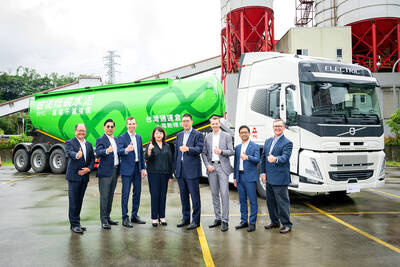
Taiwan Transport and Storage Corp (TTS, 台灣通運倉儲) yesterday unveiled its first electric tractor unit — manufactured by Volvo Trucks — in a ceremony in Taipei, and said the unit would soon be used to transport cement produced by Taiwan Cement Corp (TCC, 台灣水泥). Both TTS and TCC belong to TCC International Holdings Ltd (台泥國際集團). With the electric tractor unit, the Taipei-based cement firm would become the first in Taiwan to use electric vehicles to transport construction materials. TTS chairman Koo Kung-yi (辜公怡), Volvo Trucks vice president of sales and marketing Johan Selven, TCC president Roman Cheng (程耀輝) and Taikoo Motors Group
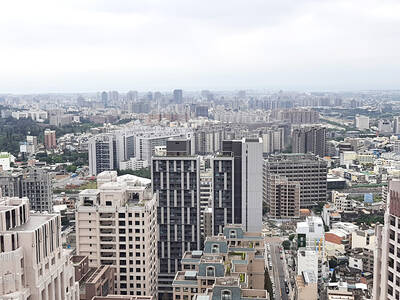
New apartments in Taiwan’s major cities are getting smaller, while old apartments are increasingly occupied by older people, many of whom live alone, government data showed. The phenomenon has to do with sharpening unaffordable property prices and an aging population, property brokers said. Apartments with one bedroom that are two years old or older have gained a noticeable presence in the nation’s six special municipalities as well as Hsinchu county and city in the past five years, Evertrust Rehouse Co (永慶房產集團) found, citing data from the government’s real-price transaction platform. In Taipei, apartments with one bedroom accounted for 19 percent of deals last


 RSS
RSS