


A biotechnology firm aims to bring handheld testing devices for harmful bacteria and viruses to hospi-tals, schools, farms and even homes within 18 months by pairing up with local personal-digital assistant (PDA) manufacturers, company officials said yesterday.
"We are co-operating with local PDA companies and hope to have a handheld testing laboratory on the market within one and a half years," Mike Chen (
"Eventually each test will take less than one hour," he said.
Dr Chip claims to have pioneered biochips or polymer chips that react on a molecular level to harmful agents present in a sample taken from a suspect source such as a throat swab, a drop of liquid, a smear from an animal and display genetic markers from potential killers in the form of colored dots.
Separate pathogens show up as different patterns of colored dots which are then read by a scanner to identify exactly what they are. With this information, doctors can offer patients the right treatment.
"The beauty of biochips is that you can detect multiple targets in one test," said Dr Chip's international marketing director, Esther Wu (
"The idea is that by putting an entire lab on one chip you avoid labor and human error," she said.
"We are focusing on automation so people can use the chip system at home," she added. "That's our final goal."
There are many potential uses for Dr Chip's diagnostic tests. One kit the company sells already detects the deadly white spot virus that can wipe out a shrimp farm in two days from the first infection.
Another detects the unpleasant enterovirus that causes diarrhea and stomach pains and can be fatal in children.
The company sold over 10,000 enterovirus test kits last year to hospitals and institutions in Taiwan to protect children in schools where the virus is prevalent.
Around 5,400 tests were sold to the Dairy Development Association of China to detect diseases in cattle like mastitis, which affects milk production.
The US dairy industry loses US$1.7 billion in milk production to mastitis annually, according to the National Mastitis Council.
The process currently takes four to six hours, and can identify 67 types of enterovirus, nine types of food-borne pathogen including e-coli, listeria and staphylococcus, eight types of harmful milk bacteria and respiratory viruses like influenza A and B, chlamydia and, most recently, SARS.
Dr Chip has yet to make a breakthrough with its SARS test, however, as the government has not certified its production procedure. For any test that is administered on humans, the government requires a Good Manufacturing Practice (GMP) certificate.
By moving into a new building in the Chunan Science Park (竹南科學園區) -- an overspill of the now fully occupied Hsinchu Science-Based Industrial Park -- and setting up a new manufacturing facility, the company expects to achieve GMP status by year-end, Chen said.
But there are markets outside the country. Beijing's Center for Disease Control and several hospitals in China have purchased SARS detection kits in anticipation of a new outbreak of the disease this winter, Wu said.
Dr Chip was founded by Wang Hsien-huang (王獻煌), formerly the project leader of the biochip technology development program at the Industrial Technology Research Institute (工研院), an academic institute that incubates research into viable companies.
Dr Chip needs more than products to turn a profit.
Last year, the five-year old company achieved US$600,000 in sales, and received the same in government funding for its research, but still made a loss.
This year, the company is hoping to break even with US$700,000 sales and a similar grant to last year.
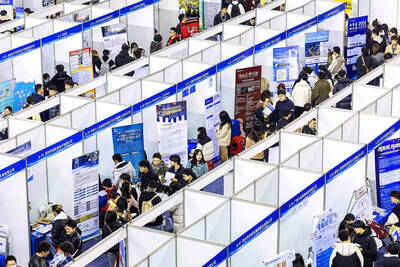
Stephen Garrett, a 27-year-old graduate student, always thought he would study in China, but first the country’s restrictive COVID-19 policies made it nearly impossible and now he has other concerns. The cost is one deterrent, but Garrett is more worried about restrictions on academic freedom and the personal risk of being stranded in China. He is not alone. Only about 700 American students are studying at Chinese universities, down from a peak of nearly 25,000 a decade ago, while there are nearly 300,000 Chinese students at US schools. Some young Americans are discouraged from investing their time in China by what they see

MAJOR DROP: CEO Tim Cook, who is visiting Hanoi, pledged the firm was committed to Vietnam after its smartphone shipments declined 9.6% annually in the first quarter Apple Inc yesterday said it would increase spending on suppliers in Vietnam, a key production hub, as CEO Tim Cook arrived in the country for a two-day visit. The iPhone maker announced the news in a statement on its Web site, but gave no details of how much it would spend or where the money would go. Cook is expected to meet programmers, content creators and students during his visit, online newspaper VnExpress reported. The visit comes as US President Joe Biden’s administration seeks to ramp up Vietnam’s role in the global tech supply chain to reduce the US’ dependence on China. Images on

New apartments in Taiwan’s major cities are getting smaller, while old apartments are increasingly occupied by older people, many of whom live alone, government data showed. The phenomenon has to do with sharpening unaffordable property prices and an aging population, property brokers said. Apartments with one bedroom that are two years old or older have gained a noticeable presence in the nation’s six special municipalities as well as Hsinchu county and city in the past five years, Evertrust Rehouse Co (永慶房產集團) found, citing data from the government’s real-price transaction platform. In Taipei, apartments with one bedroom accounted for 19 percent of deals last
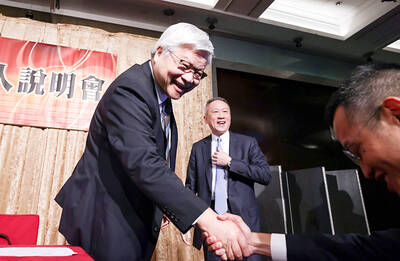
US CONSCULTANT: The US Department of Commerce’s Ursula Burns is a rarely seen US government consultant to be put forward to sit on the board, nominated as an independent director Taiwan Semiconductor Manufacturing Co (TSMC, 台積電), the world’s largest contract chipmaker, yesterday nominated 10 candidates for its new board of directors, including Ursula Burns from the US Department of Commerce. It is rare that TSMC has nominated a US government consultant to sit on its board. Burns was nominated as one of seven independent directors. She is vice chair of the department’s Advisory Council on Supply Chain Competitiveness. Burns is to stand for election at TSMC’s annual shareholders’ meeting on June 4 along with the rest of the candidates. TSMC chairman Mark Liu (劉德音) was not on the list after in December last


 RSS
RSS