


China on Tuesday announced an average cut of 3 percentage points in export tax rebates next year, aiming to ease mounting US pressure for a revaluation of the yuan.
But analysts said the new policy may negatively impact some Taiwanese businesses operating in China.
"Profit margins of many China-based Taiwanese businesses may be narrowed by an average 3 percent," Jason Fong (馮志良), deputy secretary general of the Chinese National Federation of Industries (工總), told the Taipei Times yesterday.
Currently, about one-third of Taiwanese businesses operating in China are located in unaffected tax-free bonded areas, Fong said.
Businesses located in China's economically developed areas such as Shanghai, Guangzhou and Shenzhen will be hit the hardest, since local governments in these areas usually adopt an iron-fisted approach to new policy execution, Fong added.
Yet Taiwanese businessmen can expect the policy to be applied more loosely by some inner Chinese local governments.
Governments in Chengdu city, Wuhan city and Jiangxi Province, for instance, may come up with other supporting measures or other preferable treatments that offset the impact of cuts in tax rebates in order to retain business, Fong explained.
Kao Charng (
But he also said that China-based exporters may then reduce other expenditures by importing tax-free raw material to take advantage of the tax-free treatment while making exports with higher production costs.
Kao, nevertheless, gave credit to the new policy.
He said Chinese governments' domestic fiscal problems, as well as international pressures on its currency, may be addressed and alleviated by the policy.
But Fong expressed concern about Beijing's lack of efficiency in rebating business taxes, which he said has contributed to a squeeze in China-based businesses' working capital.
Another analyst said the tax rebates reform will create no negative impact on the majority of Taiwan's high-tech and electronics industries with operations in China.
"Most Taiwanese high-tech and electronics industries will be unaffected by the new policy since they are still subject to the 17 percent tax rebate-rate category," said James Yeh (葉雲龍), a senior fund manager of HSBC Asset Management (Taiwan) Ltd's research department.
According to a statement by the Chinese State Council, export goods will be classified into five rate-categories with aircraft, automobiles and related components continuing to enjoy their 17 percent rebate-rates.
Products granted a new 13 percent rate include steel, chemicals, plastic and rubber, clothing, textiles, toys, shoes and leather products.
Yeh added that the new rebate policy is expected to help China restructure its industrial focus from a low-end and labor-intensive economy to a high-end, capital-intensive economy.
"Environmentally-unfriendly industries such as raw material and mineral industries will no longer enjoy high rebate rates and, therefore, be gradually phased out," Yeh said.
The Hongkong and Shanghai Banking Corp (HSBC) expressed its official views of the rebate policy, saying China is sending a message to the world that it's willing to make compromises to address concerns about its trade surplus while determining to maintain a stable Chinese yuan policy.
"Since a 3 percentage point reduction on value-added tax (VAT) rebates will force some Chinese exporters to increase prices to protect their margins, it can be seen as an effective 3 percent revaluation of the currency," the HSBC said in a written statement, adding that most Chinese exporters should succeed in passing on the extra charges to customers.
The policy will save China an annual fiscal cost by 50 billion yuan to 60 billion yuan while expecting the VAT tax cut to further lower China's export growth by 3 percent to 5 percent next year to an estimated 16 percent, HSBC said.
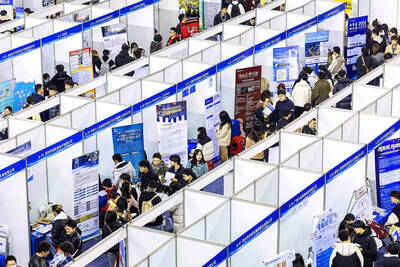
Stephen Garrett, a 27-year-old graduate student, always thought he would study in China, but first the country’s restrictive COVID-19 policies made it nearly impossible and now he has other concerns. The cost is one deterrent, but Garrett is more worried about restrictions on academic freedom and the personal risk of being stranded in China. He is not alone. Only about 700 American students are studying at Chinese universities, down from a peak of nearly 25,000 a decade ago, while there are nearly 300,000 Chinese students at US schools. Some young Americans are discouraged from investing their time in China by what they see

MAJOR DROP: CEO Tim Cook, who is visiting Hanoi, pledged the firm was committed to Vietnam after its smartphone shipments declined 9.6% annually in the first quarter Apple Inc yesterday said it would increase spending on suppliers in Vietnam, a key production hub, as CEO Tim Cook arrived in the country for a two-day visit. The iPhone maker announced the news in a statement on its Web site, but gave no details of how much it would spend or where the money would go. Cook is expected to meet programmers, content creators and students during his visit, online newspaper VnExpress reported. The visit comes as US President Joe Biden’s administration seeks to ramp up Vietnam’s role in the global tech supply chain to reduce the US’ dependence on China. Images on
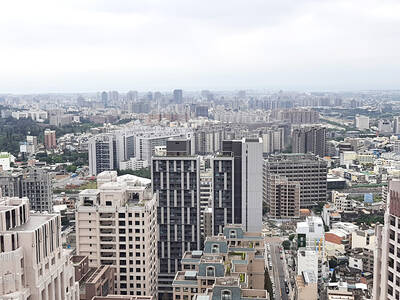
New apartments in Taiwan’s major cities are getting smaller, while old apartments are increasingly occupied by older people, many of whom live alone, government data showed. The phenomenon has to do with sharpening unaffordable property prices and an aging population, property brokers said. Apartments with one bedroom that are two years old or older have gained a noticeable presence in the nation’s six special municipalities as well as Hsinchu county and city in the past five years, Evertrust Rehouse Co (永慶房產集團) found, citing data from the government’s real-price transaction platform. In Taipei, apartments with one bedroom accounted for 19 percent of deals last
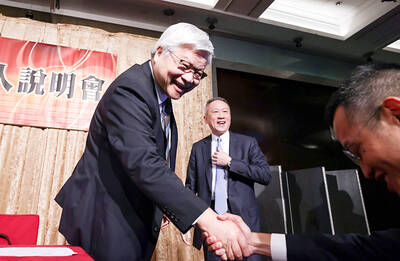
US CONSCULTANT: The US Department of Commerce’s Ursula Burns is a rarely seen US government consultant to be put forward to sit on the board, nominated as an independent director Taiwan Semiconductor Manufacturing Co (TSMC, 台積電), the world’s largest contract chipmaker, yesterday nominated 10 candidates for its new board of directors, including Ursula Burns from the US Department of Commerce. It is rare that TSMC has nominated a US government consultant to sit on its board. Burns was nominated as one of seven independent directors. She is vice chair of the department’s Advisory Council on Supply Chain Competitiveness. Burns is to stand for election at TSMC’s annual shareholders’ meeting on June 4 along with the rest of the candidates. TSMC chairman Mark Liu (劉德音) was not on the list after in December last


 RSS
RSS