


Oil prices surged to a two-month peak Friday on a combination of fund buying and concerns about heating fuel supplies ahead of a looming northern hemisphere winter.
New York's benchmark light sweet crude November contract gained US$0.96 to US$31.97 per barrel in afternoon trade.
The price of reference Brent North Sea crude oil for November delivery rose US$0.76 to US$30.90 per barrel in late deals.
OPEC's decision to slash oil output starting in November will keep crude prices high this autumn, but burgeoning exports from Iraq and Russia could force the producer group to cut deeper when demand ebbs next spring, the International Energy Agency said Friday.
The desire of some OPEC members to increase their production quotas will add to pressure on the Organization of Petroleum Exporting Countries in the second quarter of next year, when oil consumption hits a seasonal low.
Firm crude prices will encourage Russia and other independent producers to pump more oil to maximize their revenues. To avoid a supply glut, OPEC will have to pump less, giving up some its market share for the fifth consecutive year, the IEA said.
If OPEC refuses to reduce its output in the face of falling demand, prices will sink beneath the weight of surplus crude.
"Difficult decisions lie ahead," the IEA said in its monthly oil market report. The IEA, headquartered in Paris, is the energy watchdog for the world's biggest oil-importing countries.
The agency noted that average crude prices fell sharply in September, but as usual it avoided forecasting prices.
November contracts of US light, sweet crude were trading Friday at US$31.93 a barrel on the New York Mercantile Exchange. Adam Sieminski, an oil price strategist at Deutsche Bank in London, said he expected US prices would fall to an average of US$24.00 during next year's second quarter.
Such a decrease "seems like a lot," but the confluence of factors described in the IEA's report suggest that lower prices might be inevitable, Sieminski said.
OPEC, for now, is "on a roll," the agency said. With its pre-emptive decision on Sept. 24 to cut its production target by 900,000 barrels a day, the group aimed to show its resolve to do whatever it takes to support prices.
But OPEC's comfort is only temporary, the IEA said.
Iraq's postwar production is recovering more quickly than many analysts had expected. Iraq pumped an additional 380,000 barrels a day in September, whereas OPEC, which includes Iraq among its 11 members, boosted its overall production by just 90,000 barrels a day, the IEA said.
Lower output from Saudi Arabia and the United Arab Emirates offset some of the Iraqi increase, and OPEC averaged 26.66 million barrels a day for the month. World oil output overall edged upward by 300,000 barrels a day to 80.11 million barrels.
Independent producers led by Russia, Norway and Kazakhstan continued to surge ahead, adding 135,000 barrels a day last month, the IEA said. Non-OPEC production has risen by 2.2 million barrels a day since September last year, and OPEC worries that this trend might upset the global balance of supply and demand.
After OPEC agreed to cut production starting Nov. 1, some of its members hinted that they wouldn't do so again unless independent producers shouldered some of the burden by making cuts of their own. Russia -- the largest crude supplier outside OPEC -- is the group's main cause for concern as it anticipates a decline in postwinter demand.
"They've got to get help from Russia if they really want to contain this. Russia's production is increasing more rapidly than anybody else's and will continue to increase," said John Waterlow, an oil analyst at Wood Mackenzie Consultants in Edinburgh.
Russia agreed reluctantly in December 2001 to cut its production in cooperation with OPEC, but it has played down expectations that it might do so again.
OPEC President Abdullah bin Hamad al-Attiyah told reporters in Tokyo on Friday that Russia had given the group "very strong commitments" to cooperate and that the Russians were "absolutely" not interested in seeing prices fall.
Yet later in the day, Russia's Energy Minister Igor Yusufov told a news conference in Moscow that OPEC's price target was too high.
"We don't want to go over US$25 a barrel because it hurts consumers, while OPEC believes that US$28 a barrel -- even US$30 a barrel -- is acceptable," Yusufov said.
Waterlow, the analyst, said that Russian support for OPEC "is unlikely to be any more than cosmetic, if it happens at all."
At the same time, pressure is growing within OPEC, as Algeria, Libya and Nigeria each press for a larger output quota. Any increase in individual quotas would make it harder for OPEC to trim its aggregate production, the IEA said.

Stephen Garrett, a 27-year-old graduate student, always thought he would study in China, but first the country’s restrictive COVID-19 policies made it nearly impossible and now he has other concerns. The cost is one deterrent, but Garrett is more worried about restrictions on academic freedom and the personal risk of being stranded in China. He is not alone. Only about 700 American students are studying at Chinese universities, down from a peak of nearly 25,000 a decade ago, while there are nearly 300,000 Chinese students at US schools. Some young Americans are discouraged from investing their time in China by what they see

MAJOR DROP: CEO Tim Cook, who is visiting Hanoi, pledged the firm was committed to Vietnam after its smartphone shipments declined 9.6% annually in the first quarter Apple Inc yesterday said it would increase spending on suppliers in Vietnam, a key production hub, as CEO Tim Cook arrived in the country for a two-day visit. The iPhone maker announced the news in a statement on its Web site, but gave no details of how much it would spend or where the money would go. Cook is expected to meet programmers, content creators and students during his visit, online newspaper VnExpress reported. The visit comes as US President Joe Biden’s administration seeks to ramp up Vietnam’s role in the global tech supply chain to reduce the US’ dependence on China. Images on
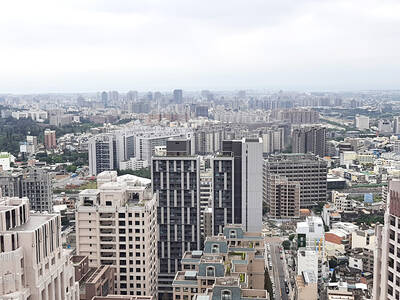
New apartments in Taiwan’s major cities are getting smaller, while old apartments are increasingly occupied by older people, many of whom live alone, government data showed. The phenomenon has to do with sharpening unaffordable property prices and an aging population, property brokers said. Apartments with one bedroom that are two years old or older have gained a noticeable presence in the nation’s six special municipalities as well as Hsinchu county and city in the past five years, Evertrust Rehouse Co (永慶房產集團) found, citing data from the government’s real-price transaction platform. In Taipei, apartments with one bedroom accounted for 19 percent of deals last

US CONSCULTANT: The US Department of Commerce’s Ursula Burns is a rarely seen US government consultant to be put forward to sit on the board, nominated as an independent director Taiwan Semiconductor Manufacturing Co (TSMC, 台積電), the world’s largest contract chipmaker, yesterday nominated 10 candidates for its new board of directors, including Ursula Burns from the US Department of Commerce. It is rare that TSMC has nominated a US government consultant to sit on its board. Burns was nominated as one of seven independent directors. She is vice chair of the department’s Advisory Council on Supply Chain Competitiveness. Burns is to stand for election at TSMC’s annual shareholders’ meeting on June 4 along with the rest of the candidates. TSMC chairman Mark Liu (劉德音) was not on the list after in December last


 RSS
RSS