


Taiwan has become the latest target of Washington's concerns over the value of the Chinese yuan, with a group of congressmen introducing a resolution condemning Taiwan for allegedly manipulating its currency at the expense of Amercian jobs.
Taiwan was listed along with China, Japan and South Korea in the little-noticed bill, which was introduced last week by Illinois Republican Don Manzullo, the chairman of the House Small Business Committee, and four other congressmen.
The bill, a non-binding resolution, charges that the currency manipulation by the four countries "has contributed significantly to the loss of United States manufacturing jobs since July 2000," in which time the US manufacturing sector has lost 2.7 million jobs.
It also says that the four countries' currency reserves total more than US$1.2 trillion, "half of which have been bought since 1999."
While much of the thrust of the House measure is aimed at China, the sponsors made it clear in the recommendations contained in the bill that the legislation was aimed at all four Asian currencies.
The bill calls on the US President George W. Bush to "enforce United States laws that provide remedies to counteract the unfair foreign practice of currency manipulation," and to take steps to encourage an international system of floating exchange rates that would "enable the dollar and other major currencies to move toward their equilibrium rates."
The measure also calls on the US Trade Representative's office to take action under Section 301 of the Trade Law of 1974 to combat unfair currency manipulation.
The head of Taiwan's Central Bank of China said on Thursday that Taiwan isn't contributing to the growth of the current-account deficit of the world's biggest economy.
According to historical Taiwan-US trade statistics, "The data clearly shows Taiwan's trade surplus with the US is declining and not increasing. In other words, Taiwan isn't one of the main countries causing the US current-account deficit,'' the Bloomberg reported, quoting Perng Fai-nan (
Taiwan's trade surplus with the US dropped in each of the past three years, according to figures from the Ministry of Finance. It fell 8 percent to US$8.67 billion last year from a year earlier, declined 2.7 percent in 2001 and slumped 14 percent in 2000. Still, the surplus has climbed 10.2 percent to US$6.15 billion in the first eight months of this year from the same period a year ago.
The US current-account deficit widened to a record US$138.7 billion, or a highest-ever 5.1 percent of GDP, in the first quarter, figures from the Commerce Department showed this month.
But pressure for the trade representative to initiate an investigation under Section 301 intensified Thursday, when seven representatives and senators testified before a hearing, blaming China's allegedly undervalued yuan for sapping jobs from America, and hitting at Beijing for a long list of areas in which China has not complied with the obligations it undertook when it entered the WTO in late 2001.

Taiwan Transport and Storage Corp (TTS, 台灣通運倉儲) yesterday unveiled its first electric tractor unit — manufactured by Volvo Trucks — in a ceremony in Taipei, and said the unit would soon be used to transport cement produced by Taiwan Cement Corp (TCC, 台灣水泥). Both TTS and TCC belong to TCC International Holdings Ltd (台泥國際集團). With the electric tractor unit, the Taipei-based cement firm would become the first in Taiwan to use electric vehicles to transport construction materials. TTS chairman Koo Kung-yi (辜公怡), Volvo Trucks vice president of sales and marketing Johan Selven, TCC president Roman Cheng (程耀輝) and Taikoo Motors Group

Stephen Garrett, a 27-year-old graduate student, always thought he would study in China, but first the country’s restrictive COVID-19 policies made it nearly impossible and now he has other concerns. The cost is one deterrent, but Garrett is more worried about restrictions on academic freedom and the personal risk of being stranded in China. He is not alone. Only about 700 American students are studying at Chinese universities, down from a peak of nearly 25,000 a decade ago, while there are nearly 300,000 Chinese students at US schools. Some young Americans are discouraged from investing their time in China by what they see

MAJOR DROP: CEO Tim Cook, who is visiting Hanoi, pledged the firm was committed to Vietnam after its smartphone shipments declined 9.6% annually in the first quarter Apple Inc yesterday said it would increase spending on suppliers in Vietnam, a key production hub, as CEO Tim Cook arrived in the country for a two-day visit. The iPhone maker announced the news in a statement on its Web site, but gave no details of how much it would spend or where the money would go. Cook is expected to meet programmers, content creators and students during his visit, online newspaper VnExpress reported. The visit comes as US President Joe Biden’s administration seeks to ramp up Vietnam’s role in the global tech supply chain to reduce the US’ dependence on China. Images on
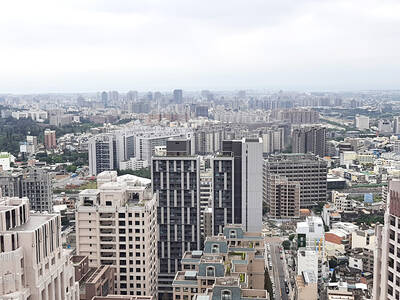
New apartments in Taiwan’s major cities are getting smaller, while old apartments are increasingly occupied by older people, many of whom live alone, government data showed. The phenomenon has to do with sharpening unaffordable property prices and an aging population, property brokers said. Apartments with one bedroom that are two years old or older have gained a noticeable presence in the nation’s six special municipalities as well as Hsinchu county and city in the past five years, Evertrust Rehouse Co (永慶房產集團) found, citing data from the government’s real-price transaction platform. In Taipei, apartments with one bedroom accounted for 19 percent of deals last


 RSS
RSS