


Developing countries are going to be the major source of sales growth for the computer industry in the coming years as mature markets in North America, Europe and Japan have reached near saturation point, according to industry leaders speaking in Taipei earlier this week.
"The world has digital haves and digital have-nots," Chen Wen-chi (
"In China, India and many other countries -- as well as in industrialized countries -- many people lack connections to the Internet, and for them we are talking about affordable and rich-featured access to the Internet," Chen said.
By concentrating on low-power performance computer chips, VIA has managed to create computers at lower prices than its competitors, making them affordable to consumers in developing countries such as Thailand and India.
"Thai government-sponsored interest-free and low-interest loans make the PC really affordable," Chen said. "They are choosing VIA processors as well as chipsets. We'd like to see this happening not just in Thailand, but also in Taiwan, China, India and all over the world."
This would then lead to a closing of the gap between the digital haves and have-nots, he added.
Other technology companies are also eyeing developing markets to make up for sales in sluggish developed nations that have seen little growth for the past three years.
Jason Chen (
"Emerging markets will account for 40 percent of PC shipments by 2006 from 20 percent in 1999," Chen said. "That's a very significant signal to the industry."
The way to sell to developing countries may be through government projects aimed at increasing computer use in schools and institutions. Wyse Technology Taiwan (
"Our customers in Taiwan are looking for markets beyond the PC," Phil Pompa, a vice president at chipmaker Advanced Micro Devices Inc -- which supplies the chips used to make Wyse's thin clients -- said on Tuesday.
"They are looking for high-growth markets like thin clients, mobile clients and set-top boxes," he said.
Getting the next generation of computers to price levels below US$200 will also stimulate growth in mature markets, said Albert Sisto, chief executive officer of software developer Phoenix Technologies Ltd.
"Technically savvy people aren't spending the money on new technology products as they aren't seeing the solutions [they want] from our industry," he said at the VIA forum. "The industry needs to evolve into a US$99 kind of market."
Japanese companies Sony Electronics Co and Nintendo Co, and the US' Microsoft Corp have been successful at selling gaming consoles that cost between US$100 and US$200. These simple devices hook up to any television and allow users to play opponents anywhere in the world via the Internet, offering "hours of entertainment for as little as US$99," Sisto said. "If we can do that, we will see a rebound."
This year Taiwanese manufacturers are expected to ship more than 18 million game consoles for the three major brands, according to estimates from the semi-official Market Intelligence Center.
The potential for non-traditional computing devices is much greater. By 2005, researcher eTForecast and chipmaker National Semiconductor Co predict a market of 500 million, equal to the PC market. There will also be 400 million mobile phones that can connect to the Internet.
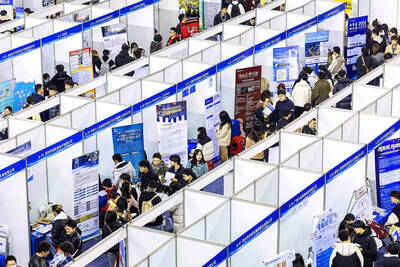
Stephen Garrett, a 27-year-old graduate student, always thought he would study in China, but first the country’s restrictive COVID-19 policies made it nearly impossible and now he has other concerns. The cost is one deterrent, but Garrett is more worried about restrictions on academic freedom and the personal risk of being stranded in China. He is not alone. Only about 700 American students are studying at Chinese universities, down from a peak of nearly 25,000 a decade ago, while there are nearly 300,000 Chinese students at US schools. Some young Americans are discouraged from investing their time in China by what they see

MAJOR DROP: CEO Tim Cook, who is visiting Hanoi, pledged the firm was committed to Vietnam after its smartphone shipments declined 9.6% annually in the first quarter Apple Inc yesterday said it would increase spending on suppliers in Vietnam, a key production hub, as CEO Tim Cook arrived in the country for a two-day visit. The iPhone maker announced the news in a statement on its Web site, but gave no details of how much it would spend or where the money would go. Cook is expected to meet programmers, content creators and students during his visit, online newspaper VnExpress reported. The visit comes as US President Joe Biden’s administration seeks to ramp up Vietnam’s role in the global tech supply chain to reduce the US’ dependence on China. Images on
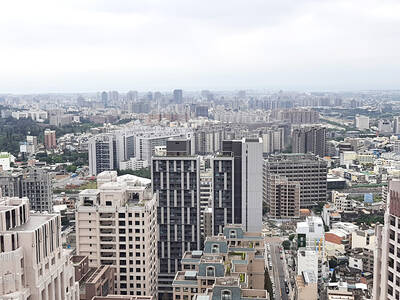
New apartments in Taiwan’s major cities are getting smaller, while old apartments are increasingly occupied by older people, many of whom live alone, government data showed. The phenomenon has to do with sharpening unaffordable property prices and an aging population, property brokers said. Apartments with one bedroom that are two years old or older have gained a noticeable presence in the nation’s six special municipalities as well as Hsinchu county and city in the past five years, Evertrust Rehouse Co (永慶房產集團) found, citing data from the government’s real-price transaction platform. In Taipei, apartments with one bedroom accounted for 19 percent of deals last
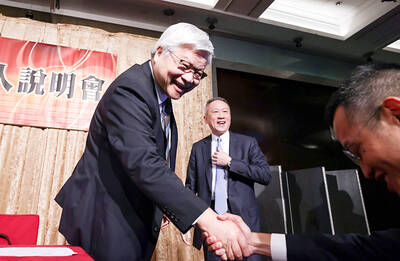
US CONSCULTANT: The US Department of Commerce’s Ursula Burns is a rarely seen US government consultant to be put forward to sit on the board, nominated as an independent director Taiwan Semiconductor Manufacturing Co (TSMC, 台積電), the world’s largest contract chipmaker, yesterday nominated 10 candidates for its new board of directors, including Ursula Burns from the US Department of Commerce. It is rare that TSMC has nominated a US government consultant to sit on its board. Burns was nominated as one of seven independent directors. She is vice chair of the department’s Advisory Council on Supply Chain Competitiveness. Burns is to stand for election at TSMC’s annual shareholders’ meeting on June 4 along with the rest of the candidates. TSMC chairman Mark Liu (劉德音) was not on the list after in December last


 RSS
RSS