


With the loss of manufacturing jobs shaping up as a crucial election issue, President Bush received two midterm reports Friday night that will help him decide whether to continue tariffs he imposed to help the American steel industry or to bow to other industries opposed to them.
It will take trade and industry experts days to analyze the data, but the findings offered a counterpoint to growing complaints from small and medium-size American manufacturing companies that use steel. They say the tariffs, or safeguards, have raised their costs, cut their profits and forced them to delay expansion and lay off employees.
One report, however, concluded that many companies "had difficulty distinguishing between the effects of the safeguard measures and other changes in market conditions."
While overall employment of steel-consuming industries generally fell or remained flat in the year after the tariffs were imposed, compared with the two previous years, according to the report, "in many cases employment fell by a greater amount [and percentage] in the year before the safeguard measures were implemented than in the first year after they were implemented."
As for maintaining the tariffs, "a majority of steel-consuming firms indicated that neither continuation or termination of the safeguard measures would change employment, international competitiveness, or capital investment," the report said.
The report said results varied by industry and that companies in the the auto parts and steel fabrication businesses reported a greater effect from the measures.
The two reports were prepared by the International Trade Commission. One was on the effect of the tariffs on the American steel industry, as required by law, and the other studied the effects of the tariffs on industries using steel to make products, as requested by Congress.
The tariffs of up to 30 percent on imported steel were originally meant to give the ailing steel industry a three-year respite to consolidate and gain a stronger, competitive foothold in the volatile global marketplace. The steel industry has streamlined, with smaller companies either going into bankruptcy or being bought by larger companies.
Bush is expected to try to appease each side in the dispute, perhaps by continuing the tariffs but expanding the number of exceptions to them, thereby holding down steel prices.
Administration officials, however, said it would be some time before the president makes his decision.
"We will begin a thorough review and analysis of these reports today and will use them as a part of our ongoing review of developments in the steel industry, and the economy more generally, since the imposition of the steel safeguard measures," said Richard Mills, a spokesman for Robert Zoellick, the US trade representative.
Even before the reports were released, some economists said that the tariffs had, in fact, resulted in more jobs lost to overseas competition than they saved.
The industries that use steel said that as many as 100,000 jobs had disappeared because of the tariffs.
The steel industry and trade unions call that figure an exaggeration and say that the increase in steel prices caused by the tariffs has been temporary.
In the heightened political climate, both sides may be exaggerating.
"On balance, the greater economic effect was more negative than positive," said Fred Bergsten, director of the Institute for International Economics. "But the numbers are fairly small and don't begin to justify the complaints you hear."
Politicians representing companies on each side of the issue have been lobbying the White House for months, touching off a fierce debate over the political implications of the tariffs for Bush's re-election as much as their effect on the economy.
"These tariffs have hurt the president's political base," said Representative Joe Knollenberg, a Republican from Michigan, who represents many of the industries that want the tariffs repealed.
Politics could easily trump economic arguments.
Several states in the Rust Belt -- Ohio, Pennsylvania and Michigan -- will be pivotal in next year's presidential election.
The question will be whether the steel industry and steel unions are considered more important for victory than the numerous but smaller companies that use steel.
Democratic candidates for president have seized on the loss of manufacturing jobs as an issue to use against Bush, but few responded Friday to requests for their opinion on the steel tariffs.
An exception was Representative Dick Gephardt, a Missouri Democrat, who has won support from some unions.
"Repealing or modifying the steel industry relief program will only further jeopardize the lives and livelihoods of workers in the steel industry," he said.
To further complicate the issue, the US lost a case at the WTO this year that had been brought by Europe contending the steel tariffs went beyond the legal provisions allowed under international trading rules to protect against a surge in imports.
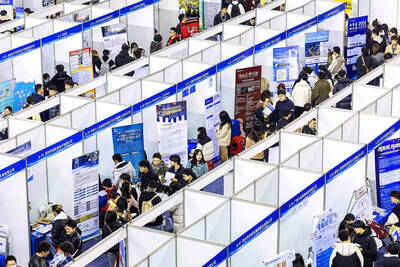
Stephen Garrett, a 27-year-old graduate student, always thought he would study in China, but first the country’s restrictive COVID-19 policies made it nearly impossible and now he has other concerns. The cost is one deterrent, but Garrett is more worried about restrictions on academic freedom and the personal risk of being stranded in China. He is not alone. Only about 700 American students are studying at Chinese universities, down from a peak of nearly 25,000 a decade ago, while there are nearly 300,000 Chinese students at US schools. Some young Americans are discouraged from investing their time in China by what they see

MAJOR DROP: CEO Tim Cook, who is visiting Hanoi, pledged the firm was committed to Vietnam after its smartphone shipments declined 9.6% annually in the first quarter Apple Inc yesterday said it would increase spending on suppliers in Vietnam, a key production hub, as CEO Tim Cook arrived in the country for a two-day visit. The iPhone maker announced the news in a statement on its Web site, but gave no details of how much it would spend or where the money would go. Cook is expected to meet programmers, content creators and students during his visit, online newspaper VnExpress reported. The visit comes as US President Joe Biden’s administration seeks to ramp up Vietnam’s role in the global tech supply chain to reduce the US’ dependence on China. Images on
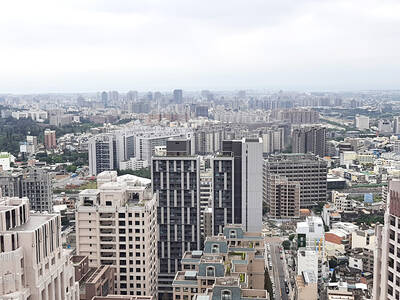
New apartments in Taiwan’s major cities are getting smaller, while old apartments are increasingly occupied by older people, many of whom live alone, government data showed. The phenomenon has to do with sharpening unaffordable property prices and an aging population, property brokers said. Apartments with one bedroom that are two years old or older have gained a noticeable presence in the nation’s six special municipalities as well as Hsinchu county and city in the past five years, Evertrust Rehouse Co (永慶房產集團) found, citing data from the government’s real-price transaction platform. In Taipei, apartments with one bedroom accounted for 19 percent of deals last
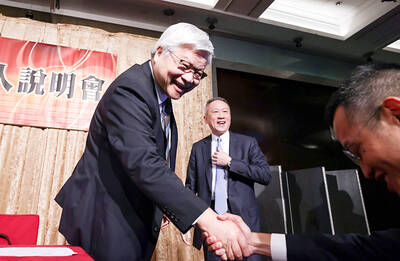
US CONSCULTANT: The US Department of Commerce’s Ursula Burns is a rarely seen US government consultant to be put forward to sit on the board, nominated as an independent director Taiwan Semiconductor Manufacturing Co (TSMC, 台積電), the world’s largest contract chipmaker, yesterday nominated 10 candidates for its new board of directors, including Ursula Burns from the US Department of Commerce. It is rare that TSMC has nominated a US government consultant to sit on its board. Burns was nominated as one of seven independent directors. She is vice chair of the department’s Advisory Council on Supply Chain Competitiveness. Burns is to stand for election at TSMC’s annual shareholders’ meeting on June 4 along with the rest of the candidates. TSMC chairman Mark Liu (劉德音) was not on the list after in December last


 RSS
RSS