


The implementation of Shanghai-bound chartered cargo flights is expected to save NT$15 billion and contribute between 0.01 and 0.04 percent to Taiwan's GDP growth in the first year, Mainland Affairs Council Chairwoman Tsai Ing-wen (
"The short-term benefits will be limited," Tsai told a joint luncheon held by six major business groups, "but in the long run, the links will add to Taiwan's GDP growth by between 0.4 and 1.19 percent, stren-gthening the nation's economic importance and strategic competitiveness in the region."
The planned cargo flights, which are slated to begin on Thrusday, will usher in the implementation of direct links and trade exchanges between Taiwan and China on a large scale pending the resumption of cross-strait negotiations, Tsai added.
According to the council's estimates, the links will allow China-based Taiwanese businesses to take advantage of China's manufacturing base while enabling them to expand their share of regional markets.
The cargo flights plan will also bring immediate advantages to the nation's petrochemical, textile, information technology and transportation sectors while negatively impacting the local agricultural sector and makers of auto parts and electronic appliances, Tsai said.
The proposed cross-strait cargo flights plan also has its downside, she said. The biggest risk is that Taiwan's economy may be marginalized if the nation cannot transform its manufacture-oriented economy to a service-based one, she said.
Citing reports conducted by several private think tanks, Tsai said that once transport links are established, China-bound capital flight may increase by US$60 billion per year, resulting in 50,000 to 80,000 lost jobs.
Moreover, the number of western-bound travelers may also double, generating hundreds of billions of dollars in revenue for China, Tsai added.
"The trade imbalance across the Strait will be addressed to prevent Taiwan from overly depending on China," Tsai said.
Before conducting a closed-door meeting with yesterday's participants, Tsai concluded her speech by blaming China for using the "one-China" principle to politicize the links' implementation.
She urged China to extend its goodwill and show flexibility by resuming cross-strait negotiations to facilitate direct links.
Gary Wang (
In addition to the transportation links, Wang also urged the government to address the inconvenience triggered by a lack of cross-strait financial exchange as well as direct air links for passengers.
In response to concerns raised by Taiwanese businesspeople, Tsai said that the Ministry of Finance and the central bank were working on plans to allow the remittance of capital across the Strait.
She added that the government won't implement links hastily, since the issue involves a legion of commercial interests for air carriers.
But the cargo plan will provide flights of convenience for China-based Taiwanese businesses to ship their deliveries on time during the next busiest quarter.

Stephen Garrett, a 27-year-old graduate student, always thought he would study in China, but first the country’s restrictive COVID-19 policies made it nearly impossible and now he has other concerns. The cost is one deterrent, but Garrett is more worried about restrictions on academic freedom and the personal risk of being stranded in China. He is not alone. Only about 700 American students are studying at Chinese universities, down from a peak of nearly 25,000 a decade ago, while there are nearly 300,000 Chinese students at US schools. Some young Americans are discouraged from investing their time in China by what they see

Taiwan Transport and Storage Corp (TTS, 台灣通運倉儲) yesterday unveiled its first electric tractor unit — manufactured by Volvo Trucks — in a ceremony in Taipei, and said the unit would soon be used to transport cement produced by Taiwan Cement Corp (TCC, 台灣水泥). Both TTS and TCC belong to TCC International Holdings Ltd (台泥國際集團). With the electric tractor unit, the Taipei-based cement firm would become the first in Taiwan to use electric vehicles to transport construction materials. TTS chairman Koo Kung-yi (辜公怡), Volvo Trucks vice president of sales and marketing Johan Selven, TCC president Roman Cheng (程耀輝) and Taikoo Motors Group

MAJOR DROP: CEO Tim Cook, who is visiting Hanoi, pledged the firm was committed to Vietnam after its smartphone shipments declined 9.6% annually in the first quarter Apple Inc yesterday said it would increase spending on suppliers in Vietnam, a key production hub, as CEO Tim Cook arrived in the country for a two-day visit. The iPhone maker announced the news in a statement on its Web site, but gave no details of how much it would spend or where the money would go. Cook is expected to meet programmers, content creators and students during his visit, online newspaper VnExpress reported. The visit comes as US President Joe Biden’s administration seeks to ramp up Vietnam’s role in the global tech supply chain to reduce the US’ dependence on China. Images on
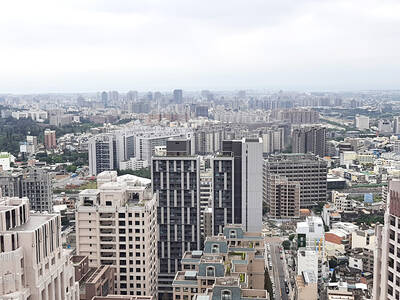
New apartments in Taiwan’s major cities are getting smaller, while old apartments are increasingly occupied by older people, many of whom live alone, government data showed. The phenomenon has to do with sharpening unaffordable property prices and an aging population, property brokers said. Apartments with one bedroom that are two years old or older have gained a noticeable presence in the nation’s six special municipalities as well as Hsinchu county and city in the past five years, Evertrust Rehouse Co (永慶房產集團) found, citing data from the government’s real-price transaction platform. In Taipei, apartments with one bedroom accounted for 19 percent of deals last


 RSS
RSS