


With the commodity price index continuing to fall over the past few months and Taiwan's Central Bank of China's low-interest rate policy doing little to stimulate the interest of private investors or consumers, several academics believe that boosting public spending might be the only way to ward off deflation.
The Directorate General of Budget, Accounting and Statistics (DGBAS) under the Cabinet reported Sunday that the commodity price index in July stood at 98.8 with 1996 as the base year, indicating a drop of 0.42 percent from that of June. In the first seven months of this year, the commodity price index dropped by 0.28 percent as compared with the same period of the preceding year.
Forecasting negative growth in the consumer price index for this year, the DGBAS said that Taiwan is still facing the threat of deflation. In May the International Monetary Fund (IMF) warned that Taiwan, Germany and Hong Kong were at risk of deflation.
When faced with deflationary pressures, many countries seek to apply a loose monetary policy as a stimulus to private consumption and investment willingness, Professor Chu Hao-ming (
The professor suggested that boosting public spending might be more effective right now. However, with mounting public debt, the government must spend the money on projects that can contribute significantly to the nation, and not on quick-fix social welfare schemes.
He added that in the long run, the government needs to improve the domestic investment environment by ensuring good infrastructure, including water and electricity supplies, and making further relaxations on regulations governing cross-Taiwan Strait trade.
Chen Tien-chih (
Chen said that the worst situation would be that consumers might speculate upon further price declines as the commodity price index continues to go down. This would make it even more difficult for the economy to rebound, he added.
The scholar suggested that the government consider raising salary levels of public servants. When the private sector follows suit, commodity prices might gradually go up, as purchasing power would rise.
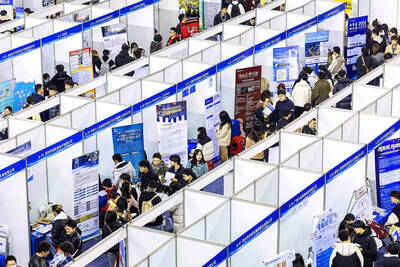
Stephen Garrett, a 27-year-old graduate student, always thought he would study in China, but first the country’s restrictive COVID-19 policies made it nearly impossible and now he has other concerns. The cost is one deterrent, but Garrett is more worried about restrictions on academic freedom and the personal risk of being stranded in China. He is not alone. Only about 700 American students are studying at Chinese universities, down from a peak of nearly 25,000 a decade ago, while there are nearly 300,000 Chinese students at US schools. Some young Americans are discouraged from investing their time in China by what they see

Taiwan Transport and Storage Corp (TTS, 台灣通運倉儲) yesterday unveiled its first electric tractor unit — manufactured by Volvo Trucks — in a ceremony in Taipei, and said the unit would soon be used to transport cement produced by Taiwan Cement Corp (TCC, 台灣水泥). Both TTS and TCC belong to TCC International Holdings Ltd (台泥國際集團). With the electric tractor unit, the Taipei-based cement firm would become the first in Taiwan to use electric vehicles to transport construction materials. TTS chairman Koo Kung-yi (辜公怡), Volvo Trucks vice president of sales and marketing Johan Selven, TCC president Roman Cheng (程耀輝) and Taikoo Motors Group

MAJOR DROP: CEO Tim Cook, who is visiting Hanoi, pledged the firm was committed to Vietnam after its smartphone shipments declined 9.6% annually in the first quarter Apple Inc yesterday said it would increase spending on suppliers in Vietnam, a key production hub, as CEO Tim Cook arrived in the country for a two-day visit. The iPhone maker announced the news in a statement on its Web site, but gave no details of how much it would spend or where the money would go. Cook is expected to meet programmers, content creators and students during his visit, online newspaper VnExpress reported. The visit comes as US President Joe Biden’s administration seeks to ramp up Vietnam’s role in the global tech supply chain to reduce the US’ dependence on China. Images on
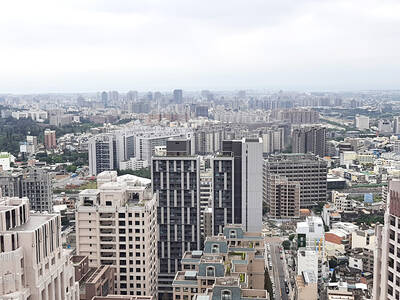
New apartments in Taiwan’s major cities are getting smaller, while old apartments are increasingly occupied by older people, many of whom live alone, government data showed. The phenomenon has to do with sharpening unaffordable property prices and an aging population, property brokers said. Apartments with one bedroom that are two years old or older have gained a noticeable presence in the nation’s six special municipalities as well as Hsinchu county and city in the past five years, Evertrust Rehouse Co (永慶房產集團) found, citing data from the government’s real-price transaction platform. In Taipei, apartments with one bedroom accounted for 19 percent of deals last


 RSS
RSS