


A coup this week in the West African island nation of Sao Tome and Principe is reverberating in the corporate suites of the energy industry here, oil company executives said on Friday. Officials from several companies said they were anxiously monitoring events on the potentially oil-rich archipelago, a former Portuguese colony on the Equator in the Gulf of Guinea.
Exxon Mobil of Irving, Texas, the world's largest oil company, and Chrome Energy, a small Houston-based oil and gas company controlled by Nigerian investors, have secured options for oil exploration in the waters off Sao Tome, an area just south of oil-rich Nigeria that geologists estimate could hold up to 6 billion barrels of reserves.
ChevronTexaco, Royal Dutch/Shell and TotalFinaElf are among the other big oil companies that have shown interest in bidding for licenses to explore other areas in auctions scheduled for October. This interest has sent expectations soaring in the two-island country of 1,000 square miles and 160,000 people where the main export crop is cocoa and the average annual income is US$280.
"Oil has created dreams of grandeur for a tiny place that has been on the margins of global affairs for many years," said Gerhard Seibert, an authority on Sao Tome at the Institute of Tropical Scientific Investigation in Lisbon, Portugal. "The army and the political and business elites sense something coming and want a part of it."
American and European companies are not the only potential investors in Sao Tome's nascent oil industry. Nigeria has a treaty with Sao Tome establishing a joint development zone in waters off both countries, allowing 60 percent of the revenue from the area to go to Nigeria. And Sonangol, Angola's state-controlled oil company, has reached a preliminary agreement to train Sao Tomean oil officials and invest in future projects.
The coup leader, Major Fernando Pereira, reportedly said this week that the troops under his command had no plans to alter existing agreements. He also agreed to talks on Friday with representatives from the US, the Community of Portuguese Speaking Countries and Nigeria, in one of the first indications that tension in the former Portuguese colony could ease.
Still, most Cabinet members, including the oil minister, Rafael Branco, were being held captive on Friday, adding to uncertainty over the effect the coup may have on oil exploration. The coup has already affected Sao Tome's fragile economy: The World Bank said this week it would suspend all aid to the nation as long as the coup leaders remained in power.
"Our contracts are with the government of Sao Tome, so we're assuming that they will be honored no matter what takes place," said John Coleman, director of investor relations at Chrome, a publicly traded company whose formal name is Environmental Remediation Holdings Corp. But, he also said, "It's too early to tell what's going to happen."
Marcia Zilensky, a spokeswoman here for Exxon Mobil, said the company was "closely following the situation like everybody else." Exxon Mobil has yet to start operations in Sao Tome.
No oil has yet been drilled in Sao Tome and none is expected to be extracted until 2007 or 2008, but the country has nonetheless become a international flash point, leading experts on West Africa to speculate it was only a matter of time before jostling for power ahead of the oil rush would evolve into political instability. Revenue from licensing agreements alone could reach $200 million in the next two years, an amount about four times the size of the national budget.
"Sao Tome is a microstate with limited capacity to absorb a big influx of cash," said Stephen Harrison, director of the Africa program at the Center for Strategic and International Studies in Washington. "It's also in a neighborhood with two very muscular players, Angola and Nigeria, opening the door for runaway competition for its resources."
Fradique Bandeira de Menezes, the president of Sao Tome, was in the Nigerian capital of Abuja when Pereira led the apparently bloodless putsch on Wednesday. The president accused mutinous troops of being influenced by "the smell of oil." He has remained in Nigeria since then.
James Burkhard, an Africa analyst at Cambridge Energy Research Associates, said investors were expecting the coup to collapse in the face of international pressure much in the way a similar power grab in 1995 dissipated after Angola stepped in to mediate between parties.

Stephen Garrett, a 27-year-old graduate student, always thought he would study in China, but first the country’s restrictive COVID-19 policies made it nearly impossible and now he has other concerns. The cost is one deterrent, but Garrett is more worried about restrictions on academic freedom and the personal risk of being stranded in China. He is not alone. Only about 700 American students are studying at Chinese universities, down from a peak of nearly 25,000 a decade ago, while there are nearly 300,000 Chinese students at US schools. Some young Americans are discouraged from investing their time in China by what they see

MAJOR DROP: CEO Tim Cook, who is visiting Hanoi, pledged the firm was committed to Vietnam after its smartphone shipments declined 9.6% annually in the first quarter Apple Inc yesterday said it would increase spending on suppliers in Vietnam, a key production hub, as CEO Tim Cook arrived in the country for a two-day visit. The iPhone maker announced the news in a statement on its Web site, but gave no details of how much it would spend or where the money would go. Cook is expected to meet programmers, content creators and students during his visit, online newspaper VnExpress reported. The visit comes as US President Joe Biden’s administration seeks to ramp up Vietnam’s role in the global tech supply chain to reduce the US’ dependence on China. Images on
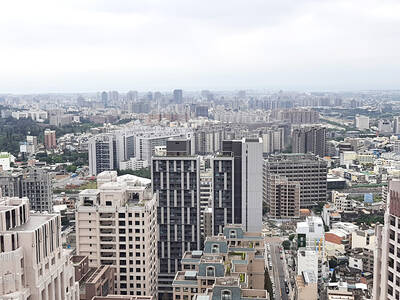
New apartments in Taiwan’s major cities are getting smaller, while old apartments are increasingly occupied by older people, many of whom live alone, government data showed. The phenomenon has to do with sharpening unaffordable property prices and an aging population, property brokers said. Apartments with one bedroom that are two years old or older have gained a noticeable presence in the nation’s six special municipalities as well as Hsinchu county and city in the past five years, Evertrust Rehouse Co (永慶房產集團) found, citing data from the government’s real-price transaction platform. In Taipei, apartments with one bedroom accounted for 19 percent of deals last
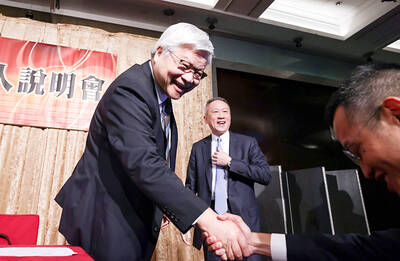
US CONSCULTANT: The US Department of Commerce’s Ursula Burns is a rarely seen US government consultant to be put forward to sit on the board, nominated as an independent director Taiwan Semiconductor Manufacturing Co (TSMC, 台積電), the world’s largest contract chipmaker, yesterday nominated 10 candidates for its new board of directors, including Ursula Burns from the US Department of Commerce. It is rare that TSMC has nominated a US government consultant to sit on its board. Burns was nominated as one of seven independent directors. She is vice chair of the department’s Advisory Council on Supply Chain Competitiveness. Burns is to stand for election at TSMC’s annual shareholders’ meeting on June 4 along with the rest of the candidates. TSMC chairman Mark Liu (劉德音) was not on the list after in December last


 RSS
RSS