


Semiconductor Manufacturing International Corp (SMIC,
"SMIC is planning for an initial public offering next year," said Joseph Xie, a senior director at the Shanghai-based company.
"It is still too early to talk about details," he said.
The postponement of the company's planned public offering, even as the shares of Asian chipmaking rivals have soared this year, underlines China's difficulty in building a semiconductor industry from scratch. It may also indicate that SMIC is finding it harder than expected to compete with Taiwan Semiconductor Manufacturing Co (TSMC,
"The bigger companies are the ones that are making the profits," said Ronald Chan, who counts TSMC shares among the US$7.5 billion he helps manage for Allianz Dresdner Asset Management.
"It's hard for SMIC to catch up," he said.
Xie didn't give any reason for the delay. Chief executive Richard Chang (
The company will need to list on overseas equity markets in the future, investors said.
"Chinese chipmakers will need to have maximum foreign support," said Stewart Aldcroft, who manages US$400 million in Asia out of US$27 billion globally for Investec Asset Management Ltd.
"There's a lot of cachet in China's largest businesses getting public listings," he said.
Aldcroft owns shares in TSMC and South Korea's Samsung Electronics Co, the world's second-largest chipmaker.
SMIC, whose shareholders include Japanese chipmaker Toshiba, has received tax and other breaks from the China and Shanghai governments, which have designated chipmaking a strategic industry.
Value-added tax on the company's chips is 4.5 percent compared with 17 percent for imported chips, among incentives that have saved SMIC US$750 million and enabled it to sell its products for half what its Taiwanese rivals charge.
Still, some semiconductor makers say China's semiconductor industry lacks the scale to be competitive.
Chipmakers need supplies of production equipment and materials such as chemicals and pure gases nearby to keep their operations working effectively, they say.
Motorola Inc, the world's ninth-biggest chipmaker, said in March it was delaying equipping its first semiconductor plant in China. The plant, in the eastern port city of Tianjin, is only 6 percent equipped, eight years after Motorola started building it.
Apart from Japan's NEC Corp, Schaumburg, Illinois-based Motorola is the only foreign chipmaker to set up a factory in China. The top 10 suppliers to China's US$17 billion semiconductor market last year were all overseas companies, according to market researcher Gartner Inc.
The problem is that SMIC's larger rivals dominate the so-called chip-foundry business, investors including Chan said.
SMIC expects to expand monthly output to about 42,000 eight-inch-diameter silicon wafers by the end of this year. That's less than 4 percent of TSMC's 1.08 million installed capacity at the end of the second quarter.
Lower prices may not be enough to let SMIC compete. Production quality and consistency are also important to customers; as a newcomer, the Shanghai company has yet to build its track record.
SMIC is deferring its share sale at a time when stocks of its Taiwanese rivals have been rising: TSMC shares have gained 55 percent this year, while those of smaller rivals UMC are up 29 percent.
TSMC shares have rebounded 85 percent from their October low, a slump caused partly by concerns that it would lose business to low-cost Chinese suppliers.
SMIC also faces new rivals in China such as Grace Semiconductor Manufacturing Corp (宏力半導體), a company founded by the son of former Chinese president Jiang Zemin (江澤民).
SMIC started production in the fourth quarter of 2001 with startup capital of US$1.5 billion, raised from investors including Goldman, Sachs & Co, Hambrecht & Quist Inc and Walden International Investment Group.
The company had a loss of HK$120.9 million (US$16 million) in the year to Dec. 31, according to Hong Kong-listed Shanghai Industrial Holdings Ltd, the chipmaker's biggest shareholder with a 17 percent stake.
Profitability may be affected by its focus on older technology. The company has bought equipment from Singapore's Chartered Semiconductor Manufacturing Ltd (特許), the world's No. 3 made-to-order supplier. Chartered, which uses less advanced equipment than its Taiwanese rivals, expects to post its 10th consecutive quarterly loss in the second quarter this year.
SMIC also produces memory chips for Germany's Infineon, Japan's Fujitsu Ltd and Toshiba, a business that has been unprofitable for most manufacturers since the spot price of benchmark memory chips fell below US$4 earlier this year.
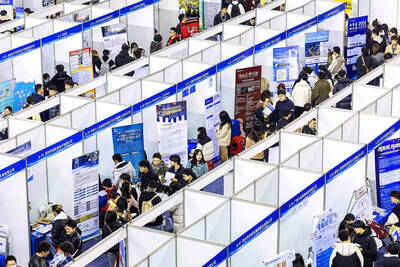
Stephen Garrett, a 27-year-old graduate student, always thought he would study in China, but first the country’s restrictive COVID-19 policies made it nearly impossible and now he has other concerns. The cost is one deterrent, but Garrett is more worried about restrictions on academic freedom and the personal risk of being stranded in China. He is not alone. Only about 700 American students are studying at Chinese universities, down from a peak of nearly 25,000 a decade ago, while there are nearly 300,000 Chinese students at US schools. Some young Americans are discouraged from investing their time in China by what they see

MAJOR DROP: CEO Tim Cook, who is visiting Hanoi, pledged the firm was committed to Vietnam after its smartphone shipments declined 9.6% annually in the first quarter Apple Inc yesterday said it would increase spending on suppliers in Vietnam, a key production hub, as CEO Tim Cook arrived in the country for a two-day visit. The iPhone maker announced the news in a statement on its Web site, but gave no details of how much it would spend or where the money would go. Cook is expected to meet programmers, content creators and students during his visit, online newspaper VnExpress reported. The visit comes as US President Joe Biden’s administration seeks to ramp up Vietnam’s role in the global tech supply chain to reduce the US’ dependence on China. Images on
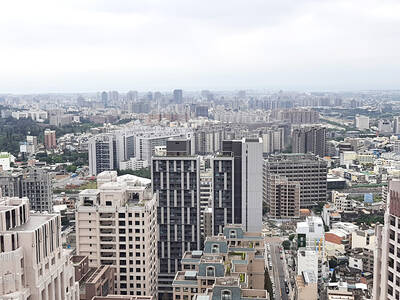
New apartments in Taiwan’s major cities are getting smaller, while old apartments are increasingly occupied by older people, many of whom live alone, government data showed. The phenomenon has to do with sharpening unaffordable property prices and an aging population, property brokers said. Apartments with one bedroom that are two years old or older have gained a noticeable presence in the nation’s six special municipalities as well as Hsinchu county and city in the past five years, Evertrust Rehouse Co (永慶房產集團) found, citing data from the government’s real-price transaction platform. In Taipei, apartments with one bedroom accounted for 19 percent of deals last
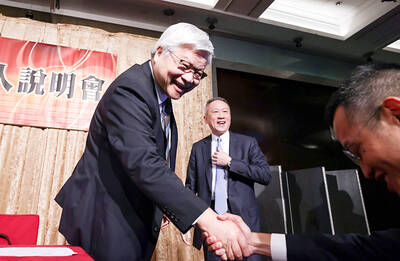
US CONSCULTANT: The US Department of Commerce’s Ursula Burns is a rarely seen US government consultant to be put forward to sit on the board, nominated as an independent director Taiwan Semiconductor Manufacturing Co (TSMC, 台積電), the world’s largest contract chipmaker, yesterday nominated 10 candidates for its new board of directors, including Ursula Burns from the US Department of Commerce. It is rare that TSMC has nominated a US government consultant to sit on its board. Burns was nominated as one of seven independent directors. She is vice chair of the department’s Advisory Council on Supply Chain Competitiveness. Burns is to stand for election at TSMC’s annual shareholders’ meeting on June 4 along with the rest of the candidates. TSMC chairman Mark Liu (劉德音) was not on the list after in December last


 RSS
RSS