


On a dusty lot in Baghdad's bustling Karadah district is a fleet of polished second-hand sedans and decade-old BMWs. This is car dealer Abdullah Radi's makeshift showroom, which he dismantles every day at sundown to escape gangs of looters. He stows the cars in a faraway garage.
With customs duties now eliminated in Iraq, Radi ships the autos he sells from Dubai to the southern port of Basra and trucks them in. He sells as many as seven a week and says profits, which he won't disclose, are up 50 percent. Customers include government employees who are now being paid in dollars. Business is good enough that his five sons also sell used cars.
"With no tax and no customs, things are good, very good," says the 58-year-old father of 11, as he stands by the road in a flowing robe and headdress, clutching a satellite phone. The only drawbacks: looters, he says.
PHOTO: REUTERS
Last month's decision by the US-led Coalition Provisional Authority to eliminate all import duties until the end of the year to boost trade is spawning a new breed of Iraqi traders importing cars, electric fuses, nightgowns and fridges from Turkey, Syria, Jordan, the Gulf states and Egypt.
Paul Bremer, Iraq's chief US administrator, says it's only a matter of time before a free market takes hold.
"I am optimistic that the coalition will succeed in transforming the Iraqi economy from a closed, dead-end system to an open, vibrant place to do business," he told participants at the World Economic Forum at the Dead Sea near Amman, Jordan on June 22.
With the red tape gone, Iraqis are swarming the Baghdad Chamber of Commerce, where they register and pay as much as US$8 for a cross-border import license to show at foreign border posts.
The Chamber building is open for business -- even though looters stole the furniture and computers, slashed the door frames, ripped out the toilets and wrecked the fountains.
In the lobby, behind a few salvaged desks, officials hand out some 400 licenses a day to applicants, 50 percent more than in prewar days, according to general manager Abdulmalik Hussein. The US decision to lift customs tariffs is "the principal reason" behind the flurry, he says.
"Before, it wasn't easy to trade," adds trademark manager Sohad Ahmad, her head covered in a multicolored shawl, as she scrawls her signature across dozens of licenses brought to her by underlings. "This is a golden opportunity for merchants."
Standing with his license in hand is 39-year-old Adnan Al-Khozai, who has just separated from his trading partner and set himself up as an independent importer of car parts and clothing.
Adnan flashes a thumbs-up sign when asked about business.
"If there is safety and no taxes, then business is good," he says.
Safety is, however, lacking. At dawn the day before, near the Jordanian border, a hooded gang in a Nissan pickup truck sidled up to Al-Khozai's car, which carried US$60,000 worth of spare parts and women's clothing. They brandished Kalashnikovs, a Russian-made assault rifle.
While he managed to speed away, a convoy of trucks carrying 22 cars behind him was overtaken and the driver has since gone missing. Al-Khozai says he keeps a Kalashnikov and one other gun at home to protect his wife and three children.
In fact, Kalashnikovs are a common sight in Baghdad. One vendor's weapon leans behind two large boxes of air-conditioning units he is selling on the sidewalk.
In the nearby "Manama" appliance store opened last month, owner Nabil Abu Rivan keeps his Kalashnikov stowed away behind a large fan, and reachable from his desk. He keeps another seven weapons in the shop, nervously interrupting conversations to oversee staff unpacking boxes. A day earlier, his store was attacked by robbers who ran off empty-handed after Abu Rivan shot at them.
Partially stocked with refrigerators, television sets, and electric ovens, the store did brisk business when it first opened, selling 300 satellite phones a week, 500 TV sets, and 200 refrigerators. The buyers? "Ali Baba," says Abu Rivan with a smile, referring to wartime looters who were spending their newly found cash.
While few import barriers mean "we sell and we put the money in our pocket," says Abu Rivan, "I'd prefer laws. At the moment, anybody can sell, import or buy."
Competition has led him to lower the price of a 20cm Samsung TV to US$180 from US$260 initially.
Lawlessness also hits traders at home. Sherko Abdelrahman, a 32-year-old importer of electrical parts, woke up one night to find his wife in tears as vandals threw stones at his door. No harm was done, but Abdelrahman keeps a gun at home.
Power shortages compound the trouble. While Abdelrahman has sold 350 generators in just 20 days because of the heat -- 45 degrees Celsius at midday, on average -- and boosted their price to US$130 from US$85 amid growing demand, he says he longs for the day when he can go back to selling large electric circuits to factories.
"God willing, electricity will come," Abdelrahman says as he stuffs licenses for the Syrian and Lebanese borders in his pocket.
Some wonder how long it will be before the US administration reimposes tariffs. Iraq's economic welfare will depend on it, they say. US officials say they will hand economic decision-making over to the new Iraqi governing council to be appointed in mid-July and it will decide future trade regulation.
"We know nothing about the future," says the Chamber of Commerce's Hussein. "What kind of rules will we have? What's the next step? They won't leave things as they are."
To interim Central Bank Governor Faleh Daoud Salman, getting the import business going is "not the aim of the Iraqi economy."
"Some people want to make a quick profit," he said in an interview. "We must give priority to what the economy needs: foodstuffs, raw materials and new machines to rehabilitate industry, and utilities and services to all citizens. For 13 years we were under a blockade and sanctions. Trade, agriculture and industry have deteriorated."
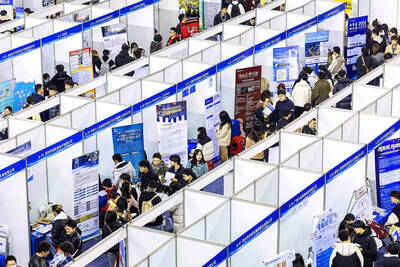
Stephen Garrett, a 27-year-old graduate student, always thought he would study in China, but first the country’s restrictive COVID-19 policies made it nearly impossible and now he has other concerns. The cost is one deterrent, but Garrett is more worried about restrictions on academic freedom and the personal risk of being stranded in China. He is not alone. Only about 700 American students are studying at Chinese universities, down from a peak of nearly 25,000 a decade ago, while there are nearly 300,000 Chinese students at US schools. Some young Americans are discouraged from investing their time in China by what they see

Taiwan Transport and Storage Corp (TTS, 台灣通運倉儲) yesterday unveiled its first electric tractor unit — manufactured by Volvo Trucks — in a ceremony in Taipei, and said the unit would soon be used to transport cement produced by Taiwan Cement Corp (TCC, 台灣水泥). Both TTS and TCC belong to TCC International Holdings Ltd (台泥國際集團). With the electric tractor unit, the Taipei-based cement firm would become the first in Taiwan to use electric vehicles to transport construction materials. TTS chairman Koo Kung-yi (辜公怡), Volvo Trucks vice president of sales and marketing Johan Selven, TCC president Roman Cheng (程耀輝) and Taikoo Motors Group

MAJOR DROP: CEO Tim Cook, who is visiting Hanoi, pledged the firm was committed to Vietnam after its smartphone shipments declined 9.6% annually in the first quarter Apple Inc yesterday said it would increase spending on suppliers in Vietnam, a key production hub, as CEO Tim Cook arrived in the country for a two-day visit. The iPhone maker announced the news in a statement on its Web site, but gave no details of how much it would spend or where the money would go. Cook is expected to meet programmers, content creators and students during his visit, online newspaper VnExpress reported. The visit comes as US President Joe Biden’s administration seeks to ramp up Vietnam’s role in the global tech supply chain to reduce the US’ dependence on China. Images on
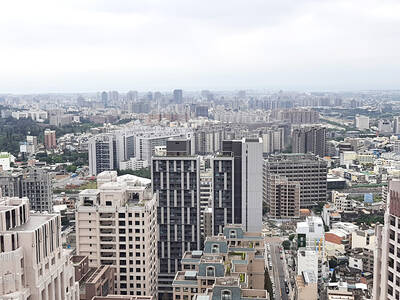
New apartments in Taiwan’s major cities are getting smaller, while old apartments are increasingly occupied by older people, many of whom live alone, government data showed. The phenomenon has to do with sharpening unaffordable property prices and an aging population, property brokers said. Apartments with one bedroom that are two years old or older have gained a noticeable presence in the nation’s six special municipalities as well as Hsinchu county and city in the past five years, Evertrust Rehouse Co (永慶房產集團) found, citing data from the government’s real-price transaction platform. In Taipei, apartments with one bedroom accounted for 19 percent of deals last


 RSS
RSS