


The threat of SARS may be waning in the Asia-Pacific but the tourism industry is still smarting from its impact and must buckle down to repair the damage to its image, experts said.
Travel industry officials have begun work on "Project Phoenix," a cooperative campaign to convince the public it is now safe to return to Asia after the World Health Organization (WHO) lifted travel advisories against all areas but Beijing.
At a meeting last week of the World Tourism Organization in the Philippine capital, tourism and travel authorities also acknowledged the huge challenge ahead.
Asian tourism was already hurt by the 2001 terror attacks in the US and the bombings on Indonesia's resort island of Bali in October last year, not to mention a global economic slow-down and the US-led war in Iraq.
The outbreak of SARS, which has killed nearly 800 and infected more than 8,000 across the region and in Canada, has done more, however, to damage the industry than anyone could have imagined.
"All of us have been caught off guard. We had figured the war in Iraq into our contingency plans and forecasts but SARS surprised us all," said Peter de Jong, president of the Pacific Asia Travel Association (PATA).
Philippine Tourism Secretary Richard Gordon, who hosted the meeting, urged the industry to "circle the wagons."
"What is important is we eliminate stigmatization," of Asia as a tourist destination, he said.
Many tourism officials complained that the threat of the pneumonia-like respiratory virus was overblown by the media, international agencies and even other governments, affecting even countries untouched by the disease.
Vang Rattanavoing, chairman of the Laos National Tourism Authority, complained that there was "some sort of psychological warfare against the region."
Tourist arrivals to Laos were down 30 percent because of SARS, even though only one suspected case was recorded there, he said.
Harsh Varma, the World Tourism Organization's regional representative, complained that one Boston newspaper carried the headline "Avoid all travel to Asia," due to SARS.
A European paper published a list of countries with confirmed SARS cases, suspected cases and countries "likely" to be infected even before a single SARS case was found, Varma said.
Andrew Drysdale, regional vice president of the International Air Transport Association (IATA) said a jetliner from Japan was barred from landing in a Middle Eastern country simply because it had made a brief stopover in Singapore, one of the countries worst-hit by SARS.
Drysdale said that passenger traffic fell sharply despite assurances by the WHO that no new cases of SARS had been reported from air travel after rigorous screening guidelines were implemented by airlines.
Deborah Luhrman, a consultant of the World Tourism Organization said press coverage might be unfair and harmful but "the media is not going to change and it's not going to go away."
SARS and terrorism had "injected fear and negativity into tourism [and] put an end to innocent and carefree travel."
It was up to the industry to turn the page on the bad publicity, putting on an honest and brave face and responding quickly to any other emerging health crises, she said.
Luhrman noted Hong Kong's assiduous updating of its website in terms of progress in treating the disease and safeguards taken to minimize the spread of SARS, something she said China and Singapore failed to do.
De Jong said that a survey of Asian airlines predicted air travel for the region will not return to pre-SARS levels until September, and warned that even when visitor arrivals return to normal, profits may not. He said this was owing to the steep discounts being offered to keep tourism industries in business.
World Tourism Organization secretary-general Francesco Friangelli remained optimistic, noting that "in the history of world tourism, we have never had a depression or a lasting recession."
"Recovery remains a certainty," he told the Manila meeting. "Based on our observations of past crises, the SARS epidemic will only delay recovery but maybe not by more than a few months."

Stephen Garrett, a 27-year-old graduate student, always thought he would study in China, but first the country’s restrictive COVID-19 policies made it nearly impossible and now he has other concerns. The cost is one deterrent, but Garrett is more worried about restrictions on academic freedom and the personal risk of being stranded in China. He is not alone. Only about 700 American students are studying at Chinese universities, down from a peak of nearly 25,000 a decade ago, while there are nearly 300,000 Chinese students at US schools. Some young Americans are discouraged from investing their time in China by what they see

MAJOR DROP: CEO Tim Cook, who is visiting Hanoi, pledged the firm was committed to Vietnam after its smartphone shipments declined 9.6% annually in the first quarter Apple Inc yesterday said it would increase spending on suppliers in Vietnam, a key production hub, as CEO Tim Cook arrived in the country for a two-day visit. The iPhone maker announced the news in a statement on its Web site, but gave no details of how much it would spend or where the money would go. Cook is expected to meet programmers, content creators and students during his visit, online newspaper VnExpress reported. The visit comes as US President Joe Biden’s administration seeks to ramp up Vietnam’s role in the global tech supply chain to reduce the US’ dependence on China. Images on
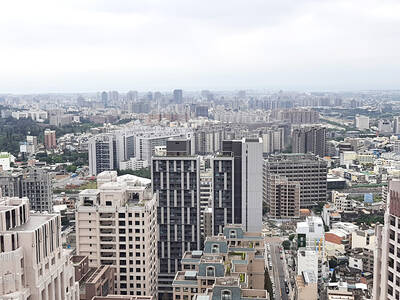
New apartments in Taiwan’s major cities are getting smaller, while old apartments are increasingly occupied by older people, many of whom live alone, government data showed. The phenomenon has to do with sharpening unaffordable property prices and an aging population, property brokers said. Apartments with one bedroom that are two years old or older have gained a noticeable presence in the nation’s six special municipalities as well as Hsinchu county and city in the past five years, Evertrust Rehouse Co (永慶房產集團) found, citing data from the government’s real-price transaction platform. In Taipei, apartments with one bedroom accounted for 19 percent of deals last
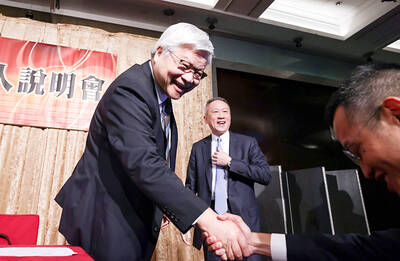
US CONSCULTANT: The US Department of Commerce’s Ursula Burns is a rarely seen US government consultant to be put forward to sit on the board, nominated as an independent director Taiwan Semiconductor Manufacturing Co (TSMC, 台積電), the world’s largest contract chipmaker, yesterday nominated 10 candidates for its new board of directors, including Ursula Burns from the US Department of Commerce. It is rare that TSMC has nominated a US government consultant to sit on its board. Burns was nominated as one of seven independent directors. She is vice chair of the department’s Advisory Council on Supply Chain Competitiveness. Burns is to stand for election at TSMC’s annual shareholders’ meeting on June 4 along with the rest of the candidates. TSMC chairman Mark Liu (劉德音) was not on the list after in December last


 RSS
RSS