


Al Sisto wouldn't knowingly expose his employees to severe acute respiratory syndrome (SARS), nor would he jeopardize his software firm's revenue, two-thirds of which comes from Asia.
So while the president and chief executive officer (CEO) of Phoenix Technologies declared all travel to Asia voluntary, he also upgraded his company's Web-based video-conferencing equipment.
Sales representatives who last month considered a flight from San Francisco to Hong Kong part of their commute now woo clients in cyberspace from offices in San Jose.
"For the keynote speeches, the high level meetings, the gatherings of senior executives to further our relationships -- that's where we've had to do a bit of a switcheroo and move to the Web and video conferencing," Sisto said.
Phoenix joins a growing list of Silicon Valley companies using technology as an antidote to traveling to SARS-inflicted places, many of which happen to be critical manufacturing centers of microchips and buyers of local firms' finished products.
The World Health Organization says people should postpone unnecessary travel to Toronto, Hong Kong, Beijing and other parts of China because of SARS.
Although few companies are reporting manufacturing slowdowns or stalled product launches, American executives fear SARS could lead to the shuttering of factories or office parks, bungle business relationships or stifle consumer demand in one of the tech industry's most important regions.
But they're hoping the new generation of high-speed, zero-delay conferencing hardware and software, as well as e-mail and instant messages, will provide an emergency measure of interpersonal
relationship building, a crucial tenet of Asian business.
Communication between Silicon Valley and Asia is essential. The continent produces billions of computer parts each year and low-cost contract workers maintain computer systems and develop software for hundreds of Silicon Valley companies.
Asia and Australia accounted for 38 percent of revenues at Intel Corp in the last quarter of last year and it was the chipmaker's leading revenue generator for the previous three quarters.
Microsoft Corp, which has more than 4,000 employees in Asia, extracts about 20 percent of its global revenue from the region. Asia has been the Redmond, Washington-based software giant's fastest growing market for at least three years.
Instead of flying to Tokyo, Guerrino De Luca, CEO of Logitech International, conducted a live interview last week with Japanese journalists via a new Polycom video system with TV-sized screens installed in the consumer electronics company's headquarters.
Although the company lifted its two-week ban on travel to and within Asia on April 21, Logitech is asking employees to become familiar with telecommuting procedures, as well as teleconferencing and Web-based video conferencing.
About 3,000 of Logtitech's 4,000 workers are in Asia, mainly at manufacturing plants in China.
The SARS outbreak has also sparked many Silicon Valley companies to update emergency strategies and make sure employees have telecommuting tools like firewall-protected access to company servers.
Sun Microsystems Inc has long encouraged employees to telecommute. Sun broadened its iWork program last month in case offices in Asia are shut down or workers quarantined.
Oracle Corp is asking employees to avoid nonessential travel to Asia. Upon return from a SARS-infected country, employees are asked to telecommute for five days.
Silicon Valley's switch to electronic communication to Asia could be risky in a business sense because many Asian executives still favor face-to-face networking.
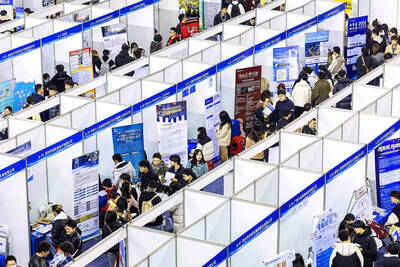
Stephen Garrett, a 27-year-old graduate student, always thought he would study in China, but first the country’s restrictive COVID-19 policies made it nearly impossible and now he has other concerns. The cost is one deterrent, but Garrett is more worried about restrictions on academic freedom and the personal risk of being stranded in China. He is not alone. Only about 700 American students are studying at Chinese universities, down from a peak of nearly 25,000 a decade ago, while there are nearly 300,000 Chinese students at US schools. Some young Americans are discouraged from investing their time in China by what they see
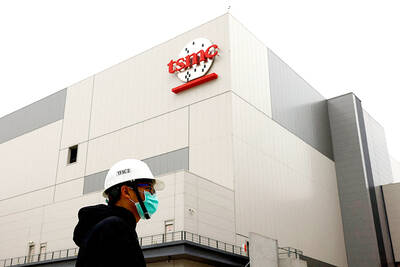
Taiwan Semiconductor Manufacturing Co (TSMC, 台積電), the world’s largest contract chipmaker, yesterday reported record sales for the first quarter, which analysts attributed to solid demand for emerging technologies. Consolidated revenue totaled NT$592.64 billion (US$18.51 billion) in the January-to-March period, up 16.5 percent from a year earlier, but down 5.26 percent from the previous quarter, TSMC said in a statement. The first-quarter revenue beat analysts’ average projection of NT$579.5 billion, Bloomberg News reported. That performance lends weight to expectations that the world’s most valuable chipmaker would return to solid growth this year after weathering a post-COVID-19-pandemic cratering of smartphone and computer sales. TSMC is budgeting
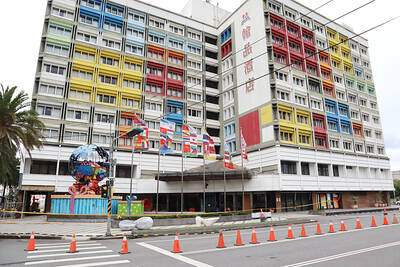
HUALIEN BRANCH: The company had been planning to rebuild the hotel before it was damaged in the quake and vowed to give affected employees the option to transfer The owner of Chateau de Chine Hualien (花蓮翰品酒店) is planning to lay off 86 workers after shutting down the hotel due to damage it sustained in a powerful earthquake on Wednesday last week, the Ministry of Labor said yesterday. The hotel has submitted a layoff report to the Hualien County Government and expects to let 69 workers go this month and 17 next month, the ministry said. LDC Hotels & Resorts Group (雲朗觀光集團), the owner of Chateau de Chine Hualien, confirmed the layoff plan in a statement yesterday. LDC said the hotel has been closed since Wednesday last week when the temblor occurred
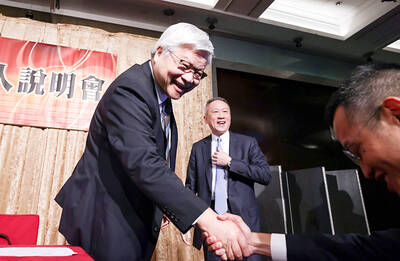
US CONSCULTANT: The US Department of Commerce’s Ursula Burns is a rarely seen US government consultant to be put forward to sit on the board, nominated as an independent director Taiwan Semiconductor Manufacturing Co (TSMC, 台積電), the world’s largest contract chipmaker, yesterday nominated 10 candidates for its new board of directors, including Ursula Burns from the US Department of Commerce. It is rare that TSMC has nominated a US government consultant to sit on its board. Burns was nominated as one of seven independent directors. She is vice chair of the department’s Advisory Council on Supply Chain Competitiveness. Burns is to stand for election at TSMC’s annual shareholders’ meeting on June 4 along with the rest of the candidates. TSMC chairman Mark Liu (劉德音) was not on the list after in December last


 RSS
RSS